

Hot & Cold Therapy Equipment Buying Guide
A decision walkthrough for facilities specifying cold therapy tanks and moist heat equipment, covering capacity, placement, drainage, delivery access and the checks that prevent a costly return.
Home › Buyer Guides › Hot & Cold Therapy Equipment Buying Guide
Take This Guide With You
The full Hot & Cold Therapy Equipment buying guide as a printable PDF, with the comparison points and the pre-order checklist. Share it with facilities, purchasing or whoever signs off.
Hot & Cold Therapy Equipment in Stock Now
A live view of what is available in Hot & Cold Therapy Equipment right now. Prices and availability come straight from the catalog.
-
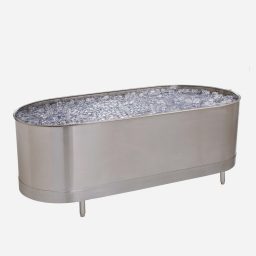 Quick ViewSelect options
 -
 Quick ViewSelect options
 -
Quick ViewSelect options
-
Quick ViewSelect options
How to Choose a Cold Therapy Tank for Your Facility
Most of a cold therapy tank decision is settled before anyone looks at a model number. The room, the drain, the floor and the freight route rule options out faster than any feature list, and a buyer who works in that order rarely gets it wrong. This guide walks the sequence: understand what your building allows, size the unit to a realistic week of treatment, settle stationary against mobile, then compare a short list on the same lines. To see what sits in the line before you start, browse the hot and cold therapy equipment category.
Who Is Buying a Cold Therapy Tank, and What Changes From Buyer to Buyer?
Five buyer types account for most cold therapy tank purchases, and each one is solving a different problem with the same equipment.
- Outpatient physical therapy clinics. One tank, one room, a fixed weekly schedule and an owner who signs the purchase order. Floor space and the plumbing the landlord will allow are the binding limits.
- Hospital rehabilitation departments. A capital request that passes through facilities, infection prevention and biomedical engineering before it reaches purchasing. Every one of those reviewers can stop the order, so bring them in early.
- Athletic training rooms. Heavy seasonal peaks, whole body immersion work, and a room that has to do three other jobs on game day. Scheduling pressure lands in a narrow window rather than spreading across the week.
- Skilled nursing facilities. Flatter, more predictable volume, older buildings, and staff turnover that makes an easy drain and clean cycle worth more than extra capacity.
- Sports medicine and multi disciplinary practices. Mixed caseloads across several clinicians, which usually argues for two smaller units rather than one large one.
Identify which of these you are before you shortlist anything, because the approval path, the timeline and the person who ends up cleaning the tank all differ. The same logic applies across the wider rehabilitation equipment range.
Should You Choose the Room or the Tank First?
Choose the room first. A tank is easy to change and a drain is not, so the cheapest version of this project is the one where the space decides the short list rather than the other way round.
Walk the intended room with a tape measure and answer four questions before you open a catalog. Where will the water come from and where will it go. What is the floor made of, is it level, and is the room above grade. Which outlet is closest and what circuit is it on. How does a crate get from the street to that room, including door widths, corridor turns and elevator dimensions.
Those answers usually eliminate half the options on their own. A room with no drain within hose reach changes the daily routine permanently. A suite on an upper floor turns filled weight into a structural question for facilities rather than a line on a spec sheet. A double door at the street and a single door at the treatment room means the crate stops in the corridor. None of this gets easier after delivery, and all of it is free to check now.
How Do You Size a Unit to a Real Week of Caseload?
Size the tank to your busiest realistic hour and to the time the unit spends out of service, not to the largest patient you can picture. Capacity in this line runs from 60 gallons to 110 gallons, and the useful question is how many of those hours the tank has to cover back to back.
Two numbers drive it. The first is concurrency: how many immersion sessions your clinicians need in the same hour on a heavy day. The second is downtime: a drain, clean and refill cycle takes the tank out of the schedule, and a larger volume takes longer to empty, longer to refill and longer to come back to working temperature. A department that runs one tank hard often loses more treatment slots to that cycle than it would to a smaller tank.
That is why two smaller units frequently beat one large one for a mixed caseload. Two tanks can be drained on alternating days, so the service never stops, and they can be placed in different rooms. One large tank wins when a single session needs the volume, which in practice means whole body work with athletes. Ask yourself which of those two situations describes your week, and let the answer set the capacity rather than the budget line.
Is a Mobile Tank Solving a Problem You Actually Have?
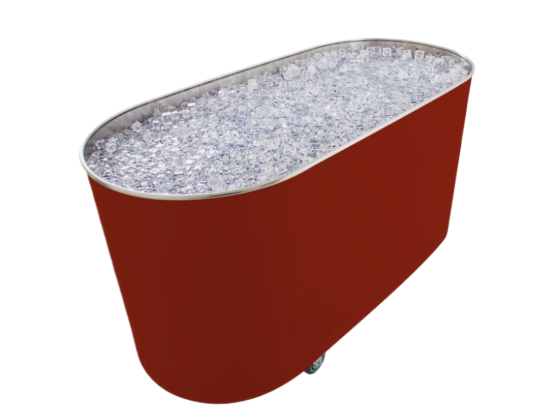
Mobile is the right answer only when the room has another job, and it is worth being honest about how often the unit will really move. Casters add a capability you pay for and then have to maintain.
Ask how many times a year the tank needs to be somewhere else. If the honest answer is a handful of times per season, mobile earns its place, because clearing floor space for taping tables or a group class is a weekly reality in a shared training room. If the answer is once, when it was first positioned, a stationary unit is simpler and there is less to service.
Two constraints come with the choice. A mobile tank is repositioned when drained, not rolled while full, so factor the drain and refill time into every move. And casters need a smooth, level path with no thresholds or floor transitions between the two positions. Walk that route pushing something heavy before you commit. Variants supplied with legs raise the frame instead of moving it, which suits a fixed room where staff need to clean and drain underneath.
What Do Fill, Drainage and Wet Floors Commit You To?
Water handling is the commitment buyers underestimate most, because it shows up every single day rather than once at installation. Decide who fills the tank, who drains it, where the water goes and how long the whole cycle takes before you sign anything.
A floor drain within hose reach changes the routine more than any feature on the unit. Without one, someone is running a hose to a sink or a mop basin on every change, and a cycle that eats half a shift quietly stops happening on schedule. Wet floors also bring their own requirements: slip protection, a place for used towels, and a cleaning protocol that covers the room, not just the equipment.
Check the disinfectants your facility has standardized on against the wetted surfaces of the unit you are considering, and confirm that staff can reach every internal surface without climbing in. Then plan the consumable side at the same time, since packs, covers and warming accessories from the hot and cold therapy supplies line are what keep the room working once the capital equipment is installed.
How Do You Compare Two Tanks That Look Nearly the Same on Paper?
Put them side by side on the same six lines and get the manufacturer specification sheet for both. Two tanks listed at the same capacity can behave completely differently in a room, which is exactly where lookalike comparisons go wrong.
- Entry and working height. A 90 Gallon Stationary Lo-Boy Cold Therapy Tank and a 90 Gallon Stationary Hi-Boy Cold Therapy Tank hold the same water in a different shape, which changes how a patient gets in and which limbs the tank suits.
- Footprint and clearance. Compare the floor area each one occupies plus the working room a clinician needs on the access side and the clearance the lid requires.
- Filled weight. Take this from the manufacturer specification, not from the capacity, and hand it to facilities if the room is above grade.
- Frame configuration. A 105 Gallon Stationary Lo-Boy Cold Therapy Tank and a 105 Gallon Stationary Lo-Boy w/Legs Cold Therapy Tank differ in how you clean and drain underneath.
- Drain and fitting position. Which side the fitting sits on decides where the hose runs every day.
- Serviceable parts and lead time. Ask which components are available separately and what the wait looks like on each.
If two units still look equal after that, the tie breaker is availability, because a tank that ships now beats a marginally better one that arrives after the room is meant to open.
Which Mistakes Cause Returns and Stranded Equipment?
Almost every problem in this category traces back to one of six shortcuts, and all six are avoidable in an afternoon.
- Buying on gallons alone. Capacity without profile tells you nothing about how a patient enters the tank or how much floor it takes.
- Assuming mobile means movable when full. It does not. Plan the drain time into every reposition.
- Skipping the freight conversation. These units ship by freight. Confirm dock or liftgate needs, door widths and who moves the crate inside the building before you order, not on the morning of delivery.
- Not checking disinfectant compatibility. Discovering that your standardized cleaner is unsuitable for the wetted surface after installation leaves you with a protocol problem and no easy fix.
- Treating floor loading as a formality. Above grade or on a raised floor, filled weight is a structural review, and it is faster to run it before the purchase order than after.
- Ordering before the room is committed. A tank delivered into an undecided space sits crated, and the clock on any return window runs while it sits.
What Belongs on a Pre-Order Checklist?
Work through this list and the order will be right the first time. Each line is a fact to confirm, not a preference to express.
- Room dimensions including clearance on the access side and above the lid.
- Drain location and fill source measured in hose length from where the tank will sit.
- Floor type, level and loading rating checked against filled weight from the manufacturer specification.
- Electrical supply, the voltage and circuit the unit requires and the position of a dedicated outlet.
- Delivery route, from street to room: dock or liftgate, door widths, corridor turns, elevator dimensions and who carries the crate.
- Approved disinfectant list checked against the wetted surfaces.
- Caseload profile, the body regions your clinicians immerse and the busiest hour of a normal week.
- Availability, lead time and warranty terms in writing before a room is scheduled to open.
Anything you cannot answer yet is a question for facilities, not a reason to delay the shortlist. Keep working from the cold therapy tank and moist heat equipment pages while the building questions get resolved.
What Should You Have Ready When You Call?
Have the room and the schedule in front of you, and a specification conversation takes one call instead of four. Bring the measurements, the drain distance, the outlet and circuit, the floor construction and whether the room is above grade, the delivery route with its narrowest point, your approved disinfectant list, your busiest hour and the body regions you treat, your target install date and your budget cycle.
Tell us what the room has to do besides hold the tank, because that single sentence usually decides stationary against mobile. Tell us if you are replacing an existing unit and what you did not like about it. And say whether you want the consumables quoted alongside the equipment so the department is ready to treat on day one rather than waiting on a second order.
Call 877-706-4480 toll free or 713-706-4480 local, or email inquiry@msecompany.net with your room dimensions and caseload, and we will work the short list with you.
Frequently Asked Questions
Is one large tank or two smaller tanks the better buy?
It depends on whether a single session needs the volume. If your work is distal limb and single limb immersion across several clinicians, two smaller tanks usually serve more patients, because one can be drained and cleaned while the other stays in service. One large tank is the answer when whole body immersion is a routine part of the caseload and a second unit would not be used.
How long does a tank take to be ready for use again after a refill?
That depends on the volume, the temperature of your incoming water and the chilling system on the specific unit, so ask for the manufacturer specification for the model you are considering rather than working from a general figure. What matters for planning is that a larger volume takes longer on every part of the cycle, so build the drain, clean, refill and cool down window into the treatment schedule.
Who inside our organization should sign off before we order?
In a hospital or larger group, expect facilities to review drainage, floor loading and electrical supply, infection prevention to review cleaning protocol compatibility, and biomedical engineering to review service and parts. In a private clinic the same questions still apply, they just land on the owner and the landlord. Getting those answers early is what keeps a capital request moving.
What does delivery day look like for equipment this size?
Plan it like a project rather than a parcel. Confirm in advance whether the carrier needs a dock or a liftgate, measure the narrowest point on the route from the street to the room, and name the person who is receiving the crate and moving it inside. Clear the route and the room beforehand, and schedule it for a time when the corridor is not part of a clinic session.
How should we budget for running a tank, not just buying one?
Count the things that recur: water and the labor to change it, electricity, cleaning supplies, the covers and consumables the room uses, and the parts you will eventually replace such as casters, drain fittings and lids. Ask which of those are available separately and what the lead time looks like on each, and ask what the manufacturer warranty terms cover before you compare two units on purchase price.
Can you quote the tank and the consumables it will need together?
Yes. Tell us the model you are considering and the treatment volume you expect, and we can quote the equipment alongside the packs, covers, wraps and warming accessories the room will consume, so nothing is missing when the unit is commissioned. Call 877-706-4480 or 713-706-4480, or email inquiry@msecompany.net.
Ready to Shop Hot & Cold Therapy Equipment?
Browse the Hot & Cold Therapy Equipment line, or go up to all rehabilitation equipment. Toll free 877-706-4480 | Local 713-706-4480 | inquiry@msecompany.net
Take This Guide With You
The full Hot & Cold Therapy Equipment buying guide as a printable PDF, with the comparison points and the pre-order checklist. Share it with facilities, purchasing or whoever signs off.