
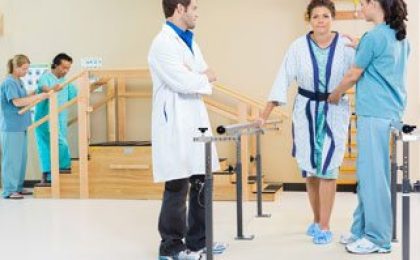
Fitness & Rehab Merchandise
Balance boards and beams, exercise pulleys, hand grip dynamometers, mat and platform tables, stretching equipment and traction therapy for rehab clinics, hospital therapy departments and home recovery.
Home › Rehabilitation Equipment & Products › Fitness & Rehab Merchandise
Rehab Exercise Equipment for Therapy Departments
Rehab exercise equipment is the working gear a therapy department uses for balance, strength, range of motion, measurement and positioning. This line covers balance boards and beams, exercise pulleys and shoulder wheels, hand grip dynamometers, mat tables and platform tables, stretching equipment and traction therapy equipment. Clinicians use these items to grade exercise difficulty, to measure and document progress, and to position patients for floor based work and transfers. Buyers include outpatient physical therapy clinics, occupational therapy suites, hospital rehab departments, skilled nursing facilities, pediatric therapy programs, athletic training rooms and patients building a home recovery setup on a clinician’s instruction.
Shop Fitness & Rehab Merchandise by Type
Select a line to see what is available, or go up to all rehabilitation equipment.
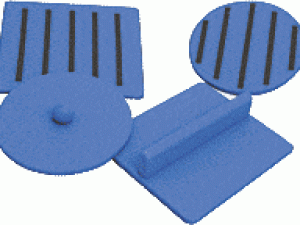
Balance Boards
Rocker and vestibular boards, beams and balancing stools for standing and seated balance work.
Exercise Pulleys
Wall station shoulder wheels and pulley units used for graded upper extremity range of motion.
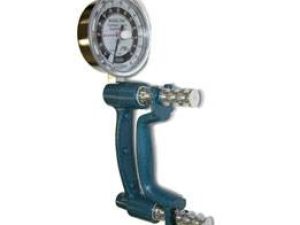
Hand Grip Dynamometers
Grip strength instruments for documenting hand function, including the Collins Dynamometer Adult.
Mat Tables & Platform Tables
Hardwood, folding and powered Hi-Lo platforms in 4ft, 5ft and 6ft widths for floor based therapy.
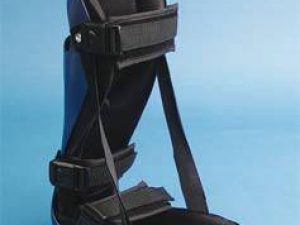
Stretching Equipment
Positioning and stretching aids for ankle and lower extremity programs, including the Ankle Exerciser.
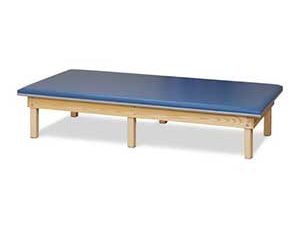
Traction Therapy
Clinical traction equipment used under a treating clinician's plan of care, including the TX Traction Unit System.
Not Sure Which to Choose?
Our Fitness & Rehab Merchandise Buying Guide walks through the decisions that actually determine the outcome: who is buying, what to compare, the mistakes that cause returns, and a pre-order checklist.
What Is Rehab Exercise Equipment and How Is It Used in Clinical Settings?
Rehab exercise equipment is the movable therapy gear that sits between the exercise mat and the powered modality cart: boards, wheels, instruments, platforms and positioning aids a clinician reaches for during a treatment session. Most of it is unpowered, which makes it durable, easy to clean and straightforward to move between rooms.
In a session the clinician grades the task to the patient. Physical therapists, occupational therapists and athletic trainers work on balance and postural stability, on strength, endurance and the muscles around a joint, on core control, on flexibility and range of motion (ROM), and on the exercises a patient has to relearn. Physiotherapy, conditioning and injury prevention programs use these same equipment families. A Rocker Square Balance Board or Vestibular Balance Board Physical Therapy Rehab introduces controlled instability for standing balance work. An Axial Resistance Shoulder Wheel supports graded upper extremity range of motion at a wall station. A Collins Dynamometer Adult records a grip strength measurement into the chart. A Hardwood Mat Platform 4ft/5ft W gives the patient a firm, low surface for floor based work.
Which item is used with which patient, at what resistance level and for how long, is the treating clinician’s decision and is documented in the plan of care. MSEC’s role is the supply side: specifying durable medical equipment that suits the room, the caseload and the infection control protocol the facility already runs.
What Types of Rehab Exercise Equipment Are Available and How Do the Subcategories Differ?
They differ by whether the item loads a task, measures a result, supports the patient or delivers a clinical treatment. Sorting them that way makes budgeting and room planning much simpler.
- Balance Boards. These load standing and seated balance tasks with controlled instability. Rocker Square Balance Board, Vestibular Balance Board Physical Therapy Rehab, Adjustable Balancing Tee Stool Physical Therapy Rehab and the Child Convertible Balance Beam Set for Physical Therapy Rehab. Small, portable, usually bought in sets so several patients work at once.
- Exercise Pulleys. The Axial Resistance Shoulder Wheel loads upper extremity range of motion at a fixed wall station, so it consumes wall rather than floor.
- Hand Grip Dynamometers. The Collins Dynamometer Adult measures rather than loads. It produces a number for the record, which puts it in a different budget conversation from exercise equipment.
- Mat Tables and Platform Tables. These support the patient. They are the structural item in the group, they carry weight, and they are the one thing here that usually ships freight.
- Stretching Equipment. The Ankle Exerciser Physical Therapy Rehab positions the ankle and lower extremity for a stretching or range of motion program set by the clinician.
- Traction Therapy. The TX Traction Unit System is clinical treatment equipment operated under a plan of care, with setup and parameters decided by the treating clinician rather than the equipment buyer.
Most departments build from the mat platform outward: it is the largest item and the one the rest of the room works around.
How Does This Line Differ From Cardio, Strength and Modality Equipment?
This line holds the unpowered, clinician handled items. The powered machines, the loaded steel and the electrotherapy modalities sit in separate MSEC lines, and knowing which line a product lives in saves a purchasing cycle.
- Cardio equipment covers the machines a patient works on for endurance: treadmills, upright and recumbent exercise bikes, elliptical cross trainers and stair steppers. Those are specified on footprint, power and service contract, not on the criteria used here, and they sit in the Cardio Equipment line.
- Weight lifting and strength training equipment covers benches, press racks and selectorized machines for shoulder press, incline press, seated row, leg extension and leg curl. Weights and racks carry a floor loading question this line does not, and they sit in the Weight Lifting Equipment line.
- Therapeutic devices and modalities cover powered treatment units: therapeutic ultrasound, shortwave diathermy, therapeutic laser, and electrotherapy including neuromuscular electrical stimulation (NMES) and transcutaneous electrical nerve stimulation (TENS). Those are operator documented devices with consumable electrodes and cables, and they sit in the Therapeutic Devices line.
- Soft goods and small tools such as resistance bands and tubing, exercise balls, foam rollers, free weights and dumbbells are the items buyers most often ask us to add to a rehab equipment order. Tell us what you want and we will quote what we can source rather than guess at what is on the shelf.
All of it can go on one purchase order. Ask the Pros at MSEC to quote across the lines so the room is specified once.
What Should a Clinic Look For in Balance Boards and Balance Training Equipment?
Look for a range of difficulty, a surface that suits your flooring and footwear policy, and cleanable construction, because balance equipment is handled constantly and shared across a caseload.
- Rocker Square Balance Board. A rocker geometry that moves in a defined plane, a common starting point for standing balance work.
- Vestibular Balance Board Physical Therapy Rehab. Configured for vestibular and balance programs where the clinician wants a different instability characteristic.
- Adjustable Balancing Tee Stool Physical Therapy Rehab. Brings balance work into seated positions and adjusts, which extends its use across patient heights.
- Child Convertible Balance Beam Set for Physical Therapy Rehab. A pediatric beam set that converts, so one purchase covers more than one level of difficulty in a children’s program.
Two practical points decide satisfaction. First, confirm the contact surface against your floor: a board that slides on a hard floor needs a mat under it, and safety in a balance area is a floor and footwear question as much as an equipment one. Second, confirm cleaning compatibility, since every patient stands on these and they have to be wiped down in line with your infection control policy. Weight capacity and dimensions should be taken from the manufacturer specification for each model rather than assumed across the group.
What Are Mat Tables and Platform Tables Used For, and How Do the Models Compare?
Mat tables and platform tables give the patient a firm, low, wide surface for floor based exercise, mat work, transfer practice and treatment in supine, prone or long sitting positions. They are the largest and longest lived purchase in this line, and the choice comes down to width, height adjustment, surface and whether the unit folds away.
| Model | Widths listed | Adjustment listed | Capacity listed |
|---|---|---|---|
| Hardwood Mat Platform 4ft/5ft W | 4 ft, 5 ft | None listed | Confirm on specification |
| Hardwood Space Saving Folding Mat Platform 4ft/5ft W | 4 ft, 5 ft | Folding | Confirm on specification |
| Hi-Lo Adjustable Mat Platform w/Foot Control 4ft/5ft/6ft W | 4 ft, 5 ft, 6 ft | Hi-Lo adjustable, foot control | Confirm on specification |
| Electric Hi-Lo Upholstered Mat Table 1000/lb Capacity | Not listed | Electric Hi-Lo | 1000/lb Capacity |
Every figure above comes from the product name as the manufacturer states it. Where a column reads confirm on specification, we will pull the figure from the manufacturer documentation for you.
Width is the decision most often regretted. A 4 ft platform is narrower to work around than a 6 ft platform, but a wider surface gives the clinician room to kneel beside a patient during mat work. Height adjustment matters where transfers happen and the surface has to meet a wheelchair seat height. Measure the room before committing.
What Does a Hand Grip Dynamometer Measure and Who Uses One?
A hand grip dynamometer measures grip force so a clinician can record it in the patient’s chart and compare it across visits. It is a measuring instrument, not an exercise device.
Rehabilitation professionals use grip strength measurement across physical therapy, occupational therapy and hand therapy, in athletic training rooms, in work conditioning and in functional capacity documentation. The instrument produces a number. Choosing the testing protocol and interpreting the result are the clinician’s responsibilities.
When buying, the questions are practical. Confirm the measuring range and units the model reports, how it is read, and whether the handle position suits the hand and wrist sizes in your caseload. Ask about the manufacturer’s calibration or verification guidance, since an instrument that has drifted produces documentation you cannot rely on. Confirm the cleaning agents permitted on the handle, because every patient grips it. The Collins Dynamometer Adult is our adult configuration in this subcategory. Take the specification from the manufacturer’s documentation for the exact model rather than from a general description.
What Is Traction Therapy Equipment and How Is It Specified?
Traction therapy equipment applies a controlled mechanical pull through a harness or halter under a treating clinician’s plan of care, and the TX Traction Unit System is the unit listed in this subcategory. Whether traction is appropriate for a patient, and at what parameters, is a clinical decision that sits entirely with the treating clinician.
From a purchasing standpoint, traction equipment is specified more like a modality unit than like merchandise. Confirm the electrical supply the manufacturer states and whether a receptacle is available where the unit will live. Confirm which table or surface the unit is intended to be used with, since a traction unit and its treatment surface are usually specified together. Confirm which harnesses, halters, belts and accessories are included and which are separate line items, because these are patient contact consumables with their own reorder cycle.
Also confirm the cleaning protocol for every patient contact component, the availability of serviceable parts, and the operator documentation that ships with the unit. MSEC does not provide guidance on traction parameters or patient selection, and nothing on this site should be read as a statement about any device’s regulatory status.
What Construction and Material Standards Are Required?
Confirm weight capacity, frame construction, upholstery specification and adjustment range against the manufacturer documentation for the exact model, because several items in this line carry patient weight and all of them meet a cleaning protocol daily.
- Weight capacity. Take the stated figure for the specific configuration. The Electric Hi-Lo Upholstered Mat Table is listed at 1000/lb Capacity; do not assume any other item shares that figure.
- Frame and surface. Hardwood platforms and upholstered tables age differently. Hardwood is hard wearing and easy to wipe. Upholstery is more comfortable but must be inspected for splits, since a broken seam cannot be properly disinfected.
- Upholstery and infection control. Confirm which disinfectants the manufacturer permits on the upholstery before you standardize a facility wide product.
- Casters and mobility. If an item is intended to move, confirm whether it has casters and whether they lock, and check that they suit your flooring.
- Adjustment and controls. On Hi-Lo models, confirm the adjustment range, how the control is operated and whether the control and actuator are serviceable parts.
- Folding hardware. On folding platforms, the hinge and latch see the most cycles and should be replaceable.
- Durability. Judge build quality on the parts that take the cycles: hinges, latches, casters, controls and upholstery seams.
How Should Medical Equipment Buyers Evaluate Rehab Exercise Equipment?
Evaluate the large items on installed cost and service life, and the small items on how many patients they keep busy per dollar. These are two different buying decisions inside one category.
- Start with the platform. Mat tables and platforms set the room layout and the budget. Decide powered against manual, hardwood against upholstered, and fixed against folding before anything else.
- Match width to the work. The 4 ft, 5 ft and 6 ft widths offered across the platform models change both the clinical working space and the floor the unit consumes.
- Buy small items in usable quantity. One balance board occupies one patient. A small set lets a clinician run a circuit or a group session.
- Treat measuring instruments separately. A dynamometer is documentation equipment and should be evaluated on readability and the manufacturer’s calibration guidance.
- Check cleaning compatibility across the whole purchase. Mixed surfaces that need different disinfectants create a protocol problem for your staff.
- Confirm serviceable parts. Upholstery, casters, actuators, foot controls, hinges and latches should be orderable years after purchase.
- Plan storage. Boards, beams and stools have to live somewhere between sessions, and a room with no storage ends up with equipment on the floor.
- Plan freight and lead time for the large items. Platforms and powered tables ship freight and need a route from the dock to the room. Ask for lead time in writing when you request the quote.
What Should a Facility Confirm Before Ordering Mat Tables and Rehab Exercise Equipment?
Confirm room dimensions, floor loading, power, freight access, cleaning compatibility and parts support before the purchase order is issued. Mat platforms and powered tables are the items that most often arrive and will not fit or will not go where they were meant to go.
- Room dimensions and clearance. Measure the platform footprint plus working space on the sides the clinician will use, and a clear path for a wheelchair to approach for transfers.
- Floor loading and surface. A mat table rated at 1000/lb Capacity plus a patient and a clinician is a concentrated load. Confirm your floor construction with facilities, and check that casters or feet suit your flooring.
- Power. Powered Hi-Lo tables and the traction unit need a receptacle. Confirm the manufacturer’s stated electrical requirement, the receptacle location and whether cord routing crosses a walking path.
- Delivery and freight access. Confirm dock availability, liftgate need, door widths, corner turns and elevator dimensions, and name a receiving contact to inspect the shipment.
- Assembly. Ask what assembly is required and who performs it.
- Availability and lead time. Confirm both before the order is issued, because a platform on backorder holds up a room fit out.
- Cleaning protocol compatibility. Verify your standard disinfectant against upholstery, hardwood, board surfaces and instrument handles.
- Serviceable parts and records. Establish which parts are replaceable, and record model and serial numbers in your equipment register at receiving.
How Is This Equipment Cleaned and Kept in Service?
It is cleaned between patients with a disinfectant the manufacturer permits for that surface, and kept in service by inspecting upholstery, hardware and moving parts on a schedule. Nearly everything in this line is direct patient contact equipment, so infection control drives the routine.
Upholstered mat tables need the surface wiped after each patient and inspected regularly for splits and seam failures. Once the covering is broken it cannot be reliably disinfected and becomes a replacement item, so budget for re upholstery or replacement cushions as a normal part of ownership. Hardwood platforms tolerate frequent wiping well, but confirm which agents the manufacturer permits on the finish. Balance boards, beams, stools, ankle exercisers and dynamometer handles are handled or stood on by every patient and belong on the same wipe down protocol as any other shared contact surface.
Mechanically, check casters and locks, folding hinges and latches, adjustment mechanisms, foot controls and any harness or strap on traction accessories. Keep the operator documentation with the equipment record, log the model and serial number, and note inspections and parts changes. For replacement upholstery, casters, controls or accessories, call 877-706-4480 toll free or 713-706-4480 local, or email inquiry@msecompany.net with the model and serial number.
Frequently Asked Questions
What width mat platform should I order?
Match width to the work the clinician does on it and to the room you have. Platform models are offered in 4ft and 5ft widths, and the Hi-Lo Adjustable Mat Platform w/Foot Control adds a 6ft option. A wider surface gives a clinician room to kneel beside a patient during mat work, while a narrower one leaves more circulation space. Send us your room dimensions and we will help.
What is the difference between a hardwood mat platform and an upholstered mat table?
Hardwood platforms give a firm, hard wearing surface that wipes down easily and has no seams to fail. Upholstered tables such as the Electric Hi-Lo Upholstered Mat Table 1000/lb Capacity are more comfortable for longer sessions but need regular inspection for splits, since damaged upholstery cannot be properly disinfected. Consider your session lengths, your cleaning protocol and your replacement budget.
Do I need a powered Hi-Lo table or is a fixed height platform enough?
Height adjustment matters most where transfers happen and the surface has to meet a wheelchair seat height, or where clinicians of different heights share the room. The Hi-Lo Adjustable Mat Platform w/Foot Control lets a clinician change height without releasing the patient. If your caseload is mostly ambulatory and the table is used at one working height, a fixed hardwood platform is simpler and has fewer parts to service.
Do mat platforms and powered tables ship freight?
Yes. These items are large and heavy, so they move as freight rather than parcel and may require a liftgate or inside delivery if you have no dock. Before ordering, confirm door widths, corner turns, elevator dimensions and the route from the delivery point to the treatment room, and name a receiving contact to inspect the shipment on arrival.
Do you carry treadmills, exercise bikes and free weights as well?
Yes, but not in this category. Treadmills, upright and recumbent exercise bikes, elliptical cross trainers and stair steppers sit in the Cardio Equipment line, and benches, press racks and selectorized strength machines sit in the Weight Lifting Equipment line. Ultrasound, diathermy, laser and electrotherapy units including NMES and TENS sit in Therapeutic Devices. We will build one quote across all of them so the room gets specified once.
How many balance boards should a clinic buy?
Buy for the number of patients who work at once, not for one at a time. A single board occupies one patient, while a small set lets a clinician run a circuit or a group session and offers different difficulty levels. Pediatric programs often add the Child Convertible Balance Beam Set for Physical Therapy Rehab so one purchase covers more than one level.
Does a hand grip dynamometer need calibration?
Follow the manufacturer’s calibration or verification guidance for the model you own, because a measuring instrument that has drifted produces documentation you cannot rely on. Ask for that guidance before purchase and build the interval into your equipment schedule. Also confirm which cleaning agents are permitted on the handle, since every patient grips it directly.
Can MSEC recommend which equipment a particular patient needs?
No. Choosing equipment for a patient, setting difficulty and deciding on treatment such as traction are the treating clinician’s decisions, and nothing in our catalog is clinical guidance. What we can do is match products to your room dimensions, floor and power situation, caseload size, infection control protocol and budget, and confirm specifications against manufacturer documentation.
Related Rehabilitation Categories
Move up to the full rehabilitation silo, or across to the lines clinics order alongside this one.
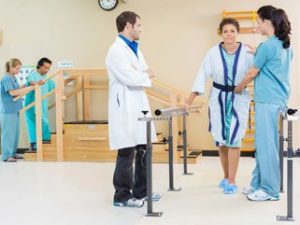
Rehabilitation Equipment & Products
The full rehabilitation silo: every line MSEC carries for therapy and recovery.
Therapeutic Devices
Electrotherapy, ultrasound and stimulation units with their electrodes and consumables.
Physical Therapy Equipment
Parallel bars, rehab work tables and training stairs for gait and function work.
Hot & Cold Therapy Equipment
Heating and chilling units that hold packs and water at treatment temperature.
Hot & Cold Therapy & Supplies
Packs, covers and wraps: the consumable side of thermal therapy.
Cardio Equipment
Treadmills, bicycles, ellipticals and stair climbers built for rehab gyms.
Weight Lifting Equipment
Weight machines and racks for progressive resistance in small increments.
Taping & Chiropractic Tables
Chiropractic and treatment tables in fixed and adjustable heights.
GSA contract holder • Ships nationwide • From Patient to Doctor & Everyone In Between
Talk to a Medical Equipment Specialist
Tell us the facility, the room and the caseload and we will put the right list together. Toll free 877-706-4480 | Local 713-706-4480 | inquiry@msecompany.net