

Hospital Transportation & Patient Transport Equipment
How patients move through a facility: manual wheelchairs in standard, PVC and bariatric builds, hospital gurneys and transport stretchers with their parts, shower trolleys for bathing transfers, and MRI safe wheelchairs for imaging suites.
Home » Hospital & Durable Medical Equipment » Hospital Transportation & Patient Transport Equipment
Moving Patients Is Its Own Equipment Category
Every facility runs a quiet logistics operation all day long: admissions to rooms, rooms to imaging, imaging to therapy, therapy to discharge. The equipment that does that work earns its keep through turning radius in a crowded hallway, wheel locks an aide can set with a foot, and weight ratings that match the population the facility actually serves. The lines below split the job by task, wheeled seating for ambulatory transfers, flat transport for patients who stay supine, bathing transfers, and the imaging suite where ferrous metal cannot go.
Shop The Transport Lines by Type
Six lines split by task: seated transfers, flat transport, bathing and imaging.

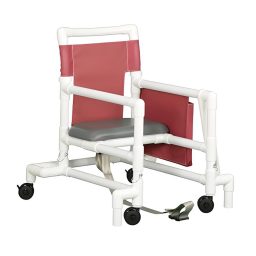
Manual Wheelchairs
Fleet chairs in 16, 18 and 20 inch seats, PVC and accessory lines.
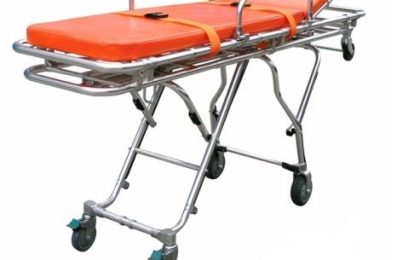
Hospital Gurneys & Stretchers
Routine transport flats, transfer stretchers and MS3C parts.
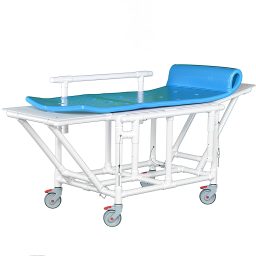
Shower Trolleys & Gurneys
Bathing transfers for patients who cannot use a bench.
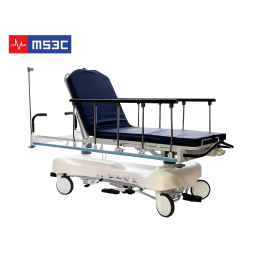
Bariatric Transport Stretchers
Higher weight ratings and wider decks for flat transport.
Bariatric Manual Wheelchairs
Reinforced wide frames past the 20 inch standard line.
MRI Wheelchairs
Non ferrous chairs for use past the magnet line.
Matching The Transport Line To The Job
Wheelchair purchases usually come down to seat width and construction: 16, 18 and 20 inch seats cover most adult populations, PVC builds handle wet and corrosive environments, and the bariatric line carries higher weight ratings with wider frames. Flat transport splits between hospital gurneys for routine moves and transport stretchers for transfers between departments, with the MS3C parts line keeping an existing stretcher fleet in service instead of replacing it. Shower trolleys bring the bathing room to patients who cannot transfer to a bench, and MRI safe wheelchairs are built without ferrous components for use past the magnet line.
Frequently Asked Questions
What is the difference between a hospital gurney and a transport stretcher?
In this catalog, gurneys are the general purpose wheeled flats a facility uses for routine patient movement, while transport stretchers are specified for moving patients between departments and ride on larger casters with transfer-friendly deck heights. Both lines list deck size, height range and weight rating on each product page.
Which wheelchair seat width fits most facility fleets?
The 18 inch seat is the common fleet standard for adult populations, with 16 inch chairs for smaller adults and pediatric crossover use and 20 inch chairs for larger patients. Facilities that serve a wide population usually stock a mix, and the bariatric line extends past the 20 inch standard frames.
Why choose a PVC wheelchair?
PVC frames do not corrode, which suits pool decks, hydrotherapy areas, shower rooms and coastal facilities where a steel frame ages quickly. They also contain no ferrous metal, which is why several PVC models cross over into MRI suite use.
Can MSEC supply transport equipment on a GSA contract?
Yes. MSEC holds a GSA contract and supplies government and institutional facilities. Call 877-706-4480 or email inquiry@msecompany.net with the equipment list and a specialist will quote it on the contract.
Related Hospital Equipment Categories
The other equipment families in the Hospital department.
Medical Carts
390 products
Utility & Janitorial Carts
208 products
Pediatric Furnishings
149 products
Medical Tables & ENT Chairs
133 products
Hospital Room Lights
111 products
Surgical & Exam Lighting
85 products
Medical Office Cabinets
68 products
Bariatric Equipment
58 products
Talk to a Medical Equipment Specialist
Toll free 877-706-4480 | Local 713-706-4480 | inquiry@msecompany.net