Emergency Evacuation Chairs
When elevators are out of service, the stairwell is the only way down, and an evacuation chair is how a person with limited mobility gets there. Nine models with manufacturer specifications, rated loads and folded dimensions on every product page.
Home » Emergency Medical Equipment » Emergency Evacuation Chairs
Evacuation Chairs for Buildings, Facilities and Response Teams
An emergency evacuation chair is a seated carry built for one specific job: moving a person down stairs during an emergency, when elevators are shut down and walking is not an option for everyone in the building. Fire codes and emergency action plans are why this category exists; multi-story workplaces, schools, hospitals, hotels and public buildings keep evacuation chairs staged in stairwells so that mobility-limited occupants have a planned way out rather than an improvised one. The nine models below span simple carried chairs through track-equipped designs, each with the manufacturer’s rated load, deployed and folded dimensions, and unit weight on its product page.
Shop Emergency Evacuation Chairs
Everything MSEC carries in Emergency Evacuation Chairs, shown in full. Specifications are supplied by the manufacturer. For current pricing, lead time or a quote on a purchase order, call toll free 877-706-4480.
-
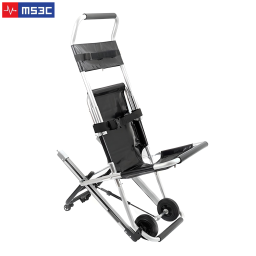
Quick ViewSelect optionsManual Lightweight Evacuation Stair Chair 500lb Capacity
Item# MS3C-330ML$1,995.00Original price was: $1,995.00.$925.00Current price is: $925.00. -
Quick ViewSelect options -
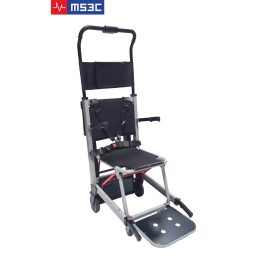
Quick ViewSelect optionsLightweight Stair Evacuation Chair 350lb Capacity
Item# MS3C-100TS$750.00Original price was: $750.00.$475.00Current price is: $475.00. -
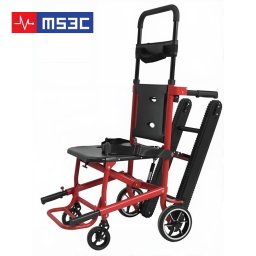
Quick ViewSelect optionsBattery Powered Stair Climb Assist Chair 400lb Capacity
Item# MS3C-300TSB, MS3C-330B$2,895.00Original price was: $2,895.00.$1,399.00Current price is: $1,399.00. -
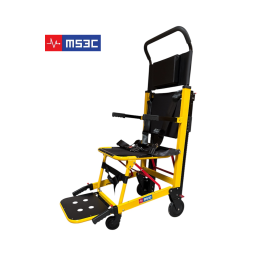
Quick ViewSelect optionsManual Aluminum Alloy EMS Evacuation Stair Chair 400lb Capacity
Item# MS3C-300TS$1,895.00Original price was: $1,895.00.$899.00Current price is: $899.00. -
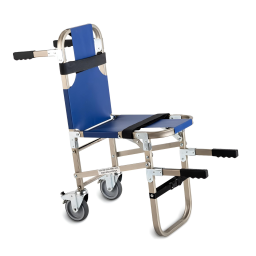
Quick ViewSelect options -
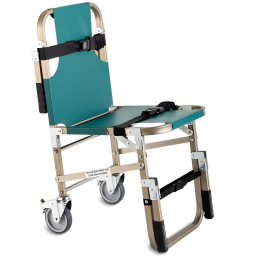
Quick ViewSelect optionsAluminum Emergency Rescue Evacuation Chair
Item# XX-008JSA $940.00 – $1,055.71Price range: $940.00 through $1,055.71 -
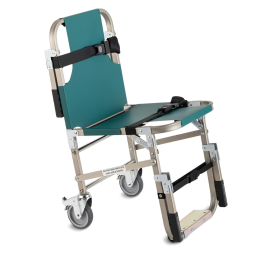
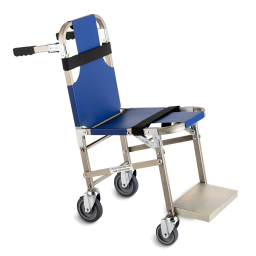
Quick ViewSelect optionsAluminum Emergency Rescue Evacuation Chair w/ 4 Wheels
Item# XXX-008JSA $1,275.59 – $1,457.51Price range: $1,275.59 through $1,457.51 -
Quick ViewSelect options
Choosing Between Models?
The Evacuation Chairs Buying Guide walks through the decisions behind a emergency evacuation chairs purchase: a comparison method, the mistakes that cause returns, and a pre-order checklist, with downloadable PDF guides.
Who Is Required to Have Evacuation Chairs?
The requirement usually arrives through an emergency action plan rather than a product mandate. Employers with multi-story workplaces write evacuation procedures that must account for every occupant, including employees and visitors who cannot use stairs unassisted, and an evacuation chair staged on each upper floor is the standard way plans answer that question. Schools, healthcare facilities, hotels and assembly buildings face the same planning obligation through their own codes and accreditation requirements. The practical purchasing consequence: the building’s plan defines how many chairs and where, and the buyer’s job is choosing which model fills those positions.
Carried Chairs vs Track Chairs: What Is the Difference?
A carried evacuation chair is exactly that: a seated frame with handles, moved down the stairs by two or more trained assistants who take the full load. A track chair adds a rubber track assembly that contacts the stair nosings, so the chair descends under control with the operator guiding rather than lifting. Carried designs cost less, weigh less and store smaller. Track designs ask far less strength of the operator and keep the descent controlled on long stair runs, which is why high-rise buildings and facilities with small or untrained response teams tend to specify them. Both classes are represented in the grid above.
How Many Operators Does an Evacuation Chair Need?
Read the manufacturer’s operating documentation on this one before buying, because the answer is a design property, not a preference. Track-equipped chairs are generally operated by a single trained person on the descent, with a second assistant recommended for transfers and doorways. Carried chairs need two operators as a floor and four on long or crowded stair runs. The staffing answer has to match the building’s real daytime population: a chair that assumes two strong trained operators is the wrong specification for a floor where one designated marshal may be the entire response.
What Do Rated Load and Chair Weight Mean in This Category?
Rated load is the manufacturer’s ceiling for the seated occupant, and buildings should specify against their population rather than an average: many buyers standardize one capacity class above what they expect. Chair weight matters in the opposite direction, because a staged chair is lifted off its wall bracket and maneuvered through doors before the stairs even start. The lighter carried chairs run under twenty pounds; track chairs run heavier for the mechanism they carry. Both numbers sit in every specification table above, and reading them together against the intended operators is the core of the purchase decision.
Where and How Should Evacuation Chairs Be Staged?
The working standard is inside or immediately beside the stairwell on every floor above ground level, wall-mounted on the manufacturer’s bracket, visible, signed and unobstructed. A chair in a locked closet or a distant storage room is not part of the evacuation plan in any meaningful sense. Most models in this line fold flat against the wall on their brackets, and the folded depth in the specification table is what determines whether a chair fits the stairwell landing without intruding on the egress path.
What Training Do Building Teams Need?
Every manufacturer in this category publishes operating instructions, and the buildings that get value from these chairs pair the purchase with hands-on practice: designated floor marshals deploy the chair from its bracket, transfer a volunteer, and run a controlled descent at least annually. The purchasing tie-in is simple: buy enough chairs to train with, keep the laminated quick-reference card with each staged unit, and put the chair on the same inspection calendar as extinguishers so straps, wheels and tracks get looked at on a schedule.
How Do Evacuation Chairs and Stair Assist Chairs Differ?
The terms overlap in daily use, and the useful distinction is duty. Chairs in this category are staged building equipment: bought for readiness, deployed rarely, optimized for storage and untrained-operator simplicity. The MS3C stair assist line next door is built around EMS and patient-transport duty, where crews take patients up and down stairs routinely and the chair is working equipment rather than staged equipment. A building outfits from this category; an ambulance service or facility transport team usually shops the stair assist line, and the related cards below link both directions.
How Should a Facility Buy Chairs for a Whole Building?
Multi-floor purchases go best as one specified order: the same model on every floor, brackets included, signage included, delivered together. Standardizing on one model means one training session covers every floor and one spare-parts arrangement covers the fleet. MSEC quotes multi-unit orders with consolidated freight, accepts purchase orders, and holds a GSA contract for government and public-sector buildings. Call toll free 877-706-4480 with the floor count and the team returns a per-unit quote the same way it does for EMS fleets.
Frequently Asked Questions
What is an emergency evacuation chair?
A seated stair-descent carry staged in buildings so people with limited mobility can be moved down stairwells during emergencies when elevators are out of service. Models are either carried by assistants or equipped with tracks that control the descent.
Are evacuation chairs required by law?
Requirements arrive through emergency action plans, fire codes and accessibility planning rather than a single product law, and multi-story employers, schools and healthcare facilities routinely find their plans require staged evacuation equipment. Your plan and local authority define the count and placement.
How much weight can an evacuation chair hold?
Each model publishes a manufacturer rated load on its product page, and buildings commonly specify one capacity class above their expected population to keep margin.
Can one person operate an evacuation chair?
Track-equipped models are generally designed for single-operator descent with an assistant recommended for transfers. Carried models require at least two operators. The manufacturer’s operating documentation governs, and it is linked from each product page.
Where should evacuation chairs be mounted?
On their wall brackets inside or immediately beside each upper-floor stairwell, visible and signed, with the folded chair clear of the egress path. Folded depth is listed in each specification table for landing planning.
Does MSEC quote evacuation chairs for entire buildings?
Yes. Multi-unit quotes with consolidated freight and purchase order terms are routine, and MSEC is a GSA contract holder for government and public-sector purchases.
Related Emergency Medical Categories
Move up to the full emergency line or across to the equipment families bought alongside this one.
MS3C Stair Assist Evacuation Chairs
Track-equipped chairs for working EMS stair duty.
MS3C Stair Chair Parts & Accessories
Tracks, wheels, straps and hardware for the chair line.
MS3C Climbing Hand Truck Trolleys
Battery powered stair climbers for heavy loads.
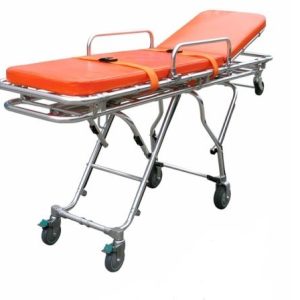
Emergency Medical Equipment
The full emergency line from transport to first aid.
GSA contract holder • Ships nationwide • From Patient to Doctor & Everyone In Between
Talk to a Medical Equipment Specialist
Toll free 877-706-4480 | Local 713-706-4480 | inquiry@msecompany.net