

Supports & Braces
Ankle supports, foam leg elevation and inflatable splint kits, plus knee, wrist, elbow, shoulder, neck and back sourcing for clinics, hospital rehab departments, skilled nursing facilities and training rooms.
Home › Rehabilitation Equipment & Products › Supports & Braces
Medical Supports and Braces for Clinics, Facilities and Home Recovery
Medical supports and braces are wearable or applied devices that stabilize a joint, limit range of motion while tissue heals, or hold a limb in position. Clinicians fit them inside a plan of care for the knee, ankle, wrist, elbow, shoulder and back, and buyers run from hospital rehab departments and outpatient clinics to skilled nursing facilities and training rooms.
MSEC stocks this line under Rehabilitation Equipment and Products, including Ankle Supports plus positioning and immobilization items such as the Leg Elevator Full Foam 45° Angle and the Inflatable Air Splints Kit. Fit decides whether a brace is worn at all, so start at the manufacturer sizing chart.
Shop Supports & Braces by Type
Select a line to see what is available, or go up to all rehabilitation equipment.

Ankle Supports
Worn ankle and foot braces sized from a tape measurement read against the manufacturer chart.
Not Sure Which to Choose?
Our Supports & Braces Buying Guide walks through the decisions that actually determine the outcome: who is buying, what to compare, the mistakes that cause returns, and a pre-order checklist.
What Are Medical Supports and Braces and How Are They Used in Clinical Settings?
Medical supports and braces are devices applied to a limb or joint to stabilize it, restrict range of motion (ROM) during healing, or hold it in a chosen position. Clinicians fit them as one part of a plan of care, normally alongside exercise, manual therapy and patient education rather than on their own.
A clinical order names a body region and the finding behind it. Pain, swelling, inflammation, joint instability and limited mobility are what the treating provider documents before a brace is chosen, and the order may reference a sprain, a strain, a ligament injury, tendonitis or osteoarthritis management. Those are the clinician’s words rather than the supplier’s.
The same product families move through very different parts of a health system. A hospital rehab department may issue a support at discharge. An outpatient clinic fits supports during a treatment episode and refits them as swelling changes. An athletic training room keeps a spread of sizes on hand, because conditioning and injury prevention programs run by the training staff requisition braces alongside everything else athletes use. A skilled nursing facility leans on positioning devices that hold a limb steady in bed.
Because these are durable medical equipment (DME) items worn against skin for hours at a time, fit and comfort decide whether a brace stays on the patient. A support that pinches, migrates down the limb or has to be cinched past its intended range comes off within the first week.
Which Body Regions Do Medical Supports and Braces Cover?
Supports and braces are grouped by body region, because that is how a clinician writes the order and how buyers search. The major joints each carry their own measuring landmark and their own selection problem.
- Knee: the busiest region in the category. A knee brace with hinges holds the joint within a range the clinician sets, a knee support or knee sleeve applies compression around the joint, and a patella strap loads a single point below the kneecap. Knee braces and knee supports are measured at thigh and calf circumference, never at the kneecap. Order lines here reference ligament injuries, patellar tracking, knee injuries from sports and osteoarthritis management.
- Ankle and foot: ankle braces and ankle supports are measured around the ankle and calf, and ankle sprains are the most common reason one is ordered. This is the region MSEC lists online, under Ankle Supports.
- Wrist and hand: a wrist brace normally carries a removable stay along the palm side, and a wrist support or thumb design adds a thumb post. Both measure at wrist circumference, and hand dominance decides the side.
- Elbow: an elbow support is a sleeve worn over the joint, while a counterforce strap sits below it on the forearm. Tennis elbow and golfer’s elbow are the terms that appear most often on the order.
- Shoulder and arm: shoulder supports, slings and immobilizers are sized from a chest circumference and an arm length rather than from a joint measurement, and side is almost always specified.
- Neck: cervical collars are specified by neck circumference and by collar height, which is the dimension buyers most often forget to ask for.
- Back and abdomen: back supports, lumbar belts, abdominal binders and hernia belts size at waist or hip circumference. Posture and trunk stability are what the clinician is managing, and the fit behaves more like a garment than like a joint brace.
MSEC’s online listing here covers the ankle and foot region, plus lower limb positioning and whole limb immobilization. For a knee brace, wrist brace, elbow support, shoulder immobilizer, cervical collar or back support not shown, send the model and size range to inquiry@msecompany.net or call 877-706-4480 and we will confirm what we can source and the lead time.
What Types of Supports and Braces Are Available in This Line?
The line is organized around Ankle Supports, with positioning and immobilization items stocked at the category level. Those groups are selected in completely different ways, which is where most ordering mistakes start.
- Ankle Supports: worn devices for the ankle and foot complex. These are sized to the patient from a limb measurement, and they are where the sizing chart governs everything.
- Leg Elevator Full Foam 45° Angle: a full foam elevation support that holds the lower limb at a fixed angle. It is not strapped to the body, so it is chosen by the surface it sits on rather than by a circumference.
- Inflatable Air Splints Kit: inflatable splints that immobilize a limb temporarily. Selection is by limb segment rather than patient size, because the splint conforms as it is inflated. These end up in response bags, training rooms and transport kits.
Vocabulary overlaps across this market, and that overlap causes ordering errors. Buyers say brace, support, sleeve, wrap, strap, cuff, stabilizer and splint for products a manufacturer may catalog under orthopedic soft goods or orthotics. When you request a quote, describe the body region, the movement the clinician wants restricted and the measurement you took, rather than the word your facility happens to use.
What Is the Difference Between Compression, Stabilization and Immobilization?
They differ by how much movement the device allows. Compression products allow full movement and apply even pressure around a limb, stabilization products allow movement within a set range, and immobilization products hold a segment still. Buying the wrong one is costly, because a worn device is usually unreturnable.
- Compression: sleeves and wraps in an elastic knit or a neoprene laminate apply pressure around the circumference of a limb. Compression and elevation are used together in the early phase of recovery, and circulation is the reason fit is checked after application rather than assumed.
- Stabilization: stays, hinges and rigid shells set how much range of motion is available and hold alignment at the joint. Where a hinged brace allows it, that adjustment is a clinical decision made at fitting, not a shipping default.
- Immobilization: splints and immobilizers hold a segment still. The Inflatable Air Splints Kit conforms to the limb as it is inflated rather than being sized to a patient, which is why it suits unplanned use.
- Positioning: foam devices such as the Leg Elevator Full Foam 45° Angle hold a limb at a set angle in bed or in a chair, with no straps and no patient measurement at all.
- Offloading and protection: pads, cushioning and shells spread load across a wider area or protect a site from contact. Weight bearing status is set by the treating clinician, and the device follows it.
Settle this before the order goes in. The five groups are measured differently, cleaned differently and stocked in different quantities.
How Do You Measure for a Brace, and Why Does the Manufacturer Chart Beat the Size Label?
Measure the limb itself with a flexible tape at the landmarks the manufacturer names, then read that number against that manufacturer’s own sizing chart. Size labels are not standardized, so a medium from one maker covers a different circumference range than a medium from another. Clothing size, shoe size and body weight are not substitutes.
- Use a flexible tape measure. A rigid ruler, or string transferred to a ruler, adds error at exactly the point where a size boundary falls.
- Measure at the landmark the chart names. Charts differ on whether a circumference is taken at the ankle bones, above the joint, at the calf or at the thigh, and the same limb gives different numbers at each.
- Measure the limb being braced. Swelling, prior surgery and limb dominance mean left and right are often not the same size.
- Keep the tape snug, not tight, and record the measurement rather than just the size. Compressing soft tissue produces a smaller number and a brace that will not close on the patient.
- The chart belongs to the model, not the brand. Two models from one manufacturer can use different bands, and charts get revised, so work from the current manufacturer specification.
- Universal and one size items still have limits, and where a model is side specific, ordering the wrong side produces a device that cannot be fitted at all.
When a measurement lands on a boundary between two sizes, do not round by instinct. Call MSEC toll free at 877-706-4480 or local at 713-706-4480 with the number in hand and we will read it against the manufacturer specification for the model you are ordering.
What Materials and Construction Standards Should Buyers Evaluate?
Look at the material touching skin, the closure hardware, the structural elements, and whether any of it can be replaced without replacing the device. Those decide comfort, durability and whether the item survives a facility’s cleaning routine.
- Skin contact layer: elastic knits breathe and flex, neoprene laminates hold warmth and stretch less, and open cell foams sit between. Breathability and edge finishing drive whether a brace is tolerated for a full wear schedule. Where a patient has a known material sensitivity, ask us to confirm the content on the manufacturer specification sheet. We will not guess at material content.
- Closures and straps: hook and loop closures wear out first and collect lint, which is a real issue in a laundry heavy environment. Ask whether straps are replaceable and whether the design allows one handed application.
- Structural elements: stays, hinges, shells and stiffeners determine how much range of motion the device allows and how much stability it offers. Flexibility and rigidity are a trade, not a quality ranking. Confirm what is in a model against the manufacturer specification rather than assuming from the photograph.
- Foam, cushioning and covers: on positioning items such as the Leg Elevator Full Foam 45° Angle, the cover and seams protect the foam core, so cover condition is the practical service life limit.
- Air bladders and valves: on the Inflatable Air Splints Kit, the valve and the seams are the wear points, and any splint that will not hold air should come out of the kit.
How Should Medical Equipment Buyers Evaluate Supports and Braces for a Facility?
Evaluate on total cost per patient episode and on whether the right size is on the shelf when it is needed, not on the lowest unit price. A cheaper brace refitted twice costs more than the one that fit the first time, and clinician time is the expensive line item.
- Size coverage: does the model’s chart cover the patients you actually treat, or will a share of your population fall outside it?
- Body region coverage: a supplier who can quote knee, ankle, wrist, elbow, shoulder, neck and back products against one set of terms saves more administrative time than a small unit price difference on any one.
- Repeat availability: a model you can reorder in the same sizes for years is worth more than a slightly better device that disappears from supply.
- Serviceable parts: replaceable straps, liners and covers extend service life.
- Cleaning compatibility: confirm the manufacturer’s stated method matches your infection control protocol before you standardize.
- Par levels by size: set them from your own usage history rather than ordering an even spread. Real demand is never flat across a size curve. Track what you actually fit for one quarter, keep lead time inside the par level, and reorder before the last unit in your most used size goes out.
To price a size curve, check availability or set up a facility order, email inquiry@msecompany.net or call 877-706-4480 toll free or 713-706-4480 locally.
What Should a Facility Confirm Before Ordering Supports and Braces?
Confirm sizing, storage, cleaning compatibility, delivery access and replacement parts before the purchase order goes out. Nothing in this line needs a power connection and none of it triggers a floor loading review, so the pre order checks are about how stock is held, cleaned and replenished rather than about the building.
- Sizing data in hand: the current manufacturer sizing chart for each model, plus the measurements for any patient specific order.
- Storage space: soft goods are light but bulky. Foam elevation supports and splint kits take far more shelf volume per unit than their weight suggests.
- Delivery and freight access: individual items ship as parcels, but a facility restock can move to freight. If it does, confirm dock or door access, whether a liftgate is needed and who signs for the shipment.
- Cleaning protocol compatibility: check the manufacturer’s cleaning instructions against the disinfectant and laundering process your facility already uses.
- Serviceable parts: ask which straps, liners, covers and valves can be ordered separately, and add those part numbers to your reorder list at the same time as the device.
- Who owns the fit: name the clinician responsible for measuring and fitting, so the measurement is taken once by someone accountable for it.
How Are Supports and Braces Cleaned and Handled Between Patients?
Follow the manufacturer’s stated cleaning instructions for the specific model, because supports mix fabrics, foams, hardware and in some cases air bladders, and those materials do not all tolerate the same agents. There is no single cleaning method that is safe across the whole category.
- Separate single patient items from reissued items at the point of stocking. Infection control decisions are simpler when the two are not on the same shelf.
- Do not substitute a stronger disinfectant than the one the manufacturer lists. Aggressive agents degrade elastic, neoprene, adhesive and hook and loop closures long before the device looks worn.
- Protect foam cores with covers. On items like the Leg Elevator Full Foam 45° Angle the cover is the cleanable surface and the foam core is not, so a compromised cover takes the whole item out of service.
- Wipe down and inspect inflatable splints after use. Check that each splint in the Inflatable Air Splints Kit still holds air before it goes back in the bag, not in an emergency.
- Retire hook and loop that no longer grips. A closure that releases under load is a fit failure, not a cosmetic problem.
Who Decides Which Support or Brace a Patient Should Wear?
The treating clinician does. Which device a patient needs, how much range of motion should be limited, how long it is worn each day and when it is discontinued are clinical decisions made by the physician, therapist or athletic trainer managing the case, and they depend on the individual patient.
What MSEC does is the supply side. We can tell you what is in stock, read a measurement against the manufacturer sizing chart for a specific model, confirm what a manufacturer states about materials and cleaning, list available replacement parts and quote facility quantities. We do not select devices for patients, we do not provide fitting or treatment guidance, and nothing on this site should be read as a statement about any device’s regulatory status.
That split matters when a facility is standardizing. Bring the clinical requirement to us as a specification, for example the body regions you need covered, the size range and the cleaning protocol you have to meet, and we will tell you what the catalog can do against it.
Frequently Asked Questions
How do I know what size support or brace to order?
Take a tape measure to the limb at the landmarks named on the manufacturer’s sizing chart for that exact model, then match the number to the chart band. Do not work from a clothing size, a shoe size or a body weight, because two patients with the same shoe size can measure very differently at the ankle, calf or thigh. If the measurement sits on a boundary between two sizes, call us at 877-706-4480 with the number before you order.
Do you carry knee braces, wrist braces and elbow supports?
The ankle and foot region is what is listed online in this category today, alongside foam leg elevation and inflatable splints. Knee braces, knee supports, wrist braces, elbow supports, shoulder immobilizers, cervical collars and back or abdominal supports are available to order through our supplier relationships. Send the body region, the model if you have one and the size range to inquiry@msecompany.net and we will confirm what we can source and the lead time.
What is the difference between a knee brace and a knee support?
In general use, a knee brace carries structural elements such as hinges, stays or a shell and holds the joint within a set range, while a knee support or knee sleeve is an elastic or neoprene garment that applies compression without restricting movement. A patella strap is a third thing again, loading one point below the kneecap. Which category a patient needs is the treating clinician’s call, so quote from the order rather than from the name.
Are supports sold as left and right specific?
It depends on the model. Some are built for a specific side, some are symmetrical and fit either. Because the wrong side cannot be fitted at all, confirm which applies before ordering rather than after the box arrives. We can check the manufacturer specification for any item on this page and tell you whether side needs to be stated on the order.
What is the Leg Elevator Full Foam 45° Angle used for?
It is a full foam elevation support that holds the lower limb at a fixed angle while the patient is in bed or in a chair. Unlike a worn brace it is not strapped to the body and is not sized from a limb measurement, so it is selected by the surface it will sit on. Whether elevation is appropriate for a given patient is the treating clinician’s decision.
Can I order an inflatable splint kit for a response bag or training room?
Yes. The Inflatable Air Splints Kit is stocked in this category and is the type of item that lives in response bags, transport kits and athletic training rooms, because the splints conform to the limb as they are inflated rather than being sized to a patient. Ask us to confirm the kit contents against the current manufacturer specification before you order.
How should supports be cleaned between patients?
Follow the cleaning instructions the manufacturer publishes for that model. Supports combine fabric, foam, neoprene, hardware and sometimes air bladders, and no single method is safe across all of them. Do not substitute a stronger disinfectant than the one listed, since aggressive agents break down elastic and hook and loop closures well before the device looks worn out.
Do you carry supports and braces that are not shown on this page?
Often, yes. This page shows what is currently listed online, and MSEC has access to product lines, body regions and sizes beyond what appears in the catalog at any moment. Send the model, the size range and the quantity you need to inquiry@msecompany.net, or call 877-706-4480 toll free, and we will tell you what we can source, what facility quantities cost and what the lead time looks like.
Related Rehabilitation Categories
Move up to the full rehabilitation silo, or across to the lines clinics order alongside this one.
Rehabilitation Equipment & Products
The full rehabilitation silo: every line MSEC carries for therapy and recovery.
Therapeutic Devices
Electrotherapy, ultrasound and stimulation units with their electrodes and consumables.
Physical Therapy Equipment
Parallel bars, rehab work tables and training stairs for gait and function work.
Fitness & Rehab Merchandise
Balance boards, pulleys, dynamometers, mat tables and stretching equipment.
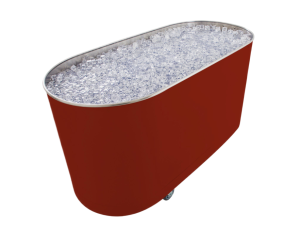
Hot & Cold Therapy Equipment
Heating and chilling units that hold packs and water at treatment temperature.
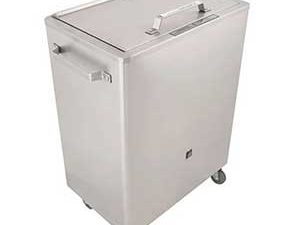
Hot & Cold Therapy & Supplies
Packs, covers and wraps: the consumable side of thermal therapy.
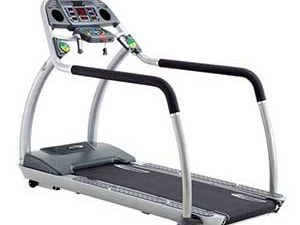
Cardio Equipment
Treadmills, bicycles, ellipticals and stair climbers built for rehab gyms.
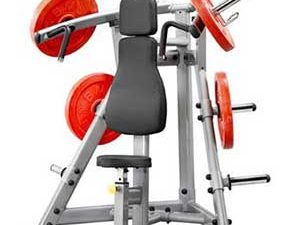
Weight Lifting Equipment
Weight machines and racks for progressive resistance in small increments.
GSA contract holder • Ships nationwide • From Patient to Doctor & Everyone In Between
Talk to a Medical Equipment Specialist
Tell us the facility, the room and the caseload and we will put the right list together. Toll free 877-706-4480 | Local 713-706-4480 | inquiry@msecompany.net