

Taping & Chiropractic Tables
Fixed height chiropractic and taping treatment tables for chiropractic offices, outpatient clinics, hospital rehab departments, skilled nursing facilities and athletic training rooms.
Home › Rehabilitation Equipment & Products › Taping & Chiropractic Tables
Chiropractic and Taping Treatment Tables for Clinics and Practices
Chiropractic treatment tables and taping tables are the fixed treatment surfaces a clinician works on: a stable platform at working height where a patient sits or lies while the clinician applies tape, performs manual therapy or delivers a chiropractic adjustment. MSEC supplies this line for chiropractic and wellness practices, outpatient clinics, physical therapy, physiotherapy and occupational therapy practices, hospital rehab departments, skilled nursing facilities and athletic training rooms. The decisions that matter are height, width, frame construction and bracing, upholstery, weight capacity and room clearance. Browse the line below or ask the pros to size a table to your treatment space.
Shop Taping & Chiropractic Tables by Type
Select a line to see what is available, or go up to all rehabilitation equipment.
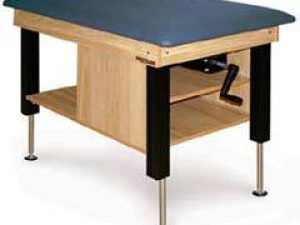
Taping Tables & Stations
Braced fixed height treatment surfaces and standing height stations, with or without integrated shelf storage.
Not Sure Which to Choose?
Our Taping & Chiropractic Tables Buying Guide walks through the decisions that actually determine the outcome: who is buying, what to compare, the mistakes that cause returns, and a pre-order checklist.
What Are Taping and Chiropractic Tables and How Are They Used in Clinical Settings?
Taping and chiropractic tables are treatment surfaces built to hold a patient at a working height that lets the clinician apply force or apply tape without bending over them. That is the purpose of the category: the table protects the clinician’s own posture and mechanics as much as it supports the patient.
A chiropractic table supports manual therapy, spinal manipulation and the adjustment itself. The patient lies prone or supine or sits, the chiropractor stands beside the table, and the frame has to stay rigid while force is applied through it. A taping table supports ankle, knee, wrist, elbow and shoulder taping, where the patient sits with a limb extended and the clinician works standing.
These tables appear in chiropractic offices, physical therapy, physiotherapy and occupational therapy clinics, hospital rehab departments, skilled nursing facilities and athletic training rooms. Practices treating back, neck, hip and shoulder pain caseloads often run one surface for several purposes across a day, so size it for the widest use in the room.
MSEC supplies this line as durable medical equipment built for continuous clinical duty. What treatment is performed on it, and whether a technique suits a given patient, are the treating clinician’s decisions.
What Types of Chiropractic Tables Do Practices Ask About?
Practices ask about six configurations, and knowing which options a technique needs is the fastest way to shorten a buying conversation. The models listed on this page are braced fixed height taping and treatment surfaces, so if your technique needs a moving section, say so up front and ask what can be sourced.
- Fixed height treatment and adjusting tables: a rigid, stationary surface, and the choice when rigidity matters more than mechanism.
- Hi-lo tables, also written hylo: the working height changes so a patient can be loaded at a low height and raised for treatment, which matters where patients arrive with limited mobility.
- Flexion distraction tables, often called flexion tables: the caudal section moves, because the flexion distraction technique requires it.
- Drop tables: sections release a short distance during an adjustment, which is why chiropractors performing drop technique adjustments specify them rather than adapting a flat table.
- Elevation tables: the patient is positioned standing and the table moves to horizontal.
- Roller, traction and decompression tables: powered surfaces specified for spine protocols in practices that offer them.
A massage table is not a substitute for any of these. Massage tables are built for comfort and portability, not for absorbing force applied through the patient, so confirm frame rating and bracing before buying one for adjusting work.
What Types of Tables Are in This Line and How Do They Differ?
This line is organized around treatment surfaces, and its subcategory is Taping Tables and Stations, which holds the fixed height bench style surfaces used for taping and general treatment work. The products listed are the Natural Wood H-Brace Taping Table w/ End Storage Shelves 27in/30in W, the Natural Wood H-Brace Taping Table w/ Shelf 27in/30in W, the H-Brace Taping Table and the Single Athletic Taping Station 36in/42in H.
- H-Brace Taping Table: the base configuration, a braced fixed height surface with no integrated shelving.
- Natural Wood H-Brace Taping Table w/ Shelf 27in/30in W: the same braced construction with a shelf underneath, offered in 27 inch and 30 inch widths.
- Natural Wood H-Brace Taping Table w/ End Storage Shelves 27in/30in W: adds end storage shelving, keeping supplies at the working end rather than centered underneath.
- Single Athletic Taping Station 36in/42in H: a station rather than a table, offered in 36 inch and 42 inch heights for standing height work.
The distinction to hold on to is table versus station. A table is a surface a patient occupies. A station is a work position built around throughput, and that side of the decision is covered on the Taping Tables and Stations page.
Should a Practice Choose a Fixed Height or an Adjustable Height Table?
Choose fixed height when one clinician or a consistent team works at the table and rigidity matters most, and choose adjustable when no single ergonomic working height suits everyone. Choose adjustable height, the hi-lo or hylo configuration, when the table is shared across practitioners of different statures, or when patients need to sit at a low height and then be positioned higher for treatment.
- Fixed height: fewer moving parts, nothing to service, and the most rigid surface for the money. The working height is decided at purchase and cannot be corrected later. The Single Athletic Taping Station 36in/42in H offers two heights, so you select the one matching the people who will use it.
- Adjustable height: accommodates multiple clinicians and eases transfers, which matters where patients arrive using a walker, a cane or a wheelchair, or with weight bearing restrictions. The cost is a mechanism that must be maintained and eventually serviced.
A practical test: measure from the floor to the point where your tallest and shortest clinicians work with elbows close to the body and without leaning over the patient. If those numbers are close, fixed height is fine and more rigid. If they are far apart, and especially where transfers are routine, the mechanism earns its maintenance.
How Do Table Width and Height Change Clinical Use?
Width decides what the patient can do on the table and height decides what the clinician can do beside it, so the two dimensions answer to different people. The table below sets the dimensions actually stated in these listings against the clinician and the technique.
| Model | Listed width | Listed height | What the listed dimension decides for the clinician and the technique |
|---|---|---|---|
| H-Brace Taping Table | Not listed, confirm on the specification | Not listed, confirm on the specification | The braced frame, not a published dimension, is what holds the surface steady under manual work |
| Natural Wood H-Brace Taping Table w/ Shelf 27in/30in W | 27in or 30in | Not listed, confirm on the specification | 27in keeps the clinician close to the patient midline for manual therapy, 30in gives the patient room to shift and turn |
| Natural Wood H-Brace Taping Table w/ End Storage Shelves 27in/30in W | 27in or 30in | Not listed, confirm on the specification | Same width trade, with supplies at the working end so the clinician does not step away mid technique |
| Single Athletic Taping Station 36in/42in H | Not listed, confirm on the specification | 36in or 42in | 36in suits seated patient access and shorter clinicians, 42in brings an ankle, wrist or knee up to a standing clinician |
Read the combined effect before comparing prices. A narrow, tall surface is a working station for standing work on an ankle, wrist or knee. A wider, lower surface is a treatment table for manual therapy on the back, hip and shoulder. They are not substitutes.
Confirm every dimension against the manufacturer specification for the exact model. Never size a room from a catalog photograph.
What Upholstery, Cushion and Seam Construction Should Buyers Look For?
Look for a covering rated for repeated disinfection with the products your facility uses, and closed seam construction that keeps fluid out of the foam. Upholstery is where treatment tables fail first, almost always because the cleaning protocol and the covering were never checked against each other.
- Covering material: ask for the care instructions and match them to your disinfectant. Some hospital grade products shorten the life of some vinyls considerably.
- Seams: a seam is a path into the foam. Sealed or welded seams keep fluid out. Stitched seams on a surface wiped many times a day will eventually wick.
- Staples and edges: check how the covering is attached at the underside edge. Exposed staples corrode and catch, and a torn edge starts there.
- Foam density and cushion depth: density decides whether the surface still supports a patient in year three, and depth decides patient comfort during a longer technique. Ask for the specification rather than judging by feel.
- Replaceable tops: where the padded top is replaceable as a part, the frame outlives several coverings.
Infection control also touches the unpadded parts. On wood and laminate construction, confirm the finish is sealed and the edges banded, because raw or damaged edge material absorbs moisture and cannot be properly disinfected.
How Should Buyers Evaluate Weight Capacity, Stability and Frame Construction?
Evaluate weight capacity from the manufacturer specification for the exact model, and evaluate the frame by how it resists lateral force rather than static load alone. A table used for manual therapy or an adjustment carries a patient and then absorbs force applied through that patient, a different demand from holding a weight.
- Rated capacity: confirm the stated patient weight capacity and whether it is a static or working rating. If the specification is unclear, ask before ordering.
- Bracing and stability: the H-brace construction on the H-Brace Taping Table and the natural wood models is a cross braced design, and bracing is what stops a fixed height table racking sideways when force is applied across it.
- Frame material: wood frames are quiet, warm to the touch and suited to clinic and training room use. Steel carries load in a smaller section. Match material to the environment and the cleaning regime, not to price.
- Joint construction and durability: bolted joints hold tension and can be retightened over a service life, which is most of what separates a five year table from a fifteen year one. Glued or pressed joints cannot.
- Floor contact and alignment: levelling feet or glides keep the frame in alignment on an imperfect floor, which is what stops the rock clinicians complain about six months in.
Where more than one practitioner works on the table, or it is used for manual therapy rather than taping alone, weight the decision toward bracing and joint construction rather than surface features.
How Much Room Clearance Does a Treatment Table Need?
A treatment table needs working clearance on every side a clinician uses, plus a clear path for the patient, and that total is always larger than the footprint. Undersizing the room is the most expensive mistake in this category, because it is discovered after freight has been paid.
- Working sides: decide before ordering which sides the clinician works from. Manual therapy usually needs both long sides and at least one end.
- Patient approach: confirm the patient, adult or pediatric, can reach the table with whatever mobility aid they use, and that a walker or wheelchair parks without blocking the clinician.
- Door swing and corridor: a door that opens inward can remove usable clearance on one side.
- Curtain and privacy track: in shared bays the track position sets the real usable width, not the wall to wall dimension.
- Stools, carts and casework: a rolling stool and a supply cart both need floor space, and the clinician needs to reach a shelf or end storage without stepping away from the patient.
Send your room dimensions to MSEC with the models you are considering and the team will check the fit against the published specification before anything ships.
How Should Medical Equipment Buyers Evaluate Taping and Chiropractic Tables?
Evaluate these tables in a fixed order: what treatment happens on the surface, who works at it, what the room allows, then which model fits. Reversing that order is how practices end up with a table that is beautiful and unusable.
- Define the use: taping, manual therapy, adjustments or general treatments, and which techniques your practitioners perform. The answer sets rigidity and bracing requirements.
- Measure the clinicians: establish the working height range across the staff who will use it, then decide fixed or adjustable from that range.
- Measure the room: footprint plus working clearance plus the patient approach path.
- Check capacity and quality: rated patient weight capacity, bracing, joint construction and finish, all from the manufacturer specification.
- Check the cleaning match: covering material against your disinfectants, and sealed edges on any wood or laminate.
- Serviceable parts and warranty: replacement tops, hardware and glides, how they are ordered years later, and what the warranty terms cover.
- Check pricing, availability and lead time together: a table is a long lived investment, so a quote that omits lead time and shipping is only half a quote. Ask which brands are available for the configuration you need.
For a practice buying several tables at once, settle the specification on one and repeat it. Mixed heights across treatment rooms cause more daily friction than buyers expect.
What Should a Facility Confirm Before Ordering Treatment Tables?
Confirm the delivery path, the assembly requirement, the floor, the cleaning protocol match and the parts arrangement before the purchase order goes out. These tables are not powered, so electrical supply is rarely the constraint. Access and fit are.
- Freight access: tables in this line ship freight. Confirm dock or liftgate availability, and who moves the crate from the curb.
- Door and corridor widths: measure the narrowest point from the delivery point to the treatment room, including door frames, corridor turns and elevator dimensions and weight limits.
- Assembly: confirm whether the table ships assembled, partly assembled or flat, and who assembles and levels it.
- Floor: confirm the floor covering suits the table’s feet or glides and is level enough not to need shimming.
- Cleaning protocol compatibility: match the covering and finish against the disinfectants in use.
- Availability, lead time and serviceable parts: confirm stock position and lead time on the quote, and confirm replacement tops, hardware and glides before purchase.
- Room readiness: confirm the treatment room is finished and the clearance is real, not planned.
Call 877-706-4480 toll free or 713-706-4480 local, or email inquiry@msecompany.net, with your access details and the team will flag problems before they become freight claims.
How Does This Line Relate to Athletic Taping Tables and Stations?
This line covers treatment surfaces and the decisions that go with them, while the dedicated Taping Tables and Stations line covers the athletic training room side of the same equipment family, where the question is throughput rather than treatment room fit.
Use this page when specifying a treatment surface for a chiropractic office, clinic treatment room or rehab department: height and width against your clinicians, upholstery against your cleaning protocol, capacity and bracing against the technique performed, and clearance against the room.
Use the taping tables and stations page when you are equipping a training room that has to move a roster of athletes through taping in a short window, where bench configuration, position count and station layout matter more than treatment room clearance.
Both sit inside the full Rehabilitation Equipment and Products catalog, alongside the mat tables and platforms in Fitness and Rehab Merchandise, the modality equipment and the strength equipment that share the same floor. Ordering across lines at once consolidates freight, which is worth doing when everything ships on a pallet.
Frequently Asked Questions
What is the difference between a taping table and a chiropractic table?
A taping table is a firm bench surface where a patient sits while a clinician tapes an ankle, knee, wrist or shoulder from a standing position, so height and rigidity matter most. A chiropractic table supports manual therapy and the adjustment, where force is applied through the patient and the frame must resist movement under it. In many practices one rigid, well braced surface serves both roles.
Do you carry flexion, drop, hi-lo, elevation or decompression tables?
The models listed on this page are braced fixed height taping and treatment surfaces rather than tables with a moving section. If your technique needs flexion distraction, a drop section, hi-lo height adjustment, elevation or traction and decompression, tell the pros which technique you practice and ask what can be sourced. Call 877-706-4480 toll free or email inquiry@msecompany.net.
What table height should I order?
Order the height that lets your clinicians work with elbows close to the body and without leaning over the patient, and measure that on the people who will actually use the table rather than using a general figure. The Single Athletic Taping Station is offered at 36in and 42in high, so you select the option that matches your staff. Where staff heights vary widely, consider an adjustable height table instead.
Which width should I choose, 27 inches or 30 inches?
Choose 27in when floor space is tight or the clinician needs to stand close to the patient midline for manual work. Choose 30in when patients need more room to shift position or you regularly treat larger patients. Both widths are offered on the Natural Wood H-Brace Taping Table models. Check the chosen width against the working clearance in your room before ordering.
Can we use a massage table for chiropractic adjusting?
Confirm the frame rating and bracing before you do. Massage tables are built for patient comfort and often for portability, not for absorbing the lateral force applied through a patient during manual therapy or an adjustment. Ask for the rated capacity, whether it is a static or working rating, and how the frame is braced, then match that against the technique your practitioners perform.
How do I know the table will survive our disinfection protocol?
Match the covering material and finish to the specific disinfectants your facility uses before ordering, because some hospital grade products shorten vinyl life. Ask MSEC for the manufacturer’s care instructions for the exact model, look for sealed rather than stitched seams on padded surfaces, and confirm that wood or laminate edges are sealed and banded so they do not absorb moisture.
Do these tables come with storage, and do I need it?
Some models do. The Natural Wood H-Brace Taping Table w/ Shelf 27in/30in W has a shelf underneath and the Natural Wood H-Brace Taping Table w/ End Storage Shelves 27in/30in W puts shelving at the ends. Choose a storage model where supplies must stay within the clinician’s reach during treatment. Choose the plain H-Brace Taping Table where the room already has casework and you want the footprint clear.
What if the table or configuration I need is not shown on this page?
Ask for it. What appears online is a portion of what MSEC supplies, and this line extends beyond the models listed, including chiropractic and treatment table configurations, stools and carts not catalogued as separate items. Call 877-706-4480 toll free or 713-706-4480 local, or email inquiry@msecompany.net with the height, width, capacity and storage you need and the room it has to fit.
Related Rehabilitation Categories
Move up to the full rehabilitation silo, or across to the lines clinics order alongside this one.
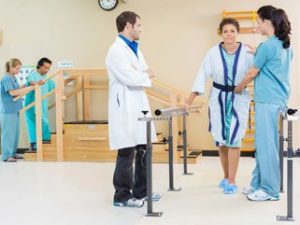
Rehabilitation Equipment & Products
The full rehabilitation silo: every line MSEC carries for therapy and recovery.
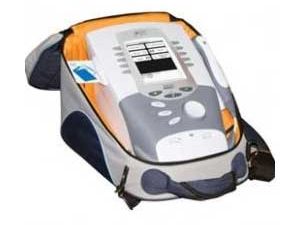
Therapeutic Devices
Electrotherapy, ultrasound and stimulation units with their electrodes and consumables.
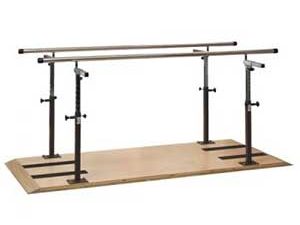
Physical Therapy Equipment
Parallel bars, rehab work tables and training stairs for gait and function work.
Fitness & Rehab Merchandise
Balance boards, pulleys, dynamometers, mat tables and stretching equipment.
Hot & Cold Therapy Equipment
Heating and chilling units that hold packs and water at treatment temperature.
Hot & Cold Therapy & Supplies
Packs, covers and wraps: the consumable side of thermal therapy.
Cardio Equipment
Treadmills, bicycles, ellipticals and stair climbers built for rehab gyms.
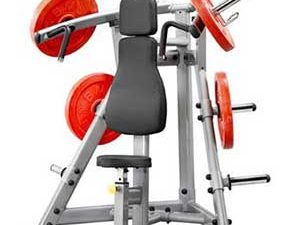
Weight Lifting Equipment
Weight machines and racks for progressive resistance in small increments.
GSA contract holder • Ships nationwide • From Patient to Doctor & Everyone In Between
Talk to a Medical Equipment Specialist
Tell us the facility, the room and the caseload and we will put the right list together. Toll free 877-706-4480 | Local 713-706-4480 | inquiry@msecompany.net