
web analytics

Break-apart & Portable Stretchers

The portable end of the stretcher world: basket stretchers for rough terrain, foldable units for storage and stairwells, plastic and pole stretchers for fast deployment, and the kits and accessories that complete them. Thirty-two products across five lines.

Home » Emergency Medical Equipment » Break-apart & Portable Stretchers

Portable and Break-apart Stretchers for Rescue, Facility and Field Use

Break-apart and portable stretchers solve the problem a wheeled ambulance cot cannot: moving a patient through spaces and over ground where wheels are useless. Stairwells, trails, industrial mezzanines, boats, bleachers and collapsed or cluttered interiors all call for a stretcher a small team can carry, and this family covers the main answers. Basket stretchers cradle a patient for rough terrain and rope work. Foldable stretchers collapse small enough to live in a closet or a vehicle. Plastic and pole stretchers deploy in seconds and clean easily. The kits and accessories line carries the straps, stands and storage that turn a bare stretcher into working equipment.

Shop Break-apart Stretchers by Type

Select a stretcher type to see every model in that line with specifications and ordering details.

Basket Stretchers from MSEC

Basket Stretchers

Rigid shells with perimeter rails for rough terrain and rope work.

Foldable Stretchers from MSEC

Foldable Stretchers

Flat and quarter folding units for staged readiness.

Plastic Stretchers from MSEC

Plastic Stretchers

Molded washdown-ready patient platforms.

Pole Stretchers from MSEC

Pole Stretchers

The lightest, simplest two-rescuer carry.

Stretcher Kits & Accessories from MSEC

Stretcher Kits & Accessories

Straps, mounts, bags, pads and replacement parts.

Choosing Between Models?

The Portable & Break-apart Stretchers Buying Guide walks through the decisions behind a break-apart stretchers purchase: a comparison method, the mistakes that cause returns, and a pre-order checklist, with downloadable PDF guides.

Which Portable Stretcher Type Fits Which Situation?

Match the type to the ground and the team. Basket stretchers are for terrain: their rigid shell and perimeter rail let a team carry, drag or rig a patient over surfaces no other design tolerates. Foldable stretchers are for readiness: they store flat or quartered, which is why facilities, schools and event operators stage them by the dozen. Plastic stretchers are the fast-deployment choice for washdown environments. Pole stretchers are the simplest and lightest of all, a fabric bed on two carrying poles, the classic two-rescuer carry. Most organizations end up owning two types, one staged for readiness and one matched to their worst realistic terrain.

How Many Rescuers Does Each Stretcher Type Assume?

The designs quietly assume different team sizes, and buying against that assumption is how carries go wrong. A pole stretcher is a genuine two-person tool on flat ground and a four-person tool anywhere else. Foldable and plastic units carry practically with two to four depending on distance. A loaded basket stretcher on rough terrain is a four-to-six-person effort and is often rotated in shifts on long evacuations. A buyer staffing a small facility team should weigh that arithmetic as heavily as price, because the stretcher that needs six carriers is the wrong purchase for a three-person response team.

What Materials and Construction Should Buyers Compare?

Frames in this family run from aluminum tube to molded polyethylene shells, beds from coated fabric to solid plastic, and the choice trades weight against cleanability against terrain tolerance. Coated fabrics keep pole and foldable units light but need inspection for cuts and UV wear. Molded plastic shrugs off decontamination chemistry and impact, at the cost of bulk. Aluminum frames hold the middle. Whatever the material, the load path is the thing to inspect on paper: continuous welded or molded structure outlasts bolted joints in repeated hard use, and the product photographs in each line show the construction clearly.

How Should Facilities Store and Stage Portable Stretchers?

A portable stretcher only earns its keep if it is where the emergency is, so placement is part of the purchase. The common pattern is one unit per floor or zone, wall-mounted or racked at a marked point along the evacuation route, with straps attached and a laminated deployment card on the mount. Foldable and pole units suit wall brackets; baskets usually rack horizontally in a utility or stair-landing space. The accessories line carries mounting and storage options, and it is cheaper to order them with the stretchers than to improvise brackets later.

What Belongs in a Complete Stretcher Setup?

A bare stretcher is not a finished purchase. A working setup adds patient restraint straps sized to the frame, a head immobilization option where the use case involves suspected spinal injury, and for basket units the lifting bridle or sling hardware if rope or hoist work is ever in scope. The Stretcher Kits & Accessories category holds that layer for this family, and ordering the setup complete in one quote is the difference between equipment that deploys and equipment that waits for a missing strap.

When Does a Buyer Need This Family Instead of an Ambulance Cot?

The two families are complements, not competitors. An ambulance service runs a wheeled cot as primary equipment and carries a foldable or basket unit for the calls the cot cannot reach. A facility with no rig at all usually needs only this family, staged for evacuation. An athletic program or event operator sits in between, often pairing a pole or plastic stretcher on the sideline with EMS transport arranged separately. If the purchase question is which single stretcher to buy first for a building, the answer is nearly always a foldable unit from this family, not a cot.

Frequently Asked Questions

For patient movement where a wheeled cot cannot go: stairs, rough terrain, confined interiors, water and remote settings, and for staged emergency readiness in facilities without EMS equipment on site.

Five lines: basket stretchers, foldable stretchers, plastic stretchers, pole stretchers, and a stretcher kits and accessories line with straps, stands and storage. Thirty-two products in total.

Foldable stretchers are the usual stairwell choice because they store on the route and handle the confined turns. The foldable line’s product pages list folded dimensions for storage planning.

Choose by terrain and team size. Baskets are the rough-terrain and rope-work tool and assume a larger carry team; pole stretchers are the lightest and simplest option for flat-ground carries with two rescuers.

It varies by model. Where straps are not bundled, the Stretcher Kits & Accessories category carries them, and the team confirms fitment before an order ships.

Yes. Facilities, schools, event operators and workplaces are regular buyers in this family, usually for evacuation readiness, and single-unit orders are as routine as fleet orders.

Related Emergency Medical Categories

Move up to the full emergency line or across to the equipment families bought alongside this one.

MS3C EMS & Ambulance Stretchers from MSEC

MS3C EMS & Ambulance Stretchers

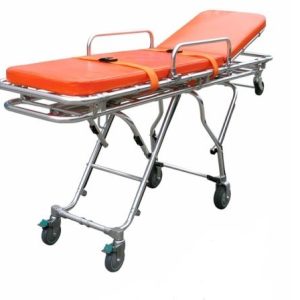
The wheeled ambulance cot line, twelve models deep.
Emergency Medical Equipment from MSEC

Emergency Medical Equipment

Back to the full emergency line.


GSA contract holder  •  Ships nationwide  •  From Patient to Doctor & Everyone In Between

Talk to a Medical Equipment Specialist

Toll free 877-706-4480  |  Local 713-706-4480  |  inquiry@msecompany.net

Scroll to Top