
web analytics

EMS & Ambulance Stretchers Buying Guide

A decision walkthrough for buying EMS and ambulance stretchers: which measurements decide rig fit, how to weigh rated load against unit weight, when the lighter transfer class is the wrong buy, and what to confirm before a purchase order goes out.

Home » Buyer Guides » EMS & Ambulance Stretchers Buying Guide

Take This Guide With You

The full EMS & Ambulance Stretchers Buying Guide as a printable PDF, with the comparison points and the pre-order checklist. Share it with facilities, purchasing or whoever signs off.

Ambulance Stretchers in Stock Now

A live view of what is available in MS3C EMS & Ambulance Stretchers right now. Prices and specifications sit on each product page, and the team quotes purchase orders at 877-706-4480.

Start With the Rig, Not the Stretcher

Every failed stretcher purchase traces back to a measurement nobody took. Before comparing models, record three numbers from the vehicle itself: floor height at the loading door, patient compartment length and width including the loading path’s turns, and the fastener or mount system already installed. A stretcher is bought into that envelope. Crews replacing a unit should also note what the outgoing stretcher got wrong, because the complaint log of the old equipment is the sharpest specification document a service owns.

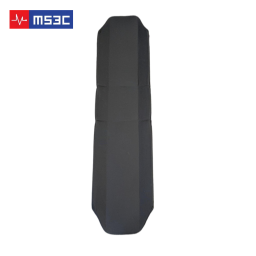
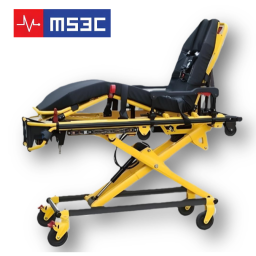
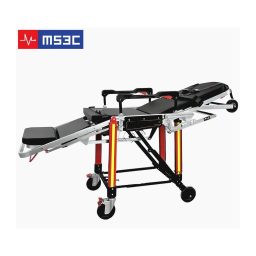
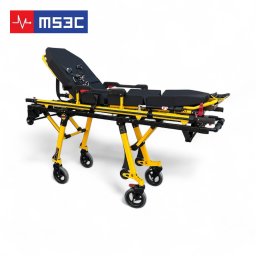
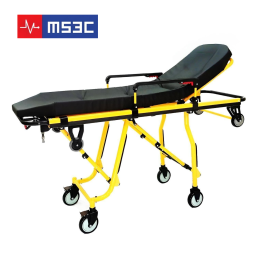
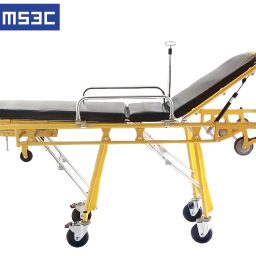
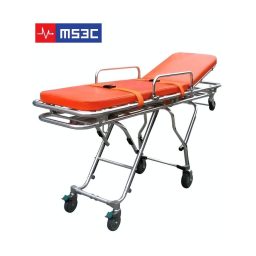
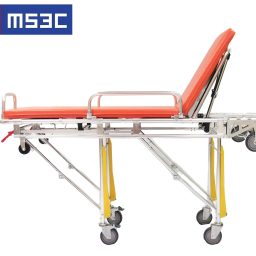
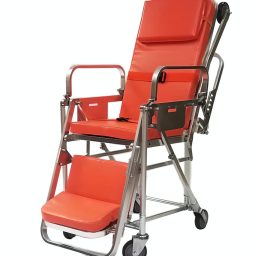
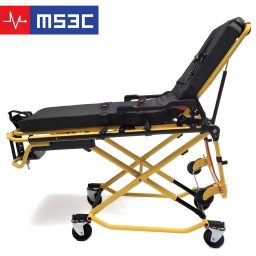
MS3C EMS & Ambulance Stretchers from the MSEC catalog
Cardio Equipment in the MSEC catalog
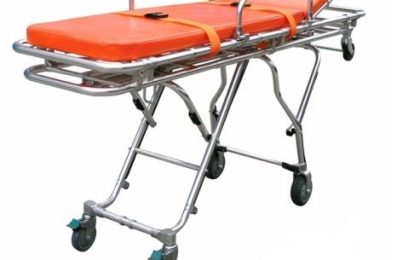
MS3C EMS & Ambulance Stretchers equipment in service
Cardio Equipment in a rehabilitation setting

Transfer Class or Full Ambulance Cot: Decide the Duty First

The class question comes before any brand question. Transfer stretchers are light, simple and priced accordingly, built for moving stable patients between locations and for event work. Full ambulance cots carry taller adjustable frames and structures built for the loading cycle, thousands of rolls in and out of a rig. Buying the transfer class for full ambulance duty is the most common mistake in this category, and it surfaces as frame wear and crew complaints within the first year. Match the class to the busiest week the service runs, not the average one.

Read Rated Load and Unit Weight as One Number Pair

Rated load is the manufacturer’s ceiling for everything riding the deck: patient, clothing, immobilization gear, the oxygen bottle. Services specify one class above their expected population to keep margin. Unit weight is the other half of the pair, because the crew carries the whole frame whenever wheels cannot roll. A heavy adjustable frame earns its weight at the rig door; a light manual unit earns its on the stairs. The right buy reads both numbers against how the service actually runs calls, and both sit in every specification table.

Height Adjustment: What the Mechanism Is Really Buying

An adjustable frame buys the crew’s backs. Every load into the rig without a matching deck height is a lift, shift after shift, and lifting injuries are the quiet budget line of every EMS operation. Multi-position frames let the deck meet the rig floor and let one crew serve mixed vehicles. Manual fixed-height units remain the right answer for transfer work and tight budgets, provided the deck height genuinely matches the vehicle it serves. The mechanism is a per-call labor decision dressed up as a feature.

Compare the Accessory Ecosystem, Not Just the Frame

Two stretchers identical on paper diverge the day a strap frays. Before choosing, price the working configuration: restraint straps, mattress pad, IV pole, side rails and storage, because one manufacturer bundles what another line-items. Then ask the longer question: are replacement wheels, straps and pads orderable years from now? A stretcher line with a living parts catalog stays in service through inspection findings; one without becomes a disposal problem at the first failed strap. MSEC stocks the accessory layer for the MS3C line for exactly this reason.

Fleet Buying: Standardize Before You Multiply

A fleet of one model is cheaper to own than a fleet of three, in ways the purchase order never shows: one training curriculum, one spare parts shelf, one inspection procedure, straps and pads that interchange across every rig. Multi-unit purchases are the moment to consolidate, even if it means retiring an odd unit early. Quote the fleet as one order with consolidated freight and delivery scheduled together, and put the spare parts starter stock on the same PO so the maintenance program exists from day one.

The Mistakes That Cause Returns

Four repeat offenders account for most stretcher returns and regrets. A deck that misses the rig floor height, discovered at first loading. A folded or overall dimension that fails the compartment or the doorway mid-path. A rated load specified to the average patient instead of the heavy end of the real population. And the missing-strap delivery, where the working configuration was never quoted as one. Every one of them is preventable with the measurements and the configuration quote described above, before money moves.

How MSEC Quotes This Category

Send the rig make and model, the patient compartment measurements if the rig is nonstandard, the expected load class and the unit count, by phone toll free at 877-706-4480, local 713-706-4480, or email inquiry@msecompany.net. The team cross-checks candidate models against the vehicle, returns a written quote with per-unit pricing, the complete working configuration and consolidated freight, and accepts purchase orders. MSEC is a GSA contract holder for municipal and government services.

Pre-Order Checklist

  • Rig floor height, compartment dimensions and mount system recorded
  • Duty class decided: transfer stretcher or full ambulance cot
  • Rated load specified one class above the expected patient population
  • Unit weight acceptable for the carries the service actually runs
  • Working configuration quoted complete: straps, pad, IV pole, rails, storage
  • Replacement parts availability confirmed for the line
  • Fleet standardized on one model; spare parts starter stock on the same PO
  • Delivery dates aligned across the order

Frequently Asked Questions

Duty. A full ambulance cot is built for the repeated loading cycle of rig work with a taller adjustable frame; a transfer stretcher is lighter and simpler, built for moving stable patients and event coverage. The class decision comes before any model comparison.

Record the rig’s floor height at the loading door, compartment length and width including the loading path, and the installed mount system, then check each candidate’s specification table against those three numbers. MSEC cross-checks candidates against a named rig on request.

One capacity class above the expected patient population, because clothing, immobilization gear and equipment on the deck all count against the rating in practice.

Because the crew carries the full frame whenever wheels cannot roll: stairs, curbs, soft ground and tight interiors. Unit weight is read together with rated load against the service’s real calls.

Yes. A stretcher without its restraint straps and pad is not deployable equipment, and quoting the working configuration as one order is how fleets arrive complete.

Yes. Written fleet quotes with per-unit pricing and consolidated freight are routine, purchase orders are accepted, and MSEC is a GSA contract holder.

Ready to Shop MS3C EMS & Ambulance Stretchers?

Browse the MS3C EMS & Ambulance Stretchers line, or call toll free 877-706-4480, local 713-706-4480, for a quote on a purchase order.

Take This Guide With You

The full EMS & Ambulance Stretchers Buying Guide as a printable PDF, with the comparison points and the pre-order checklist. Share it with facilities, purchasing or whoever signs off.

Scroll to Top