
Cardio Equipment Buying Guide
A decision walkthrough for buying rehabilitation cardio equipment, covering which patient sets your specification, testing a machine for unaided entry and exit, purchase order, and how many machines the room needs.
Home › Buyer Guides › Cardio Equipment Buying Guide
Take This Guide With You
The full Cardio Equipment buying guide as a printable PDF, with the comparison points and the pre-order checklist. Share it with facilities, purchasing or whoever signs off.
Cardio Equipment in Stock Now
A live view of what is available in Cardio Equipment right now. Prices and availability come straight from the catalog.
-
 Quick ViewSelect options
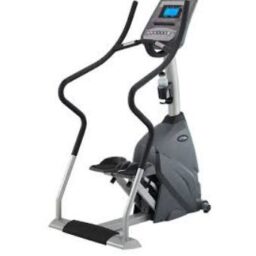
Professional Exercise Stair Stepper
Item# 01TSPFMI$2,918.38Original price was: $2,918.38.$2,161.76Current price is: $2,161.76. -
 Quick ViewSelect options
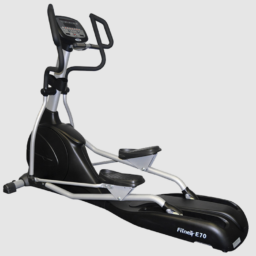
Elliptical Cross Trainer
Item# 07EFMI$3,371.03Original price was: $3,371.03.$2,497.06Current price is: $2,497.06. -
 Quick ViewSelect options
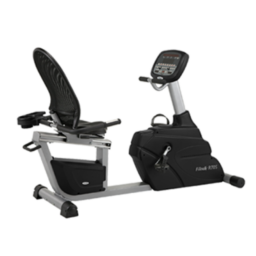
Professional Recumbent Exercise Bike
Item# 07RFMI$2,451.84Original price was: $2,451.84.$1,816.18Current price is: $1,816.18. -
 Quick ViewSelect options
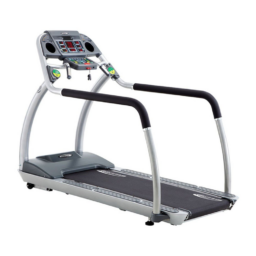
Commercial Indoor Fitness Treadmill
Item# 01TPFMI$6,283.46Original price was: $6,283.46.$4,654.41Current price is: $4,654.41.


How Do You Choose Cardio Equipment for a Rehab Gym Rather Than a Fitness Gym?
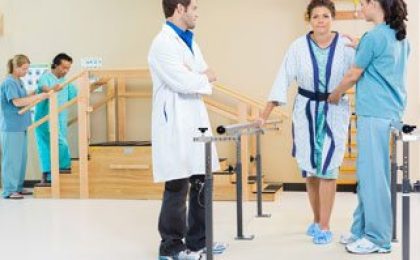
Choosing cardio equipment for a rehabilitation gym runs in the opposite direction from choosing it for a fitness floor. A fitness buyer specifies the top of the range because members want to push harder. A rehab buyer specifies the bottom of it, the way a patient gets on and off, and what the machine does when nobody has a hand on the patient. This guide takes those decisions one at a time: which patient sets the specification, how to test a machine for unaided use, which type to buy first, how many the room needs, and how to compare two units whose names differ more than their specifications do.
Who Is Buying Cardio Equipment for a Rehab Gym, and What Are They Solving?
The same four machine types get bought for very different reasons, and the reason decides the specification.
- A hospital rehab department: broad acuity, patients arriving by wheelchair or with an assistive device, and weight bearing restrictions that change week to week. Entry, exit and clearance outrank everything else.
- An outpatient orthopedic clinic: high turnover, short bouts fitted around manual treatment, one clinician supervising several patients at once. Sightlines and throughput decide the layout.
- A cardiac or pulmonary rehabilitation program: monitored sessions with documentation attached, so how the console presents and how the session gets recorded matters as much as the machine.
- A skilled nursing facility: maintenance, mobility and fall prevention work at the lightest end of the range, where the bottom of the resistance range is the whole decision.
- An athletic training room or a home recovery buyer: later stage conditioning in one case, a single machine following a discharging clinician’s program in the other.
The cardio equipment category page covers what sits in each machine type, and the wider rehabilitation equipment range covers the strength, gait and therapy lines that sit alongside it. This guide is about how to pick between them.
Which Patient in Your Caseload Should Set the Specification?
The least capable patient you expect to put on the machine sets the specification, not the average one.
Name that patient before you shortlist anything. Write down what they can manage on the first day they use a machine, how they arrive at it, and whether a clinician will be standing beside them or across the room. Then require every machine on the list to be usable at that level. A shortlist built this way is shorter, and the machines on it get used by the whole caseload rather than by the top two thirds of it.
This is where the bottom of the range stops being an abstraction, and it is a figure you have to ask for, because it rarely appears in marketing copy. Request the lowest setting and the size of the step between settings on the manufacturer specification for each unit, and do not accept the word adjustable as an answer. Compare the shortlist at the bottom of the range and the order tends to reverse against what the brochure implies.
How Do You Test Whether a Patient Can Use a Machine Unaided?
Run the machine through the six moments a patient meets alone, in order, and fail it at the first one that needs a second pair of hands.
- Approach and park: can a walker, cane or wheelchair be parked within reach, and does the patient have to let go of it before they have anything else to hold?
- Getting on: does it take one hand or two, and is there a fixed handhold that is not also a moving part?
- Starting: can the patient start it without reading anything, and does the belt or pedal stay still until they are set?
- Adjusting mid session: can the setting be changed without stopping, reaching across the body or leaning off balance?
- Stopping: is there one control that stops the machine, within reach from where the patient is, and findable without looking for it?
- Getting off: can the patient get off if it stops without warning, and does the frame stay still while they do?
Then repeat the test from where the clinician stands. From that position, can they read the console, see the setting and reach the stop without leaving the patient they are already with? Whether a particular patient works unaided is the treating clinician’s decision. The equipment question is narrower: does the machine make that possible at all, and the six moments answer it.
Which Machine Type Should a Rehab Gym Buy First?
Buy the machine the largest share of your caseload can physically get on to, then buy variety.
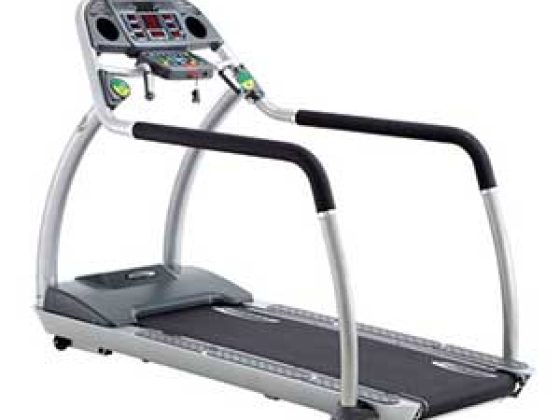
Seated machines with open frame access reach the widest mix of patients because the step over height is lowest and the transfer is closest to sitting down, which is why a Professional Recumbent Exercise Bike is so often the first machine into a rehab gym. A treadmill earns its place where gait work is a large part of the caseload, and it also carries the most demanding entry, exit and supervision requirements in the room, so it is a deliberate purchase rather than a default one.
An Upright Professional Indoor Exercise Bike, an Elliptical Cross Trainer, a Professional Exercise Stair Stepper and a Standard Elliptical Exercise Climber extend the range of work available once the first two are in. Before adding a fourth machine type, check whether a second unit of the machine that already queues would do more for the schedule. Variety looks better in a photograph. Capacity is what the calendar needs.
How Many Machines Does the Room Actually Need?
Count concurrent patients at your busiest hour, not total patients in a day.
- Session structure: how many patients are on a machine at the same moment, and for how long, is the number that sizes the room.
- Supervision ratio: how many machines one clinician can reasonably watch caps the useful count regardless of budget or floor space.
- Duplication against variety: under a single supervising clinician, two of the same machine usually beats one each of two types, because the clinician learns one set of controls and the patients queue less.
- Downtime: decide now what the schedule does when one unit is out for service, because that answer either adds a machine or adds a spare parts order.
- Sightlines: a machine that cannot be seen from where the clinician works is not usable during a busy hour, whatever the floor plan says.
How Do You Compare Two Machines Whose Names Differ More Than Their Specifications?
Ignore the names and compare the same six fields on both manufacturer specifications, in the same order.
- The bottom of the range: slowest belt speed or lowest resistance, and the size of the step between settings.
- Entry geometry: step over height, seat access, and where the fixed handholds sit.
- The stop control: what it is and where it is, from both the patient’s position and the clinician’s.
- Footprint: the space in use plus the service access behind and beside the unit, which is often forgotten until the first repair.
- Wear parts: belt, deck, pedals, cables, upholstery and casters, and whether each is sold as a serviceable part.
- Power: the electrical requirement, and what the facility has to provide at that exact spot.
This line lists a Commercial Indoor Fitness Treadmill, a Deluxe Commercial Indoor Fitness Treadmill and a Superior Commercial Treadmill. Those names describe a tier, not a clinical difference, so ask for all three specifications and compare those six fields before deciding which tier your caseload needs. The same applies to the Elliptical Cross Trainer and the Standard Elliptical Exercise Climber, which sit in separate subcategories on the cardio equipment category page and are easy to assume are interchangeable.
Which Buying Mistakes Leave a Machine Standing Unused?
An unused machine in a rehab gym almost always traces back to a decision made before the order, not to the machine itself.
- Specified at the top of the range: the purchase is judged on maximum capability, and the caseload never reaches the second setting.
- Judged on a showroom demo: a healthy adult stepping on and off easily proves nothing about the patient who set your specification.
- Power confirmed late: the machine ends up wherever the outlet is, rather than where supervision works, and the layout never recovers.
- Route in never checked: crated dimensions against door widths, turns, thresholds and elevators, confirmed before the order rather than at the curb.
- A console the clinician cannot read: if the setting is not visible from the supervising position, the machine takes a clinician out of circulation.
- No parts plan: the first wear item to fail turns into months of downtime when nobody knows how to order a replacement.
- Variety bought before capacity: four machine types and one of each looks complete and still leaves patients waiting.
What Should You Confirm Before the Order Goes In?
Work through this list and stop at the first line you cannot answer with a document rather than an impression.
- The lowest setting and the increment on every unit, from the manufacturer specification.
- Entry and exit walked through as the six moments above, for the patient who set your specification.
- The stop control identified and reachable from both positions.
- Footprint, clearance and service access marked on a room plan rather than estimated.
- Electrical requirement confirmed by your own electrician against the outlet at that spot.
- Floor loading and floor surface confirmed by the facility.
- Route in and crated dimensions, with an answer for dock, stairs or elevator.
- Who receives, inspects and signs for the freight, and what happens if damage is found.
- Cleaning compatibility between your infection control protocol and every surface on the machine.
- Serviceable parts, which ones, and how a replacement is ordered.
- Current lead time and warranty terms, both confirmed in writing at the quote.
What Should You Have Ready When You Call?
Five pieces of information turn a long back and forth into a single call.
- A room sketch with dimensions, marked with outlets, doors, columns and where a clinician normally stands.
- A caseload description, including the least capable patient you expect to use the machine and whether that patient will be supervised or unaided.
- Your concurrent patient count at the busiest hour, which sizes the order better than any annual total.
- The delivery picture: dock or no dock, stairs or elevator, who will be on site and when.
- Your dates and approvals, meaning the in service date and who has to sign the purchase.
Bring the shortlist if you have one, or ask the pros to build it from the room sketch and the caseload. You can browse the full cardio equipment line first if you want to name specific machines on the call. Toll free 877-706-4480, local 713-706-4480, or inquiry@msecompany.net.
Frequently Asked Questions
Should we buy one of each machine type or two of the one we use most?
If a single clinician supervises the area, two of the most used machine usually serves the schedule better. Duplication shortens the queue at the busiest hour and keeps one set of controls in the room. Buy a second type once your caseload needs work the first machine cannot support, or once the schedule shows patients waiting for variety rather than for a free machine.
Can patients use these machines without a clinician standing beside them?
That is the treating clinician’s decision and your facility’s policy, not an equipment specification. What the equipment decides is whether unaided use is possible at all: the approach, the transfer, the start, the mid session adjustment, the stop and the dismount. Walk those six moments before you buy, and the policy decision afterwards is made against a machine that can support it.
Do we need a dedicated electrical circuit for a treadmill?
Ask for the electrical requirement on the manufacturer specification for the exact model, then have your own electrician confirm what the outlet at that position can supply. Do not assume a machine will run on whatever is already on the wall, and do not let the outlet location decide the layout. Confirming this before the order is what keeps the machine where supervision works.
What happens to the schedule when a machine is out for service?
Decide that before you order, because it changes the purchase. Facilities with a single unit of a machine type need either a spare parts order held on site or a second unit, and which one is cheaper depends on how central that machine is to the schedule. Ask which components are consumable, which are serviceable, and what the ordering process looks like when a part is needed quickly.
Does a cardiac rehabilitation program need different machines from an orthopedic caseload?
It needs the same machine types specified differently. A monitored program puts more weight on how the console presents information, how the session data reaches your documentation, and how quickly a session can be stopped. An orthopedic caseload puts more weight on the bottom of the range and on entry with a weight bearing restriction. Describe the program on the call rather than the machine.
Should we match the equipment a patient will use after discharge?
Continuity helps, and the program itself is the discharging clinician’s decision. From a purchasing point of view the useful step is to know what the patient is likely to have access to at home or at a community gym, so the work in your gym is set up on equipment with a comparable entry and a comparable bottom of the range. Ask the pros what in the line matches.
Ready to Shop Cardio Equipment?
Browse the Cardio Equipment line, or go up to all rehabilitation equipment. Toll free 877-706-4480 | Local 713-706-4480 | inquiry@msecompany.net
Take This Guide With You
The full Cardio Equipment buying guide as a printable PDF, with the comparison points and the pre-order checklist. Share it with facilities, purchasing or whoever signs off.