

Physical Therapy Equipment Buying Guide
A decision walkthrough for equipping a physical therapy treatment room, covering purchase order, mounting, phased budgets, comparing similar items, and what a second room needs that the first one did not.
Home › Buyer Guides › Physical Therapy Equipment Buying Guide
Take This Guide With You
The full Physical Therapy Equipment buying guide as a printable PDF, with the comparison points and the pre-order checklist. Share it with facilities, purchasing or whoever signs off.
Physical Therapy Equipment in Stock Now
A live view of what is available in Physical Therapy Equipment right now. Prices and availability come straight from the catalog.
-
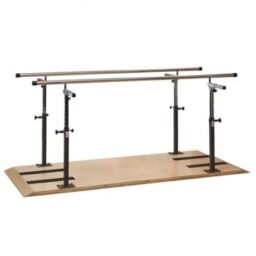 Quick ViewSelect options
Height & Width Adjustable Parallel Bars
Item# XX02-3CLT $2,198.31 – $2,845.25Price range: $2,198.31 through $2,845.25 -
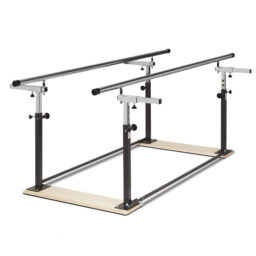 Quick ViewSelect options
Adjustable Folding Parallel Bars 7ft/10ft L
Item# XX33-3CLT $1,251.11 – $1,384.11Price range: $1,251.11 through $1,384.11 -
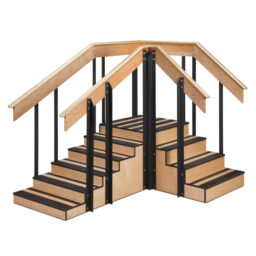 Quick ViewSelect options
Convertible Rail Support System Staircase
Item# X0805-4CLT $2,214.29 – $2,285.71Price range: $2,214.29 through $2,285.71 -
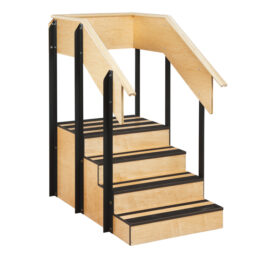 Quick ViewSelect options
One-Sided Rail Support Staircase System 30in/36in W
Item# X1055-4CLT $1,012.86 – $1,128.57Price range: $1,012.86 through $1,128.57


How Do You Equip a Physical Therapy Treatment Room From Nothing?
Equipping a treatment room is a sequencing problem before it is a product problem. The room has a date it has to open, a footprint that will not change, and a budget that arrives in stages, so the question is not which items exist but which one goes in first, what the building has to be told about, and what the second room will need that the first one did not. This guide walks those decisions in the order a buyer actually meets them, from the first purchase through to the call where the order is placed.

Who Is Buying Physical Therapy Equipment, and What Is Different About Each One?
Five buyers order this line, and the differences between them decide almost everything that follows.
- A clinician opening a first location: buying one room that has to do everything, with no second room to fall back on and a fixed date to be open by.
- An established clinic adding a room or a second site: buying capacity rather than capability. The useful question is which bottleneck the new room removes.
- A hospital rehab department or skilled nursing facility replacing worn equipment: buying inside a footprint that is already set, where facilities engineering, infection control and purchasing each hold a veto.
- A pediatric or school based program: buying for smaller patients and a different table configuration, usually in a room that is shared with other services.
- A home recovery buyer: buying one item to follow the program a discharging clinician set, in a space that was never designed for it.
Read the rest of this guide as the buyer you are, because the purchase order, the mounting decision and the tolerance for anything permanent change completely between the first of these and the third. For what sits inside the line itself, the physical therapy equipment category page lists each type, and the wider rehabilitation equipment range covers the lines that sit around it.
What Should You Buy First When the Room Is Empty?
Buy the gait path first, the treatment surface second, and the stair and curb work third.
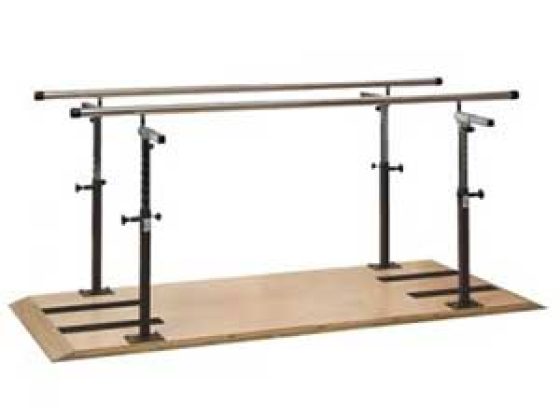
The logic is what can and cannot be improvised. Clinicians use parallel bars for standing balance, partial weight bearing and gait training, and nothing else in a therapy gym substitutes for a handhold on both sides at a set height. A rehab work table can be covered for a while by a mat table or plinth the clinic already owns, so it can follow. Training stairs and a curb set address the step, the curb and the ramp, which most plans of care reach later, so they are the piece a room can open without and add in the next cycle.
Two situations reorder that list. Pediatric and multi patient programs often put the table first, because several children work at one surface at the same time and the table effectively is the room. Any facility where the floor or the wall has to be prepared puts the mounted item first whatever it is, because construction happens before a room is furnished, never after.
Which Decision Has to Be Made Before Any Other One?
Mounting, because it is the only decision on this line that involves the building and the only one you cannot reverse cheaply.
- Floor mounted: a permanent position with nothing to stow. The floor has to be prepared, and undoing it is a repair. Suits an owned space or a long lease where the room will keep its use.
- Wall mounted and folding: recovers the floor between sessions and puts load into a wall that somebody has to certify. Suits a small room with a second job to do.
- Free standing and folding: stows without touching the building at all. Suits a leased suite, a room that changes use, or a buyer who expects to move before the equipment wears out.
- Height and width adjustable: one unit fits a wider mix of patients and clinicians, at the cost of a setting that has to be checked and reset through the day.
Ask who is allowed to change a setting and how long it takes. In a room where one clinician works all day with a similar caseload, adjustability is a feature that is rarely touched. In a room shared by several clinicians across pediatric and adult caseloads, it is the reason the room works at all. Get the floor or wall requirement confirmed in writing by the building owner or facilities engineer before the order goes in, not when the freight arrives.
How Do You Phase the Purchase Across Two Budget Cycles?
Split the order by what has to arrive together, not by what costs the most.
- Anything involving the building goes in phase one: a floor mounted or wall mounted unit drags a contractor, a landlord approval and a schedule behind it, and phase two cannot wait on that twice.
- Anything that has to match goes in the same phase: if two items will be used together in one session, buying them a year apart risks a mismatch in height, width or rail configuration that no discount makes up for.
- Anything shared between rooms can wait: a mobile item can serve two rooms until volume justifies a second.
- Confirm lead time at each phase rather than assuming it: the figure you were quoted for phase one is not a promise about phase two.
- Ask whether serviceable parts for phase one will still be available when phase two lands, because a line that is being changed out is better bought in one go.
Write the phase two list down while you are buying phase one, with the dimensions and settings of everything in phase one attached to it. The common failure is not that phase two was underfunded. It is that nobody recorded what phase one measured, and phase two arrived unable to work alongside it.
What Does a Second Treatment Room Need That the First One Did Not?
A second room is not a copy of the first one. The first room is built to be able to do everything. The second is built to remove whatever two clinicians were queueing for.
- Duplicate what is queued for, not what looks impressive: track which item two people wanted at once for a month before you decide.
- Adjustability is worth more in room two: the second room is usually the shared room, the overflow room, or the one that takes whichever caseload room one cannot.
- Free standing or folding is worth more in room two: second rooms change use more often than first rooms do.
- Split the table by population: the Multi-Patient Kidney Table 4 Cutouts is configured for child pediatric therapy and the Adjustable Multi-Patient Kidney Table 3 Cut Outs for adult therapy, so two rooms stop competing for one surface.
- Keep settings and dimensions consistent across rooms: a program written in one room should transfer to the other without anyone re-measuring.
- Stay in the same product family where you can: it keeps replacement parts, upholstery and cleaning protocol identical, which matters more at two rooms than at one.
How Do You Compare Two Options That Look the Same on Paper?
Write the difference between them in one sentence. If you cannot, they are the same item for your purposes, and you should decide on lead time, freight and parts availability instead.
When there is a real difference, get the manufacturer specification for both and compare the same fields in the same order: adjustment range and who is allowed to set it, footprint in use and stowed, what attaches to the building, what the delivery requires, which components wear and whether each is sold separately, and compatibility with your cleaning protocol. Comparing on one field at a time stops a long feature list from hiding a short answer.
The staircases are the clearest worked example. A Convertible Rail Support System Staircase, a One-Sided Rail Support Staircase System 30in/36in W, an Adjustable One-Sided Staircase 30in/36in W and a Small Straight Up & Down Staircase 30in/36in W are separated by rail configuration and by whether the unit adjusts, not by quality, and the right answer depends on whether your clinician works beside the patient or behind them. A Curb & Ramp Training Set for Physical Therapy Rehab is not a small staircase at all, because it addresses a different obstacle. All of them sit on the physical therapy equipment category page, and the pros will put two specifications side by side if you name the pair.
Which Buying Mistakes Actually Cause Returns?
Almost every return on this line traces back to one of six things, and all six are avoidable before the order is placed.
- Measuring the equipment and not the route to the room: ask for crated dimensions and walk the door widths, turns, thresholds and elevator before you buy.
- Buying for this month’s caseload: specify against the mix you see across a year, including the patients you see least often.
- Choosing a mounted unit without the building owner: a landlord or facilities engineer who says no after delivery turns a fitted item into a stored one.
- Nobody on site to receive the freight: agree who accepts delivery, who inspects it and what happens if damage is found, before the truck is scheduled.
- Treating cleaning as an afterthought: confirm upholstery and frame surfaces against the disinfectant your infection control policy names.
- Ordering the permanent item last: if something needs floor or wall preparation, it is first in the sequence whatever its place in the budget.
What Should You Work Through Before You Place the Order?
Work through this list in order, and stop at the first item you cannot answer.
- Room: measured dimensions, a sketch showing where each item lands, and the clear path a patient walks around it.
- Building: written approval for any floor or wall mounted item, plus floor loading confirmed by the facility.
- Caseload: adult, pediatric or both, the range of patient sizes, and how many clinicians share the room.
- Access: crated dimensions against door widths, turns, stairs, elevator and dock, with an answer for what happens if there is no dock.
- Delivery: who receives, who inspects, who signs, and the window that suits the clinic schedule.
- Assembly: whether installation is included, who does it, and what has to be finished in the room first.
- Service: which parts wear, whether they are sold separately, and how a replacement is ordered.
- Cleaning: your disinfectant against the manufacturer specification for every surface.
- Timing: current lead time confirmed at quote, against your opening or inspection date.
- Paperwork: warranty terms in writing, and the internal approvals the purchase needs.
What Should You Have Ready When You Call?
Have five things in front of you, and a call that would have taken three exchanges takes one.
- A room sketch with dimensions, marked with doors, windows, columns and anything already in the room.
- A description of the caseload, including patient population, the mix of adult and pediatric work, and how many clinicians use the room at once.
- The building constraints, meaning owned or leased, what you may attach to, and who approves it.
- The delivery picture, covering dock or no dock, stairs or elevator, and who will be there.
- Your dates, meaning the opening or in service date and the budget cycle the order falls in.
Then tell the pros which of the five buyer types above describes you. That single sentence narrows a catalog faster than any filter. Browse the full physical therapy equipment line first if you want to name specific items on the call, or ask the pros to build the list from the room sketch. Toll free 877-706-4480, local 713-706-4480, or inquiry@msecompany.net.
Frequently Asked Questions
How much of the budget should the first treatment room take?
Finish the first room before you start the second. A complete room that can run a full plan of care earns more than two half equipped rooms, because a missing item stops a session while a shared item only slows one. Decide what complete means for your caseload, fund that, and put anything left over toward the loose items that can move between rooms later.
Should the second treatment room mirror the first one?
No. Mirror the settings and dimensions so programs transfer between rooms, but not the purchase list. The first room is specified to be able to do everything. The second is specified to relieve whatever two clinicians were waiting on, which is usually one item rather than all of them. Track what queues for a month before committing the second room budget.
Can we start with free standing equipment and add mounted equipment later?
Yes, and it is a reasonable way to open on time in a leased suite. Plan for it deliberately: record the dimensions and settings of the free standing items, confirm the landlord approval path for mounting before you sign the lease if you can, and expect the mounted phase to bring a contractor and a schedule with it. Confirm lead time again when phase two is funded.
Who has to approve a floor or wall mounted installation in a leased suite?
The building owner or property manager, and in a hospital or skilled nursing facility, facilities engineering as well. Ask for the approval in writing and ask specifically about floor loading, wall construction behind the finish, and what has to be restored at the end of the lease. Getting that answer before ordering is the single cheapest step in this whole process.
How far ahead of an opening date should the order be placed?
Ask for the current lead time at the quote rather than working from a figure you heard before, then add your own construction, inspection and staff training time on top. Sequence anything requiring floor or wall work ahead of flooring and final inspection. If a date is fixed, say so on the call so the pros can flag any item that will not make it.
Do pediatric programs need a different setup from adult programs?
They need different configurations rather than different categories. The tables are configured separately for child pediatric therapy and adult therapy, and adjustable equipment carries more weight in a room that sees both populations in one day. If your program covers both, say so early, because it changes which items should adjust and which can be fixed.
Ready to Shop Physical Therapy Equipment?
Browse the Physical Therapy Equipment line, or go up to all rehabilitation equipment. Toll free 877-706-4480 | Local 713-706-4480 | inquiry@msecompany.net
Take This Guide With You
The full Physical Therapy Equipment buying guide as a printable PDF, with the comparison points and the pre-order checklist. Share it with facilities, purchasing or whoever signs off.