

Pillows & Cushions Buying Guide
A buyer guide to specifying positioning pillows and cushions for a facility, covering cleaning protocol compatibility, laundry, replacement planning and stock levels.
Home › Buyer Guides › Pillows & Cushions Buying Guide
Take This Guide With You
The full Pillows & Cushions buying guide as a printable PDF, with the comparison points and the pre-order checklist. Share it with facilities, purchasing or whoever signs off.
Pillows & Cushions in Stock Now
A live view of what is available in Pillows & Cushions right now. Prices and availability come straight from the catalog.
-
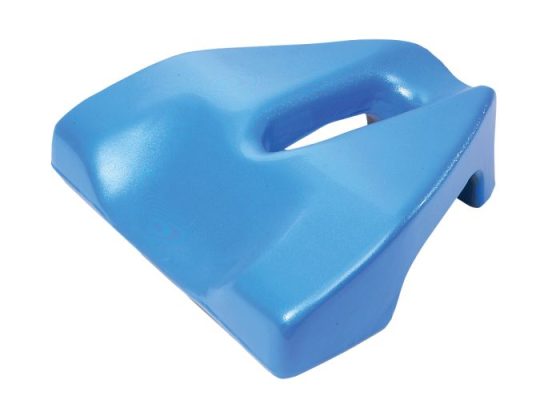
 Quick ViewSelect options
Pron Pillow – Prone Position Pillow
Item# 6024CHT$284.74Original price was: $284.74.$257.18Current price is: $257.18. -
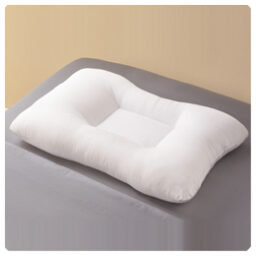 Quick ViewSelect options
Cervical Support Pillow
Item# 4697CRNSMD$125.98Original price was: $125.98.$97.66Current price is: $97.66.

How to Specify Positioning Pillows and Cushions for a Facility
Specifying positioning products for a building is a different job from buying one for a person. A facility is not choosing a shape it likes, it is choosing an item that will survive its own cleaning protocol, its own laundry cycle and its own turnover rate, and that can be replaced on a predictable budget line. This guide works through the order those decisions have to be made in: protocol first, then cover, then laundry and storage, then how many to hold and what to order per patient. For what the line holds and how the product types differ, see the pillows and cushions category page.

Who Is Specifying the Product, and How Does a Facility Order Differ From a Personal One?
A personal buyer is choosing for one body and one household washing machine. A facility buyer is choosing for a protocol, a laundry chain and a replacement budget, and the person who likes the product is usually not the person who has to clean it. Know which purchase you are making before you compare anything.
- An individual patient or caregiver in home recovery. One item, one user, laundered at home. Comfort and fit lead, and a removable fabric cover is usually workable.
- An outpatient clinic. Items move between patients through the day with minutes, not hours, between uses. Turnaround time is the constraint, which pushes toward products that can be returned to service at the treatment table.
- A hospital unit or skilled nursing facility. Infection control writes the rules, environmental services and clinical staff may work from different agent lists, and an item can be out of the building on a laundry run for a day or more.
- A materials manager buying across several buildings. The goal is one specification that every site can clean, store and reorder the same way, because variety is what makes training and reordering expensive.
These products sit inside MSEC’s broader rehabilitation equipment and products range, and clinicians use them as part of a positioning plan rather than as bedding, which is why the purchasing questions look more like linen and equipment questions than like retail ones.
What Should You Write Down Before You Look at a Single Product?
Write your own specification first, in one page, and use it to disqualify products quickly. Buyers who start from a catalog end up arguing about shapes. Buyers who start from their own protocol end up with a short list in an afternoon.
- The disinfectant your protocol names, the method and the contact time it requires. This one line rules out more products than any other.
- Who performs the cleaning, clinical staff at the point of use or environmental services on a round. The answer changes what is realistic.
- Whether the item is reissued or stays with one patient, decided per product rather than for the whole category.
- Where it is stored, including shelf volume, whether items can be stacked and whether there is somewhere they can dry.
- What it is used on, since a bed, a treatment table, a wheelchair and a recliner set different size limits.
- Who owns the reorder, and against which budget the replacements come.
Put that page in front of the supplier rather than asking for a recommendation cold. It turns a browsing exercise into a matching exercise.
How Do You Match a Product to the Cleaning Protocol You Already Run?
Compare the manufacturer’s stated cleaning instructions with your written protocol line by line, and treat any mismatch as a rejection rather than a detail to sort out later. The broad choice between a wipeable sealed cover and a launderable fabric one is covered on the positioning pillows and cushions category page. What matters here is the process you use to check it.
- Check the agent, not just the category. Protocols name specific chemistries, and a manufacturer instruction that permits one type of disinfectant does not permit all of them.
- Check the contact time your protocol demands. A surface that must stay wet for a stated period is a harder duty than a quick pass, and it is the duty the cover has to survive repeatedly.
- Ask what happens at the seams and the closure, because that is where a cleaning routine tests a cover first.
- Get the instruction in writing before you standardize, not from a product photo or a general assumption about the material.
- Check the whole item, not just the cover. Zippers, straps and any handle are cleaned with the same agent and often fail before the fabric does.
If your protocol changes, this check has to be run again on everything you already own. That is a good reason to keep the number of different products in a building small.
What Does the Laundry Cycle Actually Do to a Positioning Product?
Laundering is not a neutral step. Every cycle is an industrial process applied to an item that was designed around a foam core, and the practical questions are how many cycles the cover survives, how long the item is gone for, and whether it comes back at all.
- Turnaround time sets your quantity. If an item is away for a day, you need enough on hand to cover the beds or tables it serves while it is out, plus the ones already in use.
- Loss and mixing are real costs. Positioning items that leave the unit in a laundry cart get separated from their covers, mixed with linen and sometimes never return. Mark them and count them.
- Removable covers only help if you can buy them. Confirm that the cover is available as a separate part before you rely on laundering it, so a damaged cover is a cheap replacement rather than a discarded product.
- Cores and washing machines rarely mix. Confirm from the manufacturer instruction whether anything other than the cover may be laundered, and route the item accordingly.
- Drying and storage matter as much as washing. Items returned to a shelf before they are fully dry age faster at the contact faces.
- Decide who pays. If laundry is charged back to the unit, the cost per turnover belongs in your comparison alongside the purchase price.
A product that cannot be handled by the laundry operation you actually have is the wrong product, however well it performs on a treatment table.
How Do You Turn a Replacement Interval Into a Budget Line?
Estimate replacements from observed service life rather than a fixed calendar, then convert that into an annual number you can defend. Condition triggers tell you when to pull an item. A budget needs a rate.
- Tag and date items as they go into service. Without a start date there is no service life to measure and every replacement discussion becomes an argument.
- Record why each item was retired. Cover damage, a core that no longer returns its shape, staining or a failed closure. The mix tells you whether you have a product problem or a handling problem.
- Work out a replacement rate per year from what you actually retired last year, and apply it to the quantity you hold.
- Add a buffer stock line so a failed item can be pulled the day it fails rather than at the next order cycle.
- Compare products on cost per year in service, not on unit price, once you have a rate for each.
- Review the rate annually, because a change of disinfectant or a rise in patient volume will move it before anything else does.
Facilities that do this stop being surprised by positioning product spend, and they stop keeping items in service past the point where the cover has failed.
Which Items Should You Stock, and Which Should Be Ordered Per Patient?
Stock what any patient may need at short notice, and order per patient the items that follow one person through their stay or go home with them. Splitting the list this way keeps the supply room small without leaving a unit short.
- Stock the items used across many patients, where a wipeable cover allows fast turnaround and the shape is not personal to one body.
- Order per patient the single patient items, including anything a patient will take home, and anything a clinician has specified for one person.
- Set the stock quantity from the beds or tables served, plus what is out for cleaning, plus the buffer. Quantity is a cleaning calculation as much as a clinical one.
- Standardize across units where you can. One product cleaned one way across a building beats three similar products with three different instructions.
- Keep the storage footprint honest. These items are light and bulky, so measure the shelf before you commit to a quantity, especially for prone and wedge style products.
- Put replacement covers on the same reorder list as the products themselves.
To price facility quantities, or to set up a standing order that includes covers, email inquiry@msecompany.net or call 877-706-4480 toll free.
How Do You Compare Two Positioning Pillows That Look Identical in a Catalog?
Ask both suppliers for the same five things in writing, and the difference usually appears immediately. Catalog photographs and shape names are the least informative part of the comparison.
- The manufacturer specification sheet, with contour depth, width and height taken from the document rather than estimated from an image.
- The exact cover material and the stated cleaning method, named, not described in general terms.
- Whether the cover is sold separately, and the part number if it is. This one answer often decides cost per year in service.
- What the core does under load, and specifically whether it returns its shape. Press a sample and watch it recover before you buy a quantity.
- Availability and lead time, for both the product and its cover, since a product you cannot reorder in eighteen months creates a second standard in the building.
Where you can, get one of each and run it through your own cleaning routine for a week before committing to a facility quantity. A sample cycle answers questions that no specification sheet will.
Which Specifying Mistakes Turn Into Returns or Early Replacement?
Five mistakes account for most of the disappointment in this line, and every one of them is avoidable at the specification stage rather than after delivery.
- Buying a comfort product for a facility role. Fix: decide reissued or single patient first, then let that decide the cover.
- Using a stronger disinfectant than the manufacturer states. Fix: match the agent to the instruction, and if your protocol requires something harsher, choose a different product rather than a different chemistry.
- Ordering a quantity that ignores cleaning downtime. Fix: count what is out for cleaning or laundry as unavailable when you set the number.
- Sizing from a photograph. Fix: take dimensions from the specification sheet and check them against the beds, tables or chairs they will be used on.
- Not asking about replacement covers until one tears. Fix: get the cover part number on the original purchase order.
A sixth, quieter one: letting each unit order its own preferred product. A building with four similar items and four cleaning instructions will eventually clean one of them the wrong way.
What Should You Have Ready Before You Order or Call?
Have your protocol, your quantities and your storage limits in front of you, and a facility order can be quoted in one conversation. This is the short pre order checklist we work from at MSEC.
- Your written cleaning protocol, naming the agent, the method and the contact time.
- Whether each item is reissued or single patient, and who performs the cleaning.
- The surfaces the products will be used on, with the dimensions that constrain them.
- Quantity logic, including how many are in use, how many are out for cleaning and the buffer you want to hold.
- Storage and delivery details, including shelf space, dock or door access, whether a liftgate is needed for a freight quantity and who signs for it.
- Replacement parts, above all whether covers can be ordered separately.
Bring that list to the positioning pillows and cushions stocked by MSEC, then call 877-706-4480 toll free, 713-706-4480 locally, or email inquiry@msecompany.net and we will check cover materials and stated cleaning methods against the manufacturer specification before you standardize a building on anything.
Frequently Asked Questions
How many positioning pillows should a unit actually hold?
Count the beds or tables the product serves, add the items that will be out for cleaning or laundry at any moment, then add a small buffer so a failed item can be pulled the day it fails. Quantity in this category is a cleaning and turnaround calculation rather than a clinical one, which is why two units of the same size can legitimately hold very different numbers.
Our protocol uses a disinfectant the manufacturer does not list. What now?
Choose a different product rather than a different chemistry. Using an agent stronger than the manufacturer states shortens cover life sharply and puts you outside what the manufacturer has stated about the item. Send us your protocol, naming the agent and the contact time, and we will check it against the manufacturer instructions for the products you are considering before you order.
Can positioning products go through our facility laundry?
Only where the manufacturer instruction says so, and usually only the cover rather than the core. Before you rely on laundering, confirm three things: that the cover is removable, that it is available to buy as a separate part, and how long a laundry turnaround takes in your building. That turnaround time is what sets the quantity you need to hold.
How do we budget for replacements when there is no fixed replacement interval?
Build a rate rather than an interval. Tag items with an in service date, record why each one is retired, and use last year’s retirements to produce a replacement rate you can apply to the quantity you hold. Review it annually, since a change of disinfectant or a rise in patient volume moves that rate faster than anything about the product itself.
Should every unit in the building use the same positioning products?
Where the clinical use allows it, yes. One product, one cleaning instruction and one reorder line is easier to train, easier to audit and cheaper to stock than four similar items bought unit by unit. Standardization is also what protects you when a protocol changes, because the compatibility check then has to be run once rather than on four different specifications.
Can you quote a facility quantity with replacement covers included?
Yes. Email inquiry@msecompany.net or call 877-706-4480 toll free or 713-706-4480 locally with the products, the quantity and your cleaning protocol. We will confirm which covers are available as separate parts, give you the part numbers for your reorder list, and tell you how the shipment will arrive so you know whether you need dock access and a signature on delivery.
Ready to Shop Pillows & Cushions?
Browse the Pillows & Cushions line, or go up to all rehabilitation equipment. Toll free 877-706-4480 | Local 713-706-4480 | inquiry@msecompany.net
Take This Guide With You
The full Pillows & Cushions buying guide as a printable PDF, with the comparison points and the pre-order checklist. Share it with facilities, purchasing or whoever signs off.