

Weight Lifting Equipment Buying Guide
A decision walkthrough for building a progressive resistance inventory, covering load ladders with no missing steps at the bottom, machines against racks and free weight, and what a small clinic buys before a large one.
Home › Buyer Guides › Weight Lifting Equipment Buying Guide
Take This Guide With You
The full Weight Lifting Equipment buying guide as a printable PDF, with the comparison points and the pre-order checklist. Share it with facilities, purchasing or whoever signs off.
Weight Lifting Equipment in Stock Now
A live view of what is available in Weight Lifting Equipment right now. Prices and availability come straight from the catalog.
-
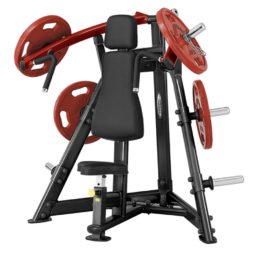 Quick ViewSelect options
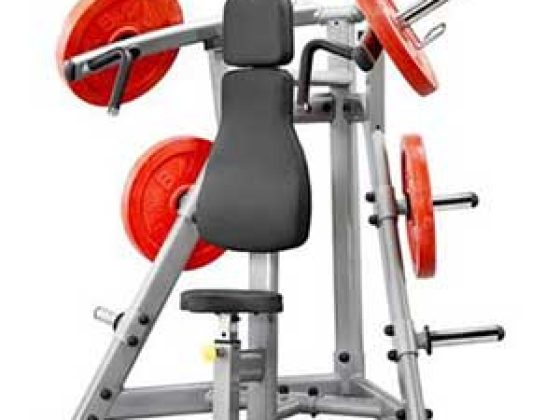
Shoulder Press Machine
Item# PSLPFMI$1,449.26Original price was: $1,449.26.$1,073.53Current price is: $1,073.53. -
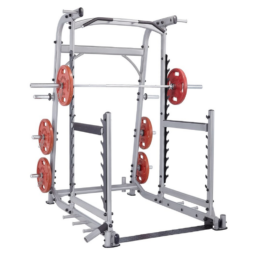 Quick ViewSelect options
Commercial Olympic Press Rack
Item# RPONFMI$1,917.79Original price was: $1,917.79.$1,420.59Current price is: $1,420.59. -
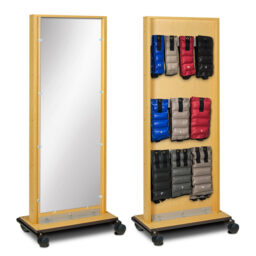 Quick ViewSelect options
Laminate Mobile Dual Sided Mirror w/Cuff Weight Rack
Item# 9-0126CLT$537.63Original price was: $537.63.$428.57Current price is: $428.57. -
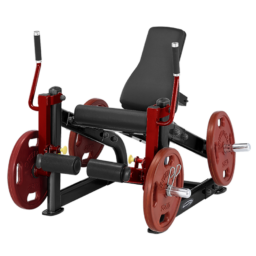 Quick ViewSelect options
Leg Extension
Item# ELLPFMI$1,449.26Original price was: $1,449.26.$1,073.53Current price is: $1,073.53.


How Do You Build a Progressive Resistance Inventory That Does Not Run Out of Steps?
A therapy gym fails at the bottom of its load range, not the top. Almost every gym has somewhere to go once a patient is strong, and far fewer have a usable step between the first rung and the second. This guide treats the purchase as inventory building rather than shopping: how to lay out the load your gym can actually produce and find the first gap, how to divide the job between machines and racks, what a small clinic buys before a large one does, and when to buy a second of something you already own.

Who Is Buying Rehabilitation Strength Equipment, and What Is Each One Solving?
Four buyers order this line, and they are solving different problems with the same catalog.
- A small outpatient clinic: one or two clinicians, limited floor, a mixed orthopedic caseload. Needs the widest movement coverage per square foot and the finest increments it can get.
- A hospital rehab department or skilled nursing facility: broader acuity, more patients arriving with weight bearing restrictions, and more staff sharing the same stations. Needs access, clearance and settings that are reproducible between clinicians.
- A growing multi clinician practice: the problem is no longer coverage, it is the queue. Needs duplication of whatever is booked solid.
- An athletic training room: later stage and return to sport work, where barbell capacity and a permanent rack position start to earn their footprint.
The weight lifting equipment category page lists what sits in each subcategory, and the wider rehabilitation equipment range covers the gait, cardio and therapy lines this equipment works alongside. This guide is about how to sequence the buying.
How Do You Build a Load Ladder With No Missing Steps at the Bottom?
Write out every load your gym can currently produce, sort it from lightest to heaviest, and look for the first place where the jump between two rungs is large as a proportion of the rung below it.
Do it as a list, not from memory. Take each station and record the settings it offers. Add the loose load you hold, which in this line means cuff weights on a rack. Sort the whole thing into one ladder per movement and per body region, because a gym can have a fine ladder for the knee and nothing usable between two rungs at the shoulder or the wrist. The first large proportional gap is what your next purchase is for, and it is usually a cheaper purchase than the one that was already on the list.
Two structural facts make the exercise worth doing. A machine stack is a fixed ladder that cannot be subdivided, so if its first step is already past what a patient can control, the station is unavailable to them regardless of what sits above it. Loose load can be added to a machine setting or used on its own, which is why racks and machines are bought together rather than chosen between.
Machines or Racks: Which Should Carry the Load in Your Gym?
Machines carry throughput and repeatability. Racks and loose load carry the bottom of the range and the late stage work. Most gyms need both, and the split depends on four things.
- Supervision ratio: a guided movement path lets one clinician keep an eye on several patients at once, which is why machines dominate in high turnover clinics.
- Reproducibility: a marked setting means the next clinician reproduces the same load without guessing, which matters most where several staff share a caseload.
- The bottom of the range: cuff weights split the difference between two machine settings, so loose load is what closes the gaps the ladder exercise exposes.
- Permanence and floor: a Commercial Olympic Press Rack needs a fixed position with clearance on every working side, while a Laminate Mobile Dual Sided Mirror w/Cuff Weight Rack rolls to wherever the patient is working.
There is an inventory argument as well. Loose load walks, and a ladder with a missing rung is usually a ladder whose rung is in somebody’s drawer. Storage that presents the increments in order, visible and countable, keeps the ladder intact, which is a purchasing decision more than a housekeeping one.
What Should a Small Clinic Buy Before a Large One Does?
A small clinic buys coverage and increments. A large facility buys duplication, specialization and late stage capacity.
For a small clinic the first purchases are a station covering the lower body movement the caseload sees most, a seated upper body station, and a mobile cuff weight rack so the fine increments live at the point of use rather than in a cupboard. That combination gives a usable ladder and enough pattern coverage that mat work and the rest of the rehabilitation catalog can fill the remainder until volume justifies more stations.
A large facility adds in a different order. Second units of whatever queues come before new movement patterns. Pairs replace single choices, so a Leg Extension and a Leg Curl Exercise Machine both go in rather than one standing for the other. A Standard Seated Row balances the pushing stations. An Incline Press Machine joins a Standard Exercise Bench Press where the caseload genuinely needs both angles, and a fixed rack appears once late stage and athletic work is a regular part of the schedule rather than an occasional one. The test throughout is simple: a station earns its footprint when it is on the schedule most days, not when it completes a set.
When Should You Buy a Second of a Station You Already Have?
When that station is the reason a patient is waiting.
- Track the queue before you decide: a month of noting which station two clinicians wanted at once answers this better than any layout theory.
- Duplication beats variety under one clinician: one supervising clinician, two identical stations and no waiting is a better hour than four stations nobody can watch.
- Variety beats duplication when a body region is uncovered: if the caseload includes work your stations cannot load at all, coverage comes first.
- The cheapest capacity is often more loose load: an extra set of cuff weights frees a station without adding a footprint.
- Plan for downtime: a single station out for a cable or pad replacement is a gap in the schedule, and that risk is part of the case for the second unit.
How Do You Compare Two Machines That Look Like They Do the Same Job?
Compare them on movement path, starting load and step size, seat and access, footprint, and serviceable parts, in that order, using the manufacturer specification for both rather than the product photo.
Movement path first, because it decides whether the two machines are alternatives at all. A Standard Exercise Bench Press, an Incline Press Machine and a Shoulder Press Machine all load an upper body pushing pattern at different angles, so the real question is whether your caseload needs those angles separately or whether one of them covers the schedule. A Leg Extension and a Leg Curl Exercise Machine are not alternatives to each other at all, because they load the knee in opposite directions, and a gym that buys one as a substitute for the other has bought half a pair. A Standard Seated Row is the pulling counterpart to the pressing stations.
Once the movement question is settled, the rest is a straight field by field comparison: the lowest usable setting and the size of the step above it, how a patient gets into the seat and whether an assistive device can be parked within reach, the footprint in use plus service access, and which pads, cables and casters are sold as replacement parts. Everything in the comparison is on the weight lifting equipment line, and the pros will put two specifications side by side if you name the pair.
Which Purchasing Mistakes Produce an Unused Station?
Six mistakes account for most of the stations that end up holding coats, and every one of them is made before the order is placed.
- Specifying on maximum stack weight: the number that sells the machine is the number your caseload will never reach, while the number that decides usability sits at the bottom.
- Buying pattern variety before increment coverage: six movement patterns with a gap at the bottom of each serves fewer patients than three with a complete ladder.
- No storage for the loose load: without a rack the cuff weights migrate, and the ladder that justified the purchase quietly breaks.
- Skipping floor loading and the route in: confirm floor loading with the facility and crated dimensions against doors, turns and elevators before you order, not at the curb.
- Cleaning checked after delivery: confirm pads and upholstery against the disinfectant your infection control policy names.
- Buying a fixed rack into a space that cannot hold one: a permanent rack needs a permanent position and landlord agreement, and a mobile unit is the answer where neither exists.
What Should You Confirm Before You Place the Order?
Go down this list and stop at the first line you cannot answer from a document.
- Your load ladder, written out per movement and per body region, with the gap this order is meant to fill identified.
- Starting resistance and increment on every station, from the manufacturer specification.
- Seat and access, including how a patient with a mobility limitation gets in and where an assistive device goes.
- Footprint, working clearance and service access marked on a room plan.
- Floor loading and floor surface confirmed by the facility, and landlord agreement for anything permanent.
- Crated dimensions against the route in, with an answer for dock, stairs or elevator.
- Delivery: who receives, who inspects, who signs, and what happens if damage is found.
- Assembly: whether it is included, who performs it, and what has to be ready in the room.
- Parts: which pads, cables, cuffs and casters are serviceable and how they are reordered.
- Cleaning compatibility for every upholstered and gripped surface.
- Lead time and warranty terms confirmed in writing at the quote.
What Should You Have Ready When You Call?
Five things, and the call goes from a browse to a quote.
- Your load ladder and the gap you are trying to close, which is the single most useful sentence you can open with.
- Your caseload: the body regions you load most, the stage of care you see most, and whether patients arrive with weight bearing restrictions.
- A room sketch with dimensions, showing existing stations and where a clinician stands.
- Staffing and throughput: how many clinicians share the gym and how many patients are working at once at the busiest hour.
- Constraints and dates: owned or leased, floor loading answer, delivery access, in service date and who approves the purchase.
Say which of the four buyer types above describes you and what queues today, and the pros can put the shortlist together from there. Toll free 877-706-4480, local 713-706-4480, or inquiry@msecompany.net.
Frequently Asked Questions
How do I tell whether my resistance range has a gap in it?
List every load your gym can produce, per movement and per body region, and sort it lightest to heaviest. Look for the first place where one rung is a large proportion heavier than the one below it. Early in the range, a small absolute jump is a large proportional one, which is why gaps at the bottom matter far more than gaps at the top. That first gap is your next purchase.
Should I buy a second of a machine I already have, or add a new movement pattern?
Buy the second unit when the existing station is the reason patients wait, and the new pattern when your caseload includes work no current station can load at all. Coverage comes before capacity, and capacity comes before completeness. A month of noting which station two clinicians wanted at the same time settles this faster than a floor plan will.
Can one machine cover two movement patterns to save space?
Sometimes, and it depends on the movement rather than the marketing. Pressing stations differ by angle, so one may cover the schedule if your caseload does not need the angles separately. Stations that load a joint in opposite directions are not substitutes for each other and buying one for both jobs leaves the program short. Ask for both manufacturer specifications and compare the movement path first.
What changes when a clinic grows from one clinician to several?
Reproducibility and queueing start to outweigh coverage. Settings need to be marked so the next clinician reproduces the same load without guessing, and the station that is booked solid needs a second unit before a new pattern is added. Storage for loose load also matters more, because cuff weights disappear fastest in a gym where several people are working at once.
How do we phase a purchase across two budget years?
Put anything permanent, anything requiring floor work and anything that has to match an existing station in the first phase, and leave mobile or standalone items for the second. Record the dimensions, settings and part numbers of phase one before phase two is written, and confirm lead time and parts availability again at the second quote rather than assuming they carried over.
Do we need free weights if we already have machines?
Machines give a guided path and repeatable settings. Loose load gives the increments between those settings and the late stage work a fixed stack cannot produce. Most gyms need both, and a gym that skipped the loose load usually discovers it at the bottom of the range, where the jump between the first and second machine setting is too large for the patients who need the station most.
Ready to Shop Weight Lifting Equipment?
Browse the Weight Lifting Equipment line, or go up to all rehabilitation equipment. Toll free 877-706-4480 | Local 713-706-4480 | inquiry@msecompany.net
Take This Guide With You
The full Weight Lifting Equipment buying guide as a printable PDF, with the comparison points and the pre-order checklist. Share it with facilities, purchasing or whoever signs off.