web analytics

MS3C Battery Operated Climbing Hand Truck Trolleys

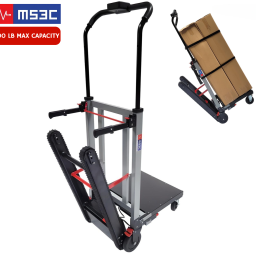
The load-moving side of the MS3C stair line: battery powered climbing trolleys that walk heavy cargo up and down stairs under one operator’s control.

Home » Emergency Medical Equipment » MS3C Battery Operated Climbing Hand Truck Trolleys

Powered Stair Climbing Trolleys for Heavy Loads

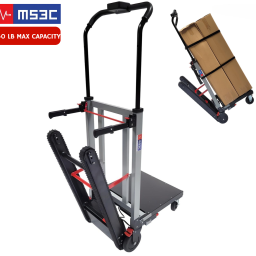
The same stair-climbing engineering that moves patients in the MS3C chair line moves cargo here. A battery operated climbing hand truck trolley is a powered hand truck whose climbing mechanism steps a heavy load up or down stairs while a single operator balances and steers, which is how equipment rooms above ground floors, walk-up deliveries and multi-story facilities move loads that would otherwise take a crew. The two models below list rated load, battery specifications, step speed and frame dimensions on their product pages.

Shop MS3C Battery Operated Climbing Hand Truck Trolley

Everything MSEC carries in MS3C Battery Operated Climbing Hand Truck Trolley, shown in full. Specifications are supplied by the manufacturer. For current pricing, lead time or a quote on a purchase order, call toll free 877-706-4480.

Choosing Between Models?

The Evacuation Chairs Buying Guide walks through the decisions behind a ms3c battery operated climbing hand truck trolley purchase: a comparison method, the mistakes that cause returns, and a pre-order checklist, with downloadable PDF guides.

Who Uses a Powered Climbing Hand Truck?

Anyone whose heavy loads and stairs intersect on a schedule. Medical equipment dealers and facility teams moving concentrators, therapy units and cases between floors. Delivery operations serving walk-up buildings. Facilities and IT teams relocating equipment racks. Vending and appliance movers. The common thread is that the load is too heavy to carry safely on stairs and too frequent to book a crew every time, which is exactly the arithmetic a powered climber changes: one trained operator, repeatably.

How Does the Climbing Mechanism Work in Practice?

The battery drives a stepping mechanism at the base of the frame that lifts the wheels past each stair nosing in sequence, so the load ascends or descends one controlled step at a time while the operator keeps the frame balanced at its tilt point. Practical evaluation comes down to the numbers on the product page: rated load against your heaviest routine item, steps per minute against your typical flight, and battery capacity against a full day’s moves. The frame’s folded dimensions decide where it lives between jobs.

What Should Buyers Check Before Ordering?

Three checks settle the purchase. Weigh the real load, including its case or packaging, against the rated capacity with margin left over. Measure the narrowest stairwell on the route, including turns and door apertures, against the frame width. And confirm the charging arrangement: where the trolley parks is where its battery charges, so the storage spot needs an outlet. The team walks through all three against a specific building at 877-706-4480 before quoting.

How Does This Line Relate to the Stair Chair Line?

They are siblings with different cargo. The stair assist chairs move people and are specified around patient safety, restraint and transfer; these trolleys move objects and are specified around load weight, frame width and battery duty. Facilities that run both, such as multi-story clinics, often buy from both lines in one order, and the shared MS3C engineering means the maintenance mindset carries over: batteries, wheels and belts are the service items, and the team supports parts for the line.

Frequently Asked Questions

A powered hand truck whose stepping mechanism walks heavy loads up and down stairs one step at a time under a single operator’s control, used where heavy items and stairs meet on a routine basis.

Each model publishes its manufacturer rated load on its product page, and buyers should weigh their heaviest routine item, packaging included, and keep margin under the rating.

Battery capacity and step counts are listed in each model’s specification table, and matching them against a typical day’s moves is part of the pre-order check the team helps with.

Frame width is in the specification table, and the buyer’s measurement of the narrowest stairwell, turn and doorway on the route is the deciding check before ordering.

No. Stair chairs in the MS3C line move patients; these trolleys move cargo. The climbing engineering is related, and multi-story facilities often order from both lines together.

Related Emergency Medical Categories

Move up to the full emergency line or across to the equipment families bought alongside this one.

MS3C Stair Assist Evacuation Chairs from MSEC

MS3C Stair Assist Evacuation Chairs

Track-equipped chairs for working EMS stair duty.

MS3C Stair Chair Parts & Accessories from MSEC

MS3C Stair Chair Parts & Accessories

Tracks, wheels, straps and hardware for the chair line.

Emergency Evacuation Chairs from MSEC

Emergency Evacuation Chairs

Staged stair-descent chairs for building readiness.
Emergency Medical Equipment from MSEC

Emergency Medical Equipment

The full emergency line from transport to first aid.


GSA contract holder  •  Ships nationwide  •  From Patient to Doctor & Everyone In Between

Talk to a Medical Equipment Specialist

Toll free 877-706-4480  |  Local 713-706-4480  |  inquiry@msecompany.net

Scroll to Top