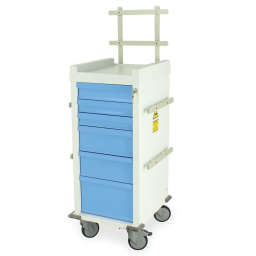
Anesthesia Carts
Anesthesia workstation carts in 3 through 7 drawer builds: 37 carts organized for induction workflow, airway supplies and controlled storage at the point of care.
Home » Hospital & Durable Medical Equipment » Medical Carts » Anesthesia Carts
The OR Workstation On Wheels
Anesthesia carts carry a working day’s materials in induction order: airway on top, drugs secured, lines and circuits below. The builds here run 3 through 7 drawers with the lock provisions anesthesia practice expects, and drawer interiors take the divider systems from the accessories family so each provider’s layout standard carries across rooms.
Shop The Anesthesia Carts Range by Type
Each line opens its models with specifications per product.
Shop Anesthesia Carts
Everything MSEC carries in Anesthesia Carts, shown in full. Specifications are supplied by the manufacturer. For current pricing, lead time or a quote on a purchase order, call toll free 877-706-4480.
-
Quick ViewSelect optionsAluminum Narrow Non-Magnetic MRI Cart w/ANS ACCS PKG., Key Lock & 6 Drawers
Item# NAM-K6NRMHRF $5,999.14 -
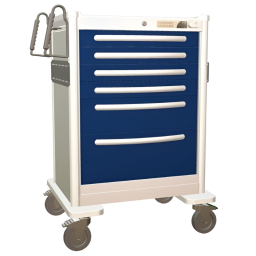
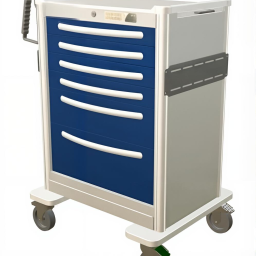
Quick ViewSelect optionsAluminum Standard Tall Anesthesia Cart w/ 6 Drawers & Proximity Lock
Item# 963333-APGTUWLH $5,733.48 -
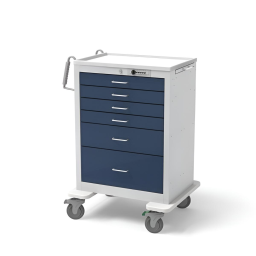
Quick ViewSelect optionsSteel Standard Tall Anesthesia Treatment Cart w/ 6 Drawers & Simplex Lock
Item# 963333-USGTUWLH $2,230.97 -
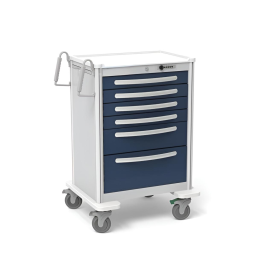
Quick ViewSelect options -
Quick ViewSelect optionsAluminum Standard Tall Anesthesia Cart w/ 6 Drawers & Electronic Lock
Item# 963333-AEGTUWLH $5,316.96 -
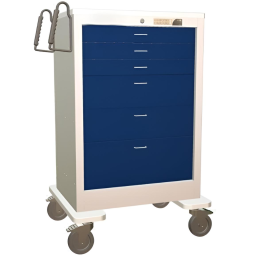
Quick ViewSelect optionsSteel Standard X-Tall Anesthesia Cart w/ 6 Drawers & Electronic Lock
Item# 966333-UEGXUWLH $3,674.34 -
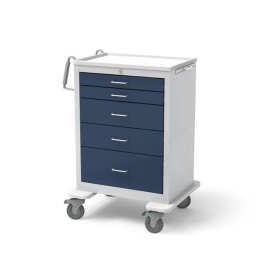
Quick ViewSelect optionsSteel Standard Tall Anesthesia Treatment Cart w/ 5 Drawers & Key Lock
Item# 96633-UKGTUWLH $1,902.19 -
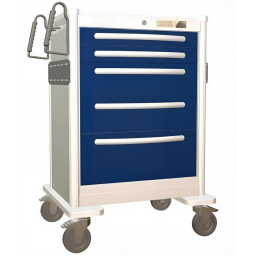
Quick ViewSelect optionsAluminum Standard Tall Anesthesia Cart w/ 5 Drawers & Electronic Lock
Item# 96633-AEGTUWLH $5,202.40 -
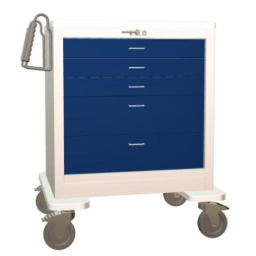
Quick ViewSelect options
What Is an Anesthesia Cart?
An anesthesia cart is a mobile, locking workstation that holds the supplies and medications an anesthesia provider needs during surgical and procedural cases. It sits beside the anesthesia machine in the operating or procedure room and is organized so the provider can reach airway equipment, syringes, medications, IV supplies and other items quickly while monitoring the patient. Unlike a crash cart, which stays sealed until an emergency, an anesthesia cart is a working cart opened throughout the day. Hospitals, ambulatory surgery centers, dental surgery practices, endoscopy suites, veterinary surgical practices and training programs all use anesthesia carts. This line includes configurations from three to seven drawers, each with its own page listing products and specifications per model. The right configuration depends on the cases performed in each room, how often the cart is restocked and the facility’s medication security requirements.
How Is an Anesthesia Cart Organized?
Anesthesia carts are typically organized by drawer depth and frequency of use. Shallow drawers at the top hold small, frequently used items such as syringes, needles, medications and airway adjuncts, where the provider can reach them without bending. Middle drawers hold IV supplies, catheters and monitoring supplies. Deeper drawers at the bottom hold bulky items such as breathing circuits, masks, bags and larger airway devices. Dividers and bins keep items organized within each drawer. Many departments standardize the drawer layout across every anesthesia cart, so any provider covering any room finds supplies in the same place. A posted drawer map and labels on drawer fronts reinforce that consistency. When choosing a cart, list the supplies each room stocks and map them to drawers before selecting the drawer count. Each configuration page lists drawer depths so the map can be matched to a model.
How Many Drawers Does an Anesthesia Cart Need?
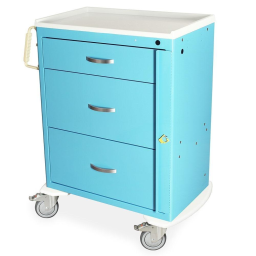
The right drawer count depends on how much stock the room carries and how often it is restocked. Three drawer carts suit satellite locations, block rooms and procedure rooms that keep bulk stock in wall storage or a nearby supply area. Four and five drawer carts carry a complete room stock for most general operating and procedure rooms and are the most common choice. Six drawer carts suit busy rooms and service lines with extensive supply lists, such as cardiac or complex surgery. Seven drawer carts provide maximum capacity for rooms that stock deeply or are restocked infrequently. Taller carts raise the top surface, which some providers use for preparation, so consider who works at the cart. Many departments run a mixed fleet, with taller carts in primary operating rooms and compact carts in satellite locations, while keeping the top drawers mapped identically across all sizes.
What Security Do Anesthesia Carts Provide?
Anesthesia carts store medications, including controlled substances, so security is essential. Many carts use central locking that secures every drawer with one key or control. Keyless and electronic locks are available on some models, and electronic locks may support individual access codes. Separate locked compartments within the cart can provide an additional barrier for controlled substances. Facilities should follow their medication security and controlled substance policies when selecting locks, since requirements vary. Carts are typically locked when the room is unattended and between cases according to policy. Coordinating lock systems across a department simplifies access for providers and technicians who work in multiple rooms. When comparing carts, check the locking system, the availability of separately locked compartments and how the system fits the department’s procedures. Each listing describes the locking features of its models.
Why Use a Different Color From Crash Carts?
Anesthesia carts and crash carts can look similar, and confusing them during an emergency could waste valuable time. Many facilities assign different colors to anesthesia carts and crash carts so staff can identify each instantly. The convention is set at the facility level and applied consistently across all rooms. When purchasing anesthesia carts, check the color options available and choose a color that matches the facility’s convention. If the facility is buying both anesthesia carts and crash carts at the same time, coordinating colors in one order helps maintain the distinction. The same principle applies to other cart types, such as isolation carts and medication carts, where color can help staff recognize each cart’s purpose. Clear labeling adds another layer of identification. Listings indicate available colors so facilities can match carts to their established conventions.
What Accessories Support Anesthesia Workflows?
Accessories adapt the anesthesia cart to the provider’s workflow. Side rails hold sharps containers, glove boxes and waste bins. Top rails and organizers hold frequently used items on the work surface. Pull out shelves add working space. Airway device holders keep laryngoscopes and other equipment accessible. IV poles mount to the cart for fluids. Drawer dividers and bins organize supplies within drawers. Some carts include space or mounts for documentation devices. Because anesthesia providers work quickly and often in tight spaces beside the anesthesia machine, accessories should place items where they are easy to reach without cluttering the work area. Accessories mount to specific rail systems, so compatibility depends on the cart model. The medical cart accessories line provides these items listed by compatible cart.
How Are Anesthesia Carts Restocked and Maintained?
Anesthesia carts are restocked regularly, often between cases or at the end of each day, by anesthesia technicians or staff following a par list for each drawer. A consistent drawer layout makes restocking faster and more accurate. Medications are managed according to pharmacy and controlled substance procedures. Carts should be cleaned with approved disinfectants between cases, including the top, handles and drawer fronts, and drawer interiors should be cleaned periodically. Locks should operate reliably, drawers should open smoothly and casters should roll and lock correctly. Damaged dividers and bins should be replaced. Keeping replacement parts for the department’s cart models allows quick repairs. Standardizing cart models across a department simplifies training, parts and restocking procedures.
Where Are Anesthesia Carts Used?
Anesthesia carts are used wherever anesthesia or sedation is provided. Hospital operating rooms are the largest users, with a cart in each room. Ambulatory surgery centers place carts in every operating and procedure room. Endoscopy suites, cardiac catheterization labs, interventional radiology and labor and delivery units use them for procedures requiring sedation or anesthesia. Dental and oral surgery practices use them for sedation procedures. Veterinary surgical practices use anesthesia carts for animal surgery. Training programs and simulation centers use them for education. Each setting has different case types and supply needs, which is why the line spans three to seven drawers. Facilities can select the configuration for each room based on its case mix and restocking schedule.
How Do Facilities Order Anesthesia Carts?
Orders usually start with the number of rooms, the supply list for each room type and the medication security policy. Departments choose drawer counts, lock systems, colors and accessories and standardize them across rooms. MSEC quotes individual carts and department orders, accepts purchase orders from hospitals, surgery centers, dental and veterinary practices and government buyers, and offers GSA contract pricing for federal and VA facilities. The order desk at 877-706-4480 can match configurations to a department’s supply lists and policies before anything ships.
What Should You Check Before Ordering?
A few checks prevent the most common problems with anesthesia cart purchases. First, compare the cart’s overall dimensions with the space beside the anesthesia machine, since operating rooms are crowded with booms, monitors and equipment, and a cart that is too wide or tall may interfere with workflow. Second, map the room’s supply list to the cart’s drawer depths to confirm everything fits with room for growth. Third, confirm that the lock system matches the department’s medication security procedures and works with existing keys or codes. Fourth, check caster size and quality against the room’s flooring and any cable covers the cart must cross. Fifth, confirm accessory compatibility so the cart can carry the department’s standard accessory set. Finally, choose a color that fits the facility’s cart color convention. Working through these checks with the anesthesia team before ordering ensures carts arrive ready for use.
Frequently Asked Questions
What is an anesthesia cart?
An anesthesia cart is a mobile, locking workstation that holds the supplies and medications an anesthesia provider uses during cases, organized for quick access beside the anesthesia machine.
How is an anesthesia cart different from a crash cart?
An anesthesia cart is a working cart opened throughout the day. A crash cart stays sealed until an emergency. Many facilities use different colors to distinguish them.
How many drawers should an anesthesia cart have?
Three drawer carts suit satellite rooms, four and five drawers suit most operating rooms, and six or seven drawers suit rooms with extensive supplies or infrequent restocking.
How are anesthesia carts secured?
Many use central locking that secures every drawer at once. Keyless and electronic locks are available, and separately locked compartments can secure controlled substances.
Why standardize anesthesia cart drawer layouts?
A consistent layout lets any provider find supplies quickly in any room and makes restocking faster and more accurate.
Can MSEC quote anesthesia carts for an OR suite?
Yes. MSEC quotes individual carts and department orders, accepts purchase orders, and offers GSA contract pricing for federal and VA facilities. Call toll free 877-706-4480 or locally 713-706-4480.
Related Hospital Equipment Categories
More lines from Medical Carts and the wider Hospital department.
Medical Cart Accessories
188 products
Emergency Crash Carts
57 products
Medication Carts
36 products
Isolation Carts
27 products
Treatment Carts
22 products
Hospital Specialty Carts
13 products
Quick Ship Medical Carts
12 products
Hospital Storage Carts
8 products
Talk to a Medical Equipment Specialist
Toll free 877-706-4480 | Local 713-706-4480 | inquiry@msecompany.net