
web analytics

Emergency Crash Carts

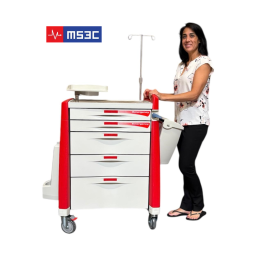
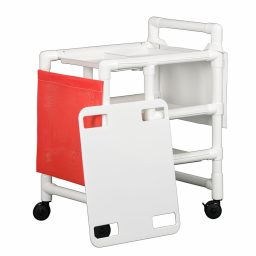
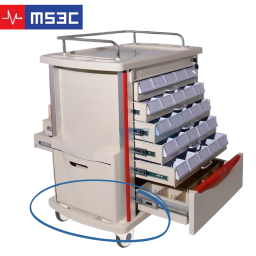
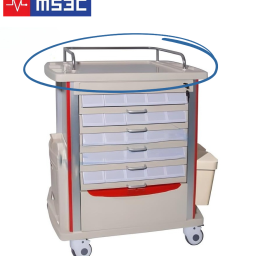
Code response carts in 3 through 9 drawer builds, pediatric configurations, MS3C parts and complete cart packages: 57 products built around seconds-count access.

A Cart Organized Around The Worst Five Minutes

A crash cart is specified backward from the code: what must be in hand in the first minute decides the top drawers, and everything else stacks beneath it. Drawer count follows the facility’s code cart standard, breakaway locks and clear labeling are assumed, and the pediatric line carries the color-coded logic children’s response requires. The MS3C parts line keeps existing carts compliant without replacement.

Shop The Emergency Crash Carts Range by Type

Each line opens its models with specifications per product.

Shop Emergency Crash Carts

Everything MSEC carries in Emergency Crash Carts, shown in full. Specifications are supplied by the manufacturer. For current pricing, lead time or a quote on a purchase order, call toll free 877-706-4480.

What Is an Emergency Crash Cart?

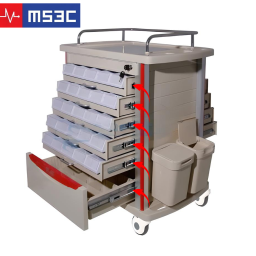
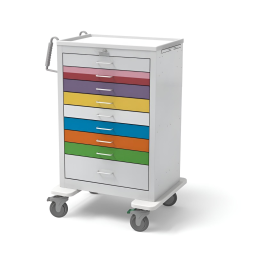
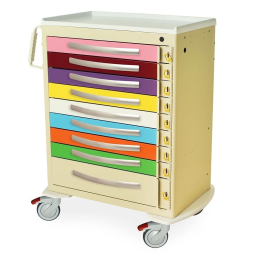
An emergency crash cart, also called a code cart, is a mobile cart stocked with the equipment and medications needed to respond to a medical emergency such as cardiac arrest. It is kept sealed and ready in a designated location, checked on a schedule, and opened only when a code is called. When that happens, responders bring the cart to the patient and use its organized drawers to find airway supplies, medications, IV supplies and other items quickly. A defibrillator, oxygen and a cardiac board often ride on or with the cart. Hospitals, surgery centers, clinics, long term care facilities, dental and imaging centers, schools and many other organizations keep crash carts. This line includes carts with three, four, five, six and nine drawers, pediatric emergency carts, emergency cart packages and parts and accessories. Each has its own page with products and specifications listed per model.

How Is a Crash Cart Drawer Standard Set?

Most facilities have a resuscitation committee or similar group that defines what each crash cart contains and where each item is located. The standard typically organizes drawers by function, such as airway, breathing, circulation, medications and IV supplies, following the order responders need items during a code. Keeping the same layout on every cart in a facility means any responder can find supplies quickly on any cart. Pharmacy usually manages the medication contents, often through sealed medication trays that are exchanged after use. Once the standard is set, the cart’s drawer count and configuration should match it. Most adult standards fill five or six drawers, which is why those sizes are the most common. Satellite locations with simpler standards may use three or four drawer carts, while areas needing extensive supplies may use larger carts. Each drawer count page lists configurations for its models.

Why Do Crash Carts Use Breakaway Locks?

A crash cart must be secure when not in use but instantly accessible during an emergency. Breakaway locks and numbered seals meet both needs. The seal or lock shows that the cart has not been opened since it was last checked and stocked, so staff performing routine checks can confirm readiness without opening every drawer. During a code, the seal breaks with a single pull, giving immediate access with no keys or codes. After the code, the cart is restocked, checked and resealed with a new numbered seal, and the seal number is recorded. This system supports documentation of cart readiness, which accreditation surveys and internal audits commonly review. When choosing a crash cart, confirm that its locking mechanism works with the seals the facility uses. Replacement seals and breakaway locks are available through the parts and accessories line.

What Accessories Do Crash Carts Need?

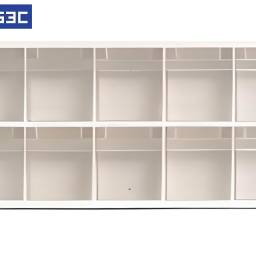
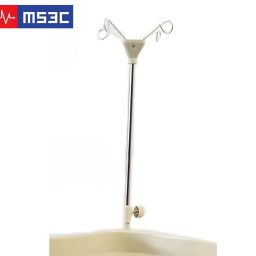
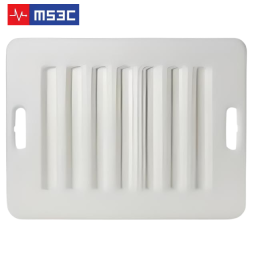
Crash carts carry more than drawer supplies. A cardiac board mounted on the back of the cart provides a firm surface under the patient during chest compressions. An oxygen tank holder carries a cylinder for ventilation. A defibrillator shelf or platform holds the defibrillator on top of the cart. An IV pole lets fluids be hung during the response. A sharps container and glove holder keep essential items within reach. Suction equipment mounts on some carts. Many facilities specify a standard accessory set for every crash cart so responders know what to expect. Emergency cart packages bundle a cart with a typical accessory set, simplifying ordering. Accessories mount to specific rail and bracket systems, so compatibility should be checked against the cart model. The parts and accessories line provides boards, brackets, holders, seals and replacement parts listed by cart model.

Why Are Pediatric Crash Carts Different?

Children vary greatly in size, and pediatric resuscitation uses equipment and medication doses that depend on the child’s weight or length. Pediatric crash carts are organized to support that approach, often with drawers arranged by size or color zones that correspond to a length based measuring system. A responder estimates the child’s size, then goes directly to the corresponding drawer for appropriately sized airway equipment, IV supplies and dosing information. This organization reduces the time and risk involved in selecting the right equipment under pressure. Pediatric carts are often a different color from adult carts so they are easy to identify. Facilities that treat children, including emergency departments, pediatric units and general hospitals, typically keep pediatric carts alongside their adult carts. The pediatric emergency carts page lists configurations designed for these systems.

Where Should Crash Carts Be Placed?

Crash cart placement is based on response time. Facilities divide their space into response zones and place carts so a cart can reach any patient in a zone within the facility’s target time. Patient units, emergency departments, procedure areas, imaging, outpatient clinics, cafeterias and other public areas may each need coverage. Carts should be parked in visible, accessible locations, kept clear of obstructions, and plugged in if the defibrillator requires charging. Placement should consider elevator access and the route to each area in the zone. Specialty areas need specialty carts: pediatric carts where children are treated and MRI safe emergency carts in the MRI suite, since standard carts cannot enter the magnet room. Facilities often document cart locations on floor plans and review placement when units are renovated or services change. Adequate coverage depends on having enough carts for every zone.

How Are Crash Carts Checked and Maintained?

Crash carts are checked on a regular schedule, often daily or each shift, to confirm the seal is intact, the defibrillator is functional and charged, oxygen tanks are full and external equipment is present. Full inventory checks are performed periodically and after every use, verifying that every item is present, in date and in its correct location. Expiring medications and supplies are replaced before their dates. Checks are documented, often on a log attached to the cart. Mechanical maintenance includes checking that drawers open smoothly, casters roll and lock, and accessory mounts are secure. Damaged parts should be replaced promptly, since a cart that malfunctions during a code can delay care. Keeping replacement seals, locks, boards and casters on hand allows quick repairs. Standardizing cart models across the facility simplifies parts and training.

How Do Crash Carts Support Accreditation and Audits?

Accreditation surveys and internal audits often review crash cart readiness, including whether carts are sealed, checks are documented, contents match the facility’s standard and supplies are in date. Equipment that supports a consistent checking process makes these reviews easier. Numbered seals and breakaway locks provide evidence that carts have not been opened. Standardized drawer layouts make inventory checks faster and more accurate. Logs attached to the cart document daily and post use checks. Organized drawers with clear labels help staff verify contents quickly. Facilities that standardize carts, seals and checking procedures across all locations typically find it easier to demonstrate readiness. When purchasing new carts, choosing models that work with the facility’s existing seals, drawer standard and accessories helps maintain consistency and avoids creating exceptions that complicate audits.

How Do Facilities Order Crash Carts?

Orders typically begin with the facility’s resuscitation standard and the number of response zones that need coverage. Facilities choose drawer counts and configurations that match the standard, select accessory sets, and include pediatric and MRI safe carts where needed. Emergency cart packages can simplify ordering. MSEC quotes individual carts and facility orders, accepts purchase orders from hospitals, surgery centers, clinics, long term care facilities, schools and government buyers, and offers GSA contract pricing for federal and VA facilities. The order desk at 877-706-4480 can match cart configurations to a facility’s drawer standard and accessory requirements before anything ships.

Frequently Asked Questions

A crash cart is a sealed, mobile cart stocked with emergency equipment and medications for responding to events such as cardiac arrest. It is checked on a schedule and opened only during a code.

Match the drawer count to your facility’s resuscitation standard. Most adult standards fill five or six drawers, while satellite locations may use three or four.

Breakaway locks and numbered seals show the cart has not been opened since it was checked, yet break instantly during an emergency with no keys needed.

A pediatric cart is organized by size or color zones that correspond to a child’s length or weight, so responders can find correctly sized equipment quickly.

Common accessories include a cardiac board, oxygen tank holder, defibrillator shelf, IV pole, sharps container and glove holder. Emergency cart packages bundle these with the cart.

Yes. MSEC quotes individual carts and facility orders, accepts purchase orders, and offers GSA contract pricing for federal and VA facilities. Call toll free 877-706-4480 or locally 713-706-4480.

Related Hospital Equipment Categories

More lines from Medical Carts and the wider Hospital department.

Talk to a Medical Equipment Specialist

Toll free 877-706-4480  |  Local 713-706-4480  |  inquiry@msecompany.net

Scroll to Top