
Treatment Carts
Wound care and procedure supply carts in 2 through 6 drawer builds: 22 carts that bring the treatment room to the bedside.
Home » Hospital & Durable Medical Equipment » Medical Carts » Treatment Carts
The Bedside Procedure Platform
Treatment carts carry the dressing change, the line care, the bedside procedure: deeper drawers than a med cart, a work surface that takes a sterile field, and capacity for the bulky supplies wound care burns through. Builds run 2 through 6 drawers so the cart matches the unit’s procedure volume instead of hauling empty steel.
Shop The Treatment Carts Range by Type
Each line opens its models with specifications per product.
Shop Treatment Carts
Everything MSEC carries in Treatment Carts, shown in full. Specifications are supplied by the manufacturer. For current pricing, lead time or a quote on a purchase order, call toll free 877-706-4480.
-
Quick ViewSelect options -
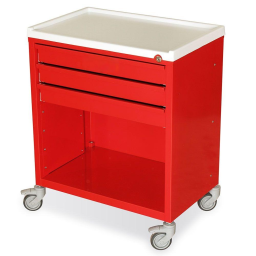
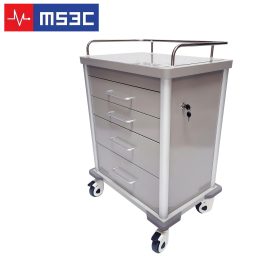
Quick ViewSelect optionsSteel Economy Medical Cart w/ 4 Drawers & Guardrail – QUICK SHIP!
Item# MS3C-CP063$1,567.00Original price was: $1,567.00.$1,095.00Current price is: $1,095.00. -
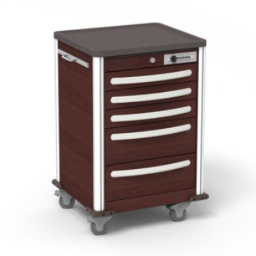
Quick ViewSelect optionsAluminum Junior Short Bedside Slim Treatment Cart w/ 5 Drawers & Simplex Lock
Item# 66333-ASHSJWLH $4,440.17 -
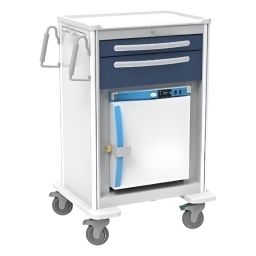
Quick ViewSelect optionsAluminum Malignant Hyperthermia Cart w/ 2 Drawers & Fridge
Item# H63-AKGXUWLH$6,570.00Original price was: $6,570.00.$5,252.00Current price is: $5,252.00. -
Quick ViewSelect options -
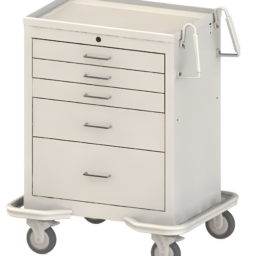
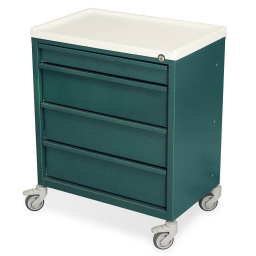
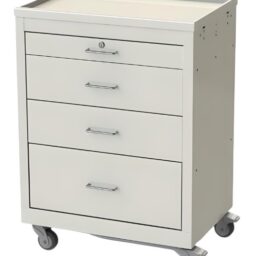
Quick ViewSelect options
What Is a Treatment Cart?
A treatment cart is a mobile workstation that carries the supplies needed for bedside procedures and routine clinical care. Nurses use treatment carts for wound care, dressing changes, catheter care, IV starts, specimen collection and other tasks performed in the patient’s room. The cart’s drawers organize supplies by task, and its top provides a clean surface for setting up procedures. Unlike a medication cart, which is organized around a scheduled pass and strict medication security, a treatment cart is organized around the procedures it supports and is opened as needed throughout the shift. Hospitals, long term care facilities, rehabilitation centers, clinics, wound care centers and home health agencies all use treatment carts. This line includes configurations from two to six drawers, each with its own page listing products and specifications per model.
How Should a Treatment Cart Be Organized?
A well organized treatment cart groups supplies by the procedures performed. A typical layout might place dressing supplies in one drawer, IV and catheter supplies in another, gloves and personal protective equipment in another and general supplies such as tape, gauze and swabs in another. Frequently used items belong in the upper drawers, and bulkier items in the lower ones. Dividers and bins keep small items separated. Labels on drawer fronts help staff find supplies quickly, especially float staff unfamiliar with the unit. A posted par list for each drawer makes restocking consistent. Many units standardize treatment cart layouts across all carts so staff can work from any cart. When choosing a cart, list the supplies the unit uses for bedside procedures, group them by task and select a drawer count that gives each group its own space.
How Many Drawers Does a Treatment Cart Need?
Drawer count should match the variety and volume of supplies the cart carries. Two and three drawer carts suit focused services, such as a wound care team or a clinic treatment room with a limited supply list. Four drawer carts suit general units with moderate treatment needs. Five and six drawer carts suit busy units with extensive treatment supplies or units that want to restock less often. Taller carts carry more but raise the top surface and add weight, which affects maneuverability in patient rooms. Consider the space in patient rooms, since the cart must fit beside the bed during procedures. Some units use a smaller cart for routine tasks and keep a larger cart for specialized procedures. Each drawer count page lists configurations and dimensions so the cart can be matched to the unit’s supply list and room layout.
How Do Treatment Carts Differ From Medication Carts?
Treatment carts and medication carts look similar but serve different purposes. Medication carts are organized around patients, with bins or cards for each patient’s medications, and they use locks that meet medication security requirements. Treatment carts are organized around procedures and supplies, with drawers grouped by task, and they generally require less security, though some include locking drawers for items that need it. Using a medication cart for treatment supplies, or the reverse, leads to awkward workflows and may conflict with policies. Facilities typically maintain both types, with medication carts for med passes and treatment carts for bedside procedures. When a single cart must support both functions, a treatment cart with a locking drawer may work, but the facility’s medication security policy should guide that decision.
What Accessories Make a Treatment Cart More Useful?
Accessories extend what a treatment cart can do. Side rails hold sharps containers, glove boxes, waste bins and wipe dispensers. IV poles mounted to the cart carry fluids during procedures. Pull out shelves add working surface for setting up supplies. Top organizers keep frequently used items within reach. Drawer dividers and bins organize small supplies. Writing surfaces support documentation. Because treatment carts are used at the bedside, accessories should keep items accessible without cluttering the work area or making the cart too wide for patient rooms. Accessories mount to specific rail systems, so compatibility depends on the cart model. The medical cart accessories line provides these items listed by compatible cart, and ordering accessories with the cart ensures they arrive ready to use.
How Do Treatment Carts Support Infection Control?
Treatment carts travel from room to room, so they must be managed to avoid carrying contamination. Carts should be cleaned with approved disinfectants regularly, including the top, handles and drawer fronts. Some facilities keep carts outside patient rooms and bring only needed supplies to the bedside, especially for patients on isolation precautions. Supplies taken into a room should not be returned to the cart if they may be contaminated. Drawer interiors should be cleaned periodically and whenever spills occur. Surfaces that tolerate disinfectants and designs without crevices make cleaning easier. Organized drawers reduce handling of supplies, which also reduces contamination risk. Isolation carts in this family serve a related purpose, staging personal protective equipment outside precaution rooms. Involving the infection prevention team in setting treatment cart procedures helps ensure safe practices.
How Are Treatment Carts Maintained?
Routine maintenance keeps treatment carts functional. Drawers should open and close smoothly, and slides should be replaced if they stick. Casters should roll quietly and lock securely, and worn casters should be replaced. Locks, where present, should operate reliably. Damaged dividers and bins should be replaced so supplies stay organized. Accessories should be checked for secure mounting. Restocking should follow the unit’s par list, and expired supplies should be removed. Keeping replacement casters, slides and organizers on hand allows quick repairs. Standardizing cart models across units simplifies parts and helps staff become familiar with each cart. A regular inspection schedule catches problems early, before they interfere with patient care.
Where Are Treatment Carts Used?
Hospitals use treatment carts on medical surgical units, emergency departments, procedure areas and specialty units. Long term care and skilled nursing facilities use them for wound care and resident treatments. Rehabilitation centers use them for routine care. Wound care centers and clinics use them in treatment rooms. Home health and hospice agencies use smaller carts in some settings. Each setting has different supply needs, which is why the line spans two to six drawers. Facilities can select configurations for each unit based on the procedures performed and the space available.
How Do Facilities Order Treatment Carts?
Orders typically start with the procedures performed on each unit and the supplies they require. Facilities choose drawer counts and accessories, standardize layouts and order by unit. MSEC quotes individual carts and fleet orders, accepts purchase orders from hospitals, long term care facilities, clinics and government buyers, and offers GSA contract pricing for federal and VA facilities. The order desk at 877-706-4480 can match configurations to supply lists before anything ships.
How Does Cart Size Affect Work in Patient Rooms?
Patient rooms are often crowded with the bed, overbed table, chairs, IV poles and monitoring equipment, so the size of a treatment cart affects how easily staff can work at the bedside. A cart that is too wide may not fit between the bed and other furniture, forcing staff to reach awkwardly or leave the cart in the doorway. A cart that is too tall may block sight lines or make the top surface uncomfortable for shorter staff. Compact carts maneuver more easily but carry fewer supplies. Before ordering, measure the space available beside beds in typical rooms and compare it with the cart’s listed width and depth. Consider the cart’s turning radius in tight rooms and whether it must pass through narrow doorways. Units with small rooms may choose narrower carts and keep backup supplies in a nearby supply room. Matching cart size to room layout makes bedside procedures safer and more efficient.
How Can Treatment Carts Reduce Wasted Steps?
Every trip a nurse makes to a supply room for a missing item takes time away from patients and interrupts the procedure. A well stocked, well organized treatment cart reduces those trips by bringing everything needed for common procedures to the bedside. Analyzing the procedures performed most often on a unit and making sure the cart carries a complete set of supplies for each helps eliminate missing items. Procedure kits or bins grouped by task, such as a dressing change bin, let staff grab everything at once. Consistent restocking to par levels ensures supplies are always available. Feedback from staff about items they frequently have to retrieve helps refine the cart’s contents over time. Units that focus on cart organization often find that procedures go more smoothly and staff spend more time with patients.
Frequently Asked Questions
What is a treatment cart?
A treatment cart is a mobile workstation that carries supplies for bedside procedures such as wound care, dressing changes and IV starts, organized by task.
How is a treatment cart different from a medication cart?
Treatment carts are organized around procedures and supplies. Medication carts are organized around patients and use locks that meet medication security requirements.
How many drawers should a treatment cart have?
Two and three drawers suit focused services, four suits general units and five or six suit busy units with extensive supplies.
What accessories are available for treatment carts?
Common accessories include sharps holders, glove holders, IV poles, pull out shelves, organizers and drawer dividers, listed by compatible cart model.
Should treatment carts enter isolation rooms?
Many facilities keep carts outside isolation rooms and bring only needed supplies inside. Follow your infection prevention team’s procedures.
Can MSEC quote treatment carts for a unit?
Yes. MSEC quotes individual carts and fleet orders, accepts purchase orders, and offers GSA contract pricing for federal and VA facilities. Call toll free 877-706-4480 or locally 713-706-4480.
Related Hospital Equipment Categories
More lines from Medical Carts and the wider Hospital department.
Medical Cart Accessories
188 products
Emergency Crash Carts
57 products
Anesthesia Carts
37 products
Medication Carts
36 products
Isolation Carts
27 products
Hospital Specialty Carts
13 products
Quick Ship Medical Carts
12 products
Hospital Storage Carts
8 products
Talk to a Medical Equipment Specialist
Toll free 877-706-4480 | Local 713-706-4480 | inquiry@msecompany.net