
web analytics

Cold Therapy Tanks

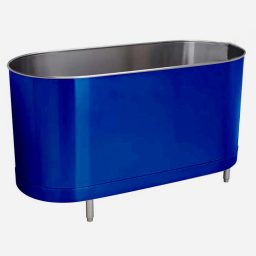
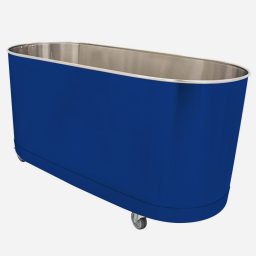
Clinical cold immersion tanks in Lo-Boy, Hi-Boy and Sports bodies from 60 to 110 gallons, in stationary, mobile and legged configurations for clinics, hospital rehab departments and athletic training rooms.

Cold Therapy Tanks for Clinics, Training Rooms and Rehab Departments

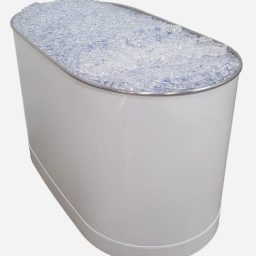
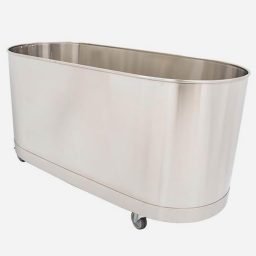
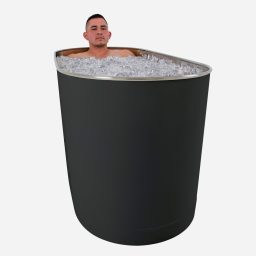
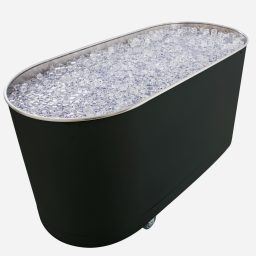
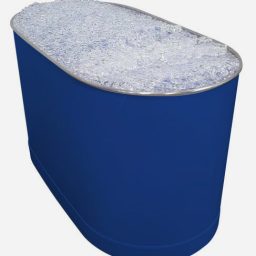
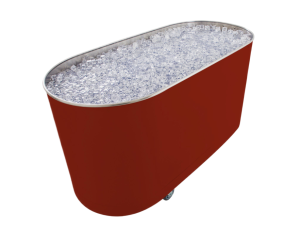
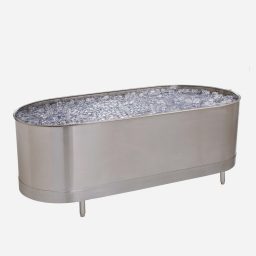
A cold therapy tank is a stainless immersion tank built for clinical duty, sized in gallons and supplied in a stationary or mobile frame. Clinicians in outpatient clinics, hospital rehab departments and athletic training rooms use cold immersion within post operative and acute injury protocols. MSEC stocks this category deeper than any other in the hot and cold line, in Lo-Boy, Hi-Boy and Sports bodies from 60 gallons up to 110 gallons.

Shop Cold Therapy Tanks

Everything MSEC carries in Cold Therapy Tanks, shown in full. Specifications are supplied by the manufacturer. For current pricing, lead time or a quote on a purchase order, call toll free 877-706-4480.

Choosing Between Models?

The Hot & Cold Therapy Equipment Buying Guide walks through the decisions behind this purchase, with a comparison method, the mistakes that cause returns and a pre-order checklist.

Why Does the Same Capacity Appear in Three Different Tank Bodies?

Because the gallon figure tells you how much water the tank holds, not how the patient gets into it. MSEC lists 75, 90 and 105 gallon tanks in the Lo-Boy body, 90 gallon and 110 gallon tanks in the Sports body, and a 105 gallon tank in the Hi-Boy body, and those units are not substitutes for one another even where the capacity matches.

The body style sets the rim height and therefore the entry and the working position for the clinician standing alongside. The capacity sets the volume of water, the fill and drain time and what the floor is carrying once the tank is full. Two tanks holding the same water can suit completely different rooms, and two tanks in the same body can suit completely different caseloads.

That is why the right sequence is to fix the body style with your clinicians first, then choose a capacity within that body, then decide stationary or mobile. Buyers who start from the gallon figure alone frequently end up with a tank that fits the budget and not the room. The hot and cold therapy equipment page explains how the body styles differ.

Which Tank Capacities Does MSEC Stock in Each Style?

Every capacity below is a tank MSEC lists by name, and the gaps in this table are real gaps rather than omissions. The 60 gallon size exists only in the Hi-Boy body, the 85 and 110 gallon sizes only in the Sports body, and the w/ Legs configuration appears on a limited set of stationary tanks.

Tank BodyCapacities StockedStationaryMobileStationary w/ Legs
Lo-Boy75, 90, 105 gallon75, 90, 10575, 90, 105105
Hi-Boy60, 75, 90, 105 gallon60, 75, 90, 10560, 75, 90, 105Not listed
Sports85, 90, 110 gallon85, 90, 11085, 90, 11090, 110

Read it across rather than down. If your room needs the smallest tank in the range, you are buying a Hi-Boy. If you need the largest, you are buying a Sports tank. If you need 75 gallons, the choice is between a Lo-Boy and a Hi-Boy, and that decision is about rim height, not volume.

What Does the w/ Legs Option Change on a Stationary Tank?

Legs raise a stationary tank off the floor, and MSEC lists that configuration on the 105 Gallon Stationary Lo-Boy w/Legs Cold Therapy Tank, the 90 Gallon Stationary Sports Cold Therapy Tank w/ Legs and the 110 Gallon Stationary Sports Cold Therapy Tank w/ Legs.

The practical effect shows up in three places. It changes the rim height relative to the floor, which changes the working height for the clinician and the entry for the patient. It changes what sits under the tank, which affects how the floor underneath is cleaned and how drain hardware is reached. And it changes the delivered height, which is worth checking against door frames and ceiling clearances on the delivery route.

Because the legged version is a separate listing rather than an accessory, the decision is made at order time. If you are unsure which version your room needs, send us the room dimensions and the drain position and we will work it through with you before the order is placed.

Which Components Should You Ask About Before a Tank Is Quoted?

Ask about everything that is not the tank shell, because that is where two quotes stop being comparable. A tank is a stainless vessel, and what makes it usable in a treatment room is the hardware attached to it and the services around it.

  • Drain hardware and drain routing. How the tank empties, and where that water goes in your room.
  • Fill source. Whether the tank is filled from a fixed supply or manually, which affects turnaround more than capacity does.
  • Frame and casters. On mobile tanks, what the casters are rated for and whether they lock.
  • Cover or lid. Whether one is included, which matters for a tank left standing between sessions.
  • Steps, rails or seating. Anything the patient uses to enter, which is usually quoted separately.
  • Temperature and chilling. Whether the configuration you are quoting includes any chilling hardware or is a tank only.

Get these confirmed in writing on the quote. Ask the pros at 877-706-4480 toll free, 713-706-4480 local, or inquiry@msecompany.net.

What Does a Filled Tank Commit the Room To?

Far more weight than the empty tank suggests, and that is the number your facilities team needs rather than the shipping weight. A 105 gallon or 110 gallon tank holds a substantial volume of water, and once filled it becomes a fixed load on that section of floor whether the frame is stationary or mobile.

Three consequences follow. Floor loading has to be confirmed by someone who knows the building, particularly above ground floor level. Wet floor management becomes a daily operational item rather than an installation one, so slip surfaces and drainage routes around the tank need a plan. And a mobile tank is mobile between uses, not during them, which means the room still has to work with the tank standing where it is filled.

Buyers moving from a small extremity unit to a full immersion tank are usually surprised by this step change. It is worth walking the room and the delivery route before the order rather than after.

What Should You Confirm on the Specification Sheet Before Ordering a Cold Therapy Tank?

Confirm the physical dimensions against the room and the route first, then the services. Work down this list with the sheet in front of you.

  • Overall external dimensions and height, including the legs where a w/ Legs version is specified.
  • Delivery access, meaning door widths, corridor turns, elevator dimensions and whether a dock or a lift gate is needed.
  • Floor loading for the filled tank, signed off by your facilities team.
  • Water supply and drainage at the installed position, and the drain valve arrangement supplied with the tank.
  • Electrical supply if the configuration includes any powered component.
  • Cleaning protocol compatibility, so the tank surfaces and fittings tolerate the disinfectant your facility already uses.
  • Serviceable parts, specifically which valves, casters and fittings can be ordered on their own later.

The hot and cold therapy buyer guide takes the same list further into the decision, including how to weigh one large tank against two smaller ones.

When Does a Facility Need Something Other Than an Immersion Tank?

When the protocol is localized, when the room cannot take a filled tank, or when the equipment has to travel to the patient. An immersion tank is the right answer for whole limb and larger region immersion in a dedicated space, and the wrong answer for a treatment room that has no drain and no floor capacity.

  • You need heat rather than cold. Moist heat equipment sits in the wider hot and cold therapy equipment line alongside these tanks.
  • You need cold applied to one area without immersion. Pack and wrap based products sit in the same parent line and cost a fraction of a tank installation.
  • You are equipping a whole department. Work down from the rehabilitation equipment hub so the tank is specified alongside the tables, seating and strength equipment that share the space.

If the capacity or configuration you need does not appear in the table above, call us. Tank ranges change, and we will tell you what is available rather than steering you to the nearest listed size.

Frequently Asked Questions

No. MSEC lists 60 gallons only in the Hi-Boy body, in both the 60 Gallon Stationary Hi-Boy Cold Therapy Tank and the 60 Gallon Mobile Hi-Boy Cold Therapy Tank. The Lo-Boy range starts at 75 gallons and the Sports range starts at 85 gallons. If a Lo-Boy at that capacity is what your room needs, call us before you settle for a different body style.

They sit in different product families. The 105 gallon tanks are listed in the Lo-Boy and Hi-Boy bodies, while 110 gallons is the largest Sports tank and is listed in stationary, mobile and stationary w/ Legs versions. The five gallon difference is far less significant to your decision than the body style difference that comes with it.

Treat the legged version as a separate product rather than an upgrade. MSEC lists the w/ Legs configuration as its own item on specific tanks, which means the decision belongs at order time. If you think you may want the raised height later, tell us before you order and we will confirm what is possible on the model you are considering.

Within each body style, yes. Every capacity MSEC lists in the Lo-Boy, Hi-Boy and Sports bodies appears in both a stationary and a mobile version, from the 60 gallon Hi-Boy up to the 110 gallon Sports tank. The w/ Legs configuration is the one that is limited, appearing on a selected set of stationary tanks rather than across the full range.

Yes, and the Sports body was built for that setting. Training rooms typically look at the 85, 90 and 110 gallon Sports tanks, often in the mobile frame so the tank can be repositioned when the room changes use. Clinics and hospital rehab departments more often specify Lo-Boy or Hi-Boy bodies in a fixed position with permanent drainage.

Send the room dimensions, the position of the nearest drain and water supply, the floor level and building access route, and the body style your clinicians want. With those five things we can narrow the range to two or three tanks in one call. Reach us at 877-706-4480 toll free, 713-706-4480 local, or inquiry@msecompany.net.

Related Categories

Move up to Hot & Cold Therapy Equipment, or across to the lines ordered alongside this one.

Hot and cold therapy equipment unit for rehabilitation clinics

Hot & Cold Therapy Equipment

The full Hot & Cold Therapy Equipment line.


GSA contract holder  •  Ships nationwide  •  From Patient to Doctor & Everyone In Between

Talk to a Medical Equipment Specialist

Toll free 877-706-4480  |  Local 713-706-4480  |  inquiry@msecompany.net

Scroll to Top