

Lo-Boy Hydrotherapy Whirlpool Tubs
Low profile stainless hydrotherapy tanks in 75, 90 and 105 gallon capacities, in mobile and stationary configurations, for physical therapy clinics, hospital rehab departments and athletic training rooms.
Home › Rehabilitation Equipment › Hydrotherapy Whirlpool Tubs › Lo-Boy Hydrotherapy Whirlpool Tubs
Lo-Boy Hydrotherapy Whirlpool Tubs for Rehabilitation Facilities
A lo-boy whirlpool is a low profile stainless hydrotherapy tank, named for the height of the tank rather than for the body part treated. Clinicians use lo-boy units for lower extremity and partial immersion work in physical therapy clinics, hospital rehab departments, outpatient rehabilitation centers, athletic training rooms and skilled nursing facilities. MSEC lists lo-boy tanks in three capacities, each available in a mobile or a stationary configuration, and those two choices are what a specification conversation actually turns on.
Shop Lo-Boy Hydrotherapy Whirlpool Tubs
Everything MSEC carries in Lo-Boy Hydrotherapy Whirlpool Tubs, shown in full. Specifications are supplied by the manufacturer. For current pricing, lead time or a quote on a purchase order, call toll free 877-706-4480.
-
 Quick ViewSelect options
 -
 Quick ViewSelect options
 -
 Quick ViewSelect options
 -
 Quick ViewSelect options
 -
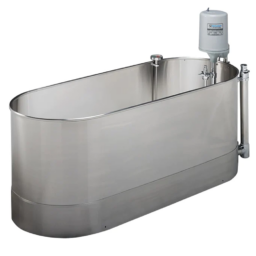 Quick ViewSelect options
 -
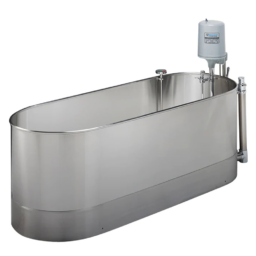 Quick ViewSelect options
 -
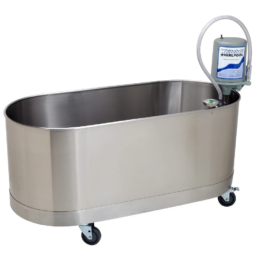 Quick ViewSelect options


Choosing Between Models?
The Hydrotherapy Rehabilitation Tubs Clinical Guide walks through the decisions behind this purchase, with a comparison method, the mistakes that cause returns and a pre-order checklist.
What Makes a Lo-Boy Tank Different From a Hi-Boy or Slant Back Tank?
Tank height and the immersion it allows. A lo-boy tank sits low, which is what makes it the configuration clinicians reach for in lower extremity and partial immersion work, while taller and angled tanks are specified where more of the trunk goes into the water.
- Lo-boy. Low tank profile. Easier to reach into from a standing position, and it sets a lower entry for the patient.
- Hi-Boy. A taller tank for seated immersion covering more of the body.
- Slant Back. An angled back that changes how the patient is positioned in the tank.
- Extremity. Small tanks for a single limb, where the whole body never enters the water.
Height is also a staff question rather than only a patient one. The lower the tank, the further a clinician bends to assist at the water line, and the shorter the lift path for anything that has to come out of the tank. Confirm the finished tank height and the interior dimensions on the manufacturer specification for the model you are quoting, because that figure decides both the patient entry and how the staff work around the unit all day.
Which Lo-Boy Models Does MSEC List, and How Do They Compare?
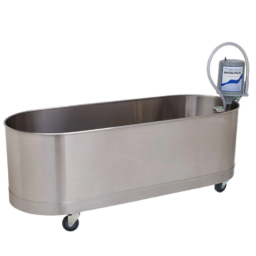
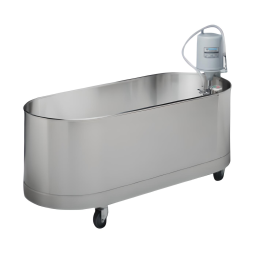
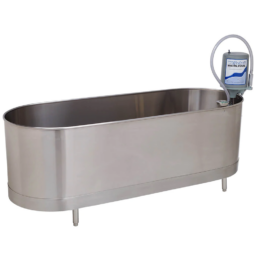
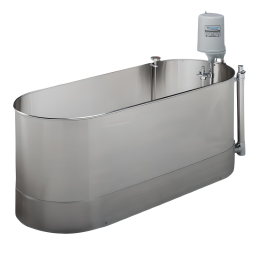
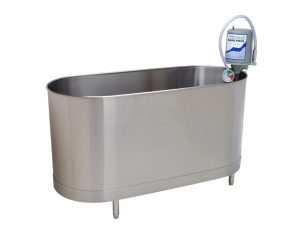
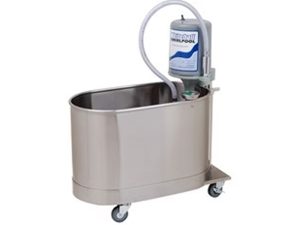
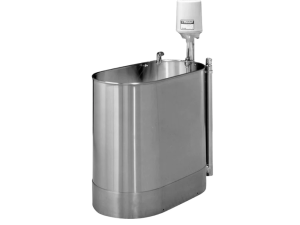
Three capacities, 75, 90 and 105 gallons, each listed in both a mobile and a stationary configuration, with an additional 105 gallon stationary unit specified with legs.
| Capacity | Mobile configuration | Stationary configuration |
|---|---|---|
| 75 gallon | 75 Gallon Lo-Boy Whirlpool Mobile Unit | 75 Gallon Lo-Boy Whirlpool Stationary Unit |
| 90 gallon | 90 Gallon Mobile Lo-Boy Whirlpool | 90 Gallon Stationary Lo-Boy Whirlpool |
| 105 gallon | 105 Gallon Mobile Lo-Boy Whirlpool | 105 Gallon Stationary Lo-Boy Whirlpool, and 105 Gallon Stationary Lo-Boy Whirlpool w/ Legs |
Capacity is the headline figure, and it stands in for interior volume rather than describing the tank’s footprint. A larger tank holds more water, which changes fill time, drain time, water use per treatment and the static load on the floor when the unit is full. Confirm exterior dimensions, interior dimensions and finished height separately from capacity, since two tanks quoted at the same gallon figure are not necessarily the same shape.
The 105 Gallon Stationary Lo-Boy Whirlpool and the 105 Gallon Stationary Lo-Boy Whirlpool w/ Legs are listed separately, so confirm the mounting arrangement and the finished working height on each before ordering. That difference affects how the unit sits relative to the floor and how the plumbing connections are made, which is not something to settle after delivery.
Should You Order the Mobile or the Stationary Configuration?
Order mobile if the tank has to serve more than one space or move for cleaning and access, and stationary if it lives in one place on a permanent connection. Every capacity in this category is listed both ways, so the decision is genuinely open.
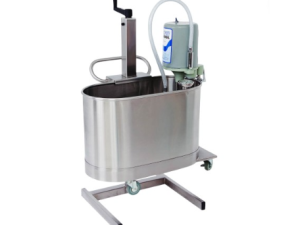
- Mobile units sit on casters and can be repositioned within a treatment area. That suits rooms that change function, facilities that clean behind equipment on a schedule, and departments that want the option to move a tank rather than rebuild a room.
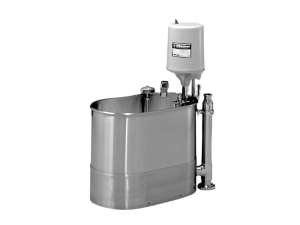
- Stationary units stay put. They suit a dedicated hydrotherapy room where the connections are fixed, and they remove the question of whether a caster has been locked before a session.
A caution worth stating plainly: a mobile configuration means the unit can be repositioned, not that a full tank should be moved. Water is heavy, and the manufacturer’s instructions govern when and how a unit is moved. Plan the room so the tank is filled where it will be used.
The parent line covers casters, turbine agitation and temperature monitoring across all the tank types, so see the Hydrotherapy Whirlpool Tubs category page rather than repeating it here.
How Do You Choose Between 75, 90 and 105 Gallons?
Work backward from the immersion the clinicians need and the throughput the room has to sustain, not from the largest number on the page. Capacity drives four things at once.
- Immersion. The water volume and the interior dimensions together decide how much of the limb or body the water covers with the patient positioned as the clinician wants.
- Fill and drain time. A larger tank takes longer at both ends, which comes straight out of the treatment schedule if the room runs back to back sessions.
- Water and utilities. Every treatment at 105 gallons uses more than one at 75 gallons, and hot water supply is the constraint facilities most often discover late.
- Floor loading. A full tank plus its own weight is a significant static load. Confirm it against the manufacturer specification and, on an upper floor or a converted room, against your building information.
Departments running a single tank for a mixed caseload usually size up, because a tank that is too small limits what can be treated in it. Departments running two tanks often split the difference and pair capacities. The hydrotherapy rehabilitation tubs clinical guide works through that sizing decision against a caseload in more detail.
What Does the Room Need to Support a Lo-Boy Whirlpool?
Water in, water out, power for the turbine, and floor that takes the load when the tank is full. Settle all four before the unit is ordered, because retrofitting a room around a delivered tank is the expensive way to do it.
- Fill source. Hot and cold supply within reach of the tank position, with enough hot water capacity for the treatment pattern the room will run.
- Drainage. Where the water goes, and how long a full tank takes to clear through it. A floor drain placed for a mop bucket is not necessarily placed for a tank.
- Electrical. A receptacle positioned for the unit as installed, specified against the manufacturer’s electrical requirement rather than assumed.
- Floor. Loading when full, plus a surface that tolerates standing water and the cleaning agents used around it.
- Working space. Room for staff on the sides they actually work from, for a chair or a transfer device, and for the tank to be cleaned all the way around.
- Delivery route. Door widths, corridor turns, elevator dimensions and dock access for a crated stainless tank.
Have the room measurements and your utility positions to hand when you call 877-706-4480 or 713-706-4480 and we can check them against the specification before the purchase order.
What Should You Confirm on the Specification Sheet Before Ordering a Lo-Boy Whirlpool?
Confirm the exact model and configuration first, because this category lists close variants and the difference between two of them is not visible in a thumbnail.
- Model, capacity and configuration. Mobile or stationary, and with or without legs on the 105 gallon stationary units.
- Exterior and interior dimensions, and finished height. Separately from the gallon figure.
- Tank material, gauge and weld construction. As the manufacturer states them.
- Turbine and electrical requirement. Motor specification, supply requirement and where the connection sits on the unit.
- Fill, drain and overflow arrangement. Connection type and position, plus any auxiliary drain fittings.
- Casters and locking on mobile units, or the mounting arrangement on stationary units.
- Included components. Thermometer, agitation controls and anything else stated as standard, so accessories are not ordered twice.
- Cleaning compatibility. Which agents the manufacturer names for the tank and the fittings, so the unit fits your existing infection control protocol.
- Serviceable parts and lead time. Turbine components, fittings and casters, plus the lead time on each.
- Freight. Crate dimensions and weight, lift gate requirement and who receives the delivery.
When Does a Facility Need an Extremity, Sports or Hydrolift Unit Instead?
When the treatment scope or the patient transfer is different from what a lo-boy tank handles. The rest of the line covers those cases.
- Extremity Hydrotherapy Whirlpool Tubs. Small tanks for a single limb, where the volume, the footprint and the water use are all a fraction of a lo-boy unit.
- Sports Hydrotherapy Whirlpool Tubs. Units specified for athletic training room use.
- Hydrolift Hydrotherapy Whirlpools. The line to look at when patient transfer into and out of the tank is the governing problem.
- Podiatry Hydrotherapy Whirlpool Tubs. Configured for podiatry practice.
- Hydrotherapy Whirlpool Tub Accessories. The items that go with whichever tank you specify, ordered against the model rather than generically.
For how all the tank types compare, start at the Hydrotherapy Whirlpool Tubs category page, and for the wider rehabilitation catalog including physical therapy equipment, cardio and therapeutic devices, see Rehabilitation Equipment & Products. If the capacity or configuration you need is not listed, call 877-706-4480 or email inquiry@msecompany.net.
Frequently Asked Questions
What is the difference between a lo-boy and a hi-boy whirlpool?
Tank height, and therefore how much of the body the water covers. A lo-boy tank sits low and is the configuration used for lower extremity and partial immersion work, while a hi-boy tank is taller and is specified where seated immersion covers more of the body. Confirm the finished height and interior dimensions on both specification sheets before choosing between them.
Does the 105 gallon stationary model with legs sit at a different height?
MSEC lists the 105 Gallon Stationary Lo-Boy Whirlpool and the 105 Gallon Stationary Lo-Boy Whirlpool w/ Legs as separate items, so ask for both specification sheets and compare the finished height and mounting arrangement directly. That difference affects patient entry, how staff work at the water line and how the plumbing connections are made, so settle it before the order.
Do lo-boy whirlpools need a floor drain?
Confirm the drainage arrangement against the model and your room. A full tank has to empty somewhere, and how long that takes comes out of the treatment schedule. A floor drain placed for general cleaning is not necessarily sized or positioned for a tank of this capacity, so check the drain position against where the unit will actually stand.
What water supply does a lo-boy whirlpool need?
Hot and cold supply reaching the tank position, with enough hot water capacity for the number of treatments the room will run in a session. Hot water capacity is the constraint facilities most often discover after installation rather than before. Check the building’s supply against the tank capacity and the expected fills per day, not against a single fill.
Are whirlpool accessories ordered with the tub or separately?
Confirm what the specification sheet lists as standard, then order the rest against the model. Items such as seating, covers and additional fittings are matched to the tank rather than bought generically, which is why they sit in the whirlpool accessories category. Ordering them at the same time as the tank avoids a second freight charge.
Can you match a replacement lo-boy to a tub we already have?
Send us the details from the existing unit’s data plate along with the capacity and whether it is mobile or stationary, and we will look at what is currently available. Tank models and revisions change over time, so a like for like replacement is not guaranteed, but we can compare the current specification against what you are replacing before you commit.
Related Categories
Move up to Hydrotherapy Whirlpool Tubs, or across to the lines ordered alongside this one.
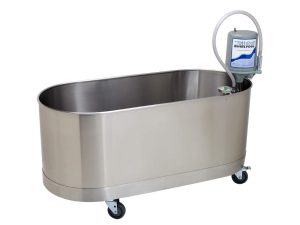
Hydrotherapy Whirlpool Tubs
The full Hydrotherapy Whirlpool Tubs line.
GSA contract holder • Ships nationwide • From Patient to Doctor & Everyone In Between
Talk to a Medical Equipment Specialist
Toll free 877-706-4480 | Local 713-706-4480 | inquiry@msecompany.net