


Medical Office Cabinets
Sixty-eight cabinets across nine lines for clinical storage: instrument, supply and office storage built for medical environments.
Home » Hospital & Durable Medical Equipment » Medical Office Cabinets
Clinical Storage That Belongs In The Room
Medical storage differs from office storage in surface, security and cleanability. The cabinet lines in this family are built for clinical rooms: wipeable institutional finishes, locking options where contents require them, and formats from countertop units to full wardrobes so storage fits the room instead of the other way around.
Shop The Medical Office Cabinets Lines by Type
Every line in the family with its catalog count.
Wide Base Cabinets
19 products
Treatment Cabinets
17 products
Wall Mounted Cabinets
15 products
Bedside Cabinets
4 products
Cabinet Accessories
4 products
Free Standing Office Cabinets
4 products
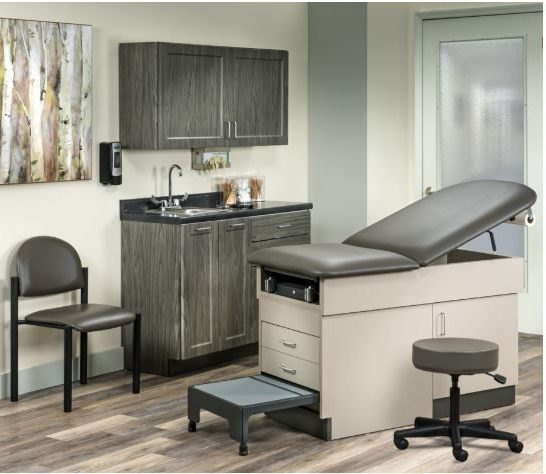
Doctors Office Packages
2 products
Sink Base Cabinets
2 products
Storage Cabinets
1 products
What Does the Medical Office Cabinets Family Include?
Exam rooms, treatment rooms and clinical offices need storage that keeps supplies organized and close at hand while standing up to daily cleaning. This family covers wall mounted cabinets, free standing office cabinets, glass display cabinets, sink base cabinets, wide base cabinets, bedside cabinets, treatment cabinets, storage cabinets, pediatric cabinets, cabinet accessories and complete doctors office packages. Each line has its own page with products and specifications listed per model. Medical office cabinets differ from home or general office furniture because their finishes are designed to tolerate disinfectants, their layouts suit clinical supplies, and their hardware is built for frequent use. They also contribute to the look of a practice, since patients see them in every exam room. Choosing well starts with what each room stores, how the room is laid out, and whether supplies need to be visible, concealed or locked.
How Do You Plan Cabinets for an Exam Room?
Most exam rooms combine base cabinets with a countertop and wall cabinets above. The base cabinets often include a sink base for hand washing, along with drawers for frequently used supplies. Wall cabinets store items used less often or kept out of reach. The exam table, stool and patient chair need space, so cabinet runs usually occupy one wall. Start by listing what the room stores, then plan drawers for small items, shelves for boxes and bins, and locked storage for anything policy requires. Leave space for a sharps container, glove dispensers and other wall mounted items. The sink location depends on plumbing. Standardizing the cabinet layout across exam rooms lets staff find supplies in any room. Listings give dimensions and configurations for each cabinet so layouts can be planned against the room’s floor plan.
When Should You Choose Wall Mounted Versus Free Standing?
Wall mounted cabinets keep floor space clear, which helps in small rooms and makes floors easier to clean. They place supplies at eye level and above countertops, making them ideal for items used regularly but not constantly. Installation requires walls that can support the loaded weight, so wall construction should be confirmed before ordering. Free standing cabinets require no construction and can be moved when rooms are reconfigured, which suits leased spaces and practices that expect changes. They often provide larger capacity, including tall storage units. Many rooms use both, with wall cabinets above a counter and free standing storage in corners or adjacent storage rooms. Tall free standing cabinets in patient areas may need anchoring to prevent tipping. Listings state mounting type, dimensions and capacity for each model so the right choice can be made for each room.
Why Choose Glass Display Cabinets?
Glass door cabinets let staff see supplies without opening doors, which speeds up finding items and makes stock levels visible at a glance. They suit treatment areas where supplies are used frequently, and they can display instruments or products in patient facing areas such as retail sections of a practice. Visible storage also encourages organization, since clutter is apparent. The tradeoff is discretion, since some supplies are better kept out of sight in patient rooms. Locks are available on many glass cabinets for items that should be visible but secured. When choosing glass cabinets, consider what will be stored, whether visibility helps staff or patients, and whether the contents should be locked. Shelf material and adjustability also matter for display. Listings give glass construction, shelf details, lock options and dimensions for each model.
What Are Sink Base and Wide Base Cabinets For?
Sink base cabinets support a sink while concealing plumbing and providing storage underneath. They anchor the wet wall of an exam or treatment room, usually paired with matching base and wall cabinets. Because they sit beneath water, moisture resistant interiors are valuable. The cabinet must accommodate the sink size and plumbing, so cutout dimensions and interior clearances should be checked against the fixture plan. Wide base cabinets provide extra storage capacity, often with double doors and deep shelves, and their countertops serve as work surfaces. They suit treatment rooms, labs and supply areas that need more storage than standard base cabinets provide. Both types should match the finish of other cabinets in the room. Listings provide dimensions, interior configurations and construction details so these cabinets can be planned into the room layout correctly.
How Do Treatment and Bedside Cabinets Differ?
Treatment cabinets are designed around clinical supplies used during procedures and treatments, with shelves and drawers sized for dressings, instruments and procedure supplies. They often stand beside a treatment table or mount above a counter, and many include locks for items that require security. Bedside cabinets serve patient rooms, providing personal storage for belongings and frequently used care items next to the bed. They balance a clinical, cleanable construction with a furniture appearance that suits patient rooms, and some roll so housekeeping can move them for cleaning. The two types serve different users: treatment cabinets are for staff, bedside cabinets for patients. Facilities furnishing both treatment rooms and patient rooms can coordinate finishes across the lines. Listings give dimensions, storage configurations and lock options for each model.
What Should You Look For in Cabinet Finishes and Hardware?
Clinical cabinets are cleaned frequently with disinfectants, so finishes must resist chemicals, moisture and staining. Laminate and other healthcare grade surfaces hold up better than wood or painted finishes found in home furniture. Edges should be sealed to keep moisture out of the core material. Hardware sees heavy use, so hinges, drawer slides and handles should be built for clinical environments, where drawers may open dozens of times a day. Soft close mechanisms reduce noise in patient areas. Handles should be easy to clean and to operate with gloved hands. Locks should be reliable and keyed according to the facility’s needs. Color and finish selections affect how a practice looks, so coordinating cabinets across rooms creates a consistent appearance. Listings describe materials, finishes and hardware for each cabinet, which helps compare durability.
What Are Doctors Office Packages?
Doctors office packages bundle coordinated cabinets for a complete exam or office room into a single order. They are useful for new practices, expansions and renovations, since they eliminate the need to select and coordinate each cabinet individually. A package typically includes base, wall and sink cabinets sized to work together, with matching finishes. Practices outfitting several rooms can order multiple packages for a consistent look across the office. Before ordering a package, compare its listed contents and dimensions with the room’s floor plan and plumbing, and confirm that it includes the storage the room needs. If a package almost fits, individual cabinets from the lines in this family can fill gaps or replace components. Packages simplify purchasing, but the room layout should still guide the decision so cabinets fit the space properly.
How Do Facilities Order Office Cabinets?
Cabinet orders usually follow room counts and room types. Facilities plan a standard layout for exam rooms, treatment rooms and offices, then order cabinets for each room. Wall construction should be confirmed for wall mounted units, and plumbing locations for sink bases. Finishes should be selected to coordinate across the practice. MSEC quotes room and practice cabinet orders, including doctors office packages, accepts purchase orders from clinics, hospitals, long term care facilities and government buyers, and offers GSA contract pricing for federal and VA facilities. The order desk at 877-706-4480 can help plan cabinet layouts from a floor plan before anything ships, so cabinets arrive sized and configured for each room.
Frequently Asked Questions
What medical office cabinets does MSEC carry?
MSEC carries wall mounted, free standing, glass display, sink base, wide base, bedside, treatment, storage and pediatric cabinets, accessories and doctors office packages. Each line lists products per model.
How should cabinets be arranged in an exam room?
Most exam rooms use base cabinets with a sink and countertop plus wall cabinets above, usually along one wall. Plan drawers for small items, shelves for bins and locked storage where needed.
Should I choose wall mounted or free standing cabinets?
Wall mounted cabinets save floor space but need walls that can support the load. Free standing cabinets need no construction and can be moved. Many rooms use both.
What finish is best for medical cabinets?
Healthcare grade laminate and similar surfaces that resist disinfectants, moisture and staining are best. Sealed edges and clinical grade hardware improve durability.
What is included in a doctors office package?
A package bundles coordinated base, wall and sink cabinets for a complete room with matching finishes. Compare its contents and dimensions with your floor plan before ordering.
Can MSEC quote cabinets for a new practice?
Yes. MSEC quotes room and practice orders, accepts purchase orders, and offers GSA contract pricing for federal and VA facilities. Call toll free 877-706-4480 or locally 713-706-4480.
Related Hospital Equipment Categories
The other equipment families in the Hospital department.
Medical Carts
390 products
Utility & Janitorial Carts
208 products
Pediatric Furnishings
149 products
Medical Tables & ENT Chairs
133 products
Hospital Room Lights
111 products
Surgical & Exam Lighting
85 products
Bariatric Equipment
58 products
Medical Room Furnishings
42 products
Talk to a Medical Equipment Specialist
Toll free 877-706-4480 | Local 713-706-4480 | inquiry@msecompany.net