
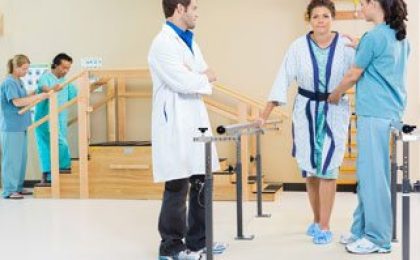
Stretching Equipment
Ankle and lower extremity positioning devices for range of motion programs in outpatient clinics, hospital rehab departments, skilled nursing facilities and athletic training rooms.
Home › Rehabilitation Equipment › Fitness & Rehab Merchandise › Stretching Equipment
Stretching Equipment for Rehabilitation and Therapy Programs
Stretching equipment covers the positioning devices a clinician uses to hold a joint at a set angle while a patient works through a range of motion program. In the MSEC catalog this category is built around ankle and lower extremity positioning, and it is bought by outpatient physical therapy clinics, hospital rehab departments, skilled nursing facilities, athletic training rooms and patients continuing a home program. These are unpowered, clinician handled items, sized and specified on adjustment range and build rather than on electrical specification.
Shop Stretching Equipment
Everything MSEC carries in Stretching Equipment, shown in full. Specifications are supplied by the manufacturer. For current pricing, lead time or a quote on a purchase order, call toll free 877-706-4480.
-
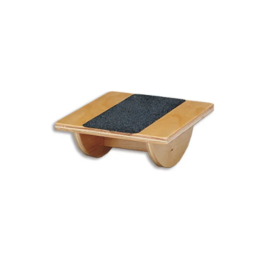 Quick ViewSelect options

Choosing Between Models?
The Fitness & Rehab Merchandise Buying Guide walks through the decisions behind this purchase, with a comparison method, the mistakes that cause returns and a pre-order checklist.
What Sits in the MSEC Stretching Equipment Category Today?
The Ankle Exerciser Physical Therapy Rehab is the item listed here. It is a positioning device for the foot and ankle complex, used seated, with the foot placed on a platform that holds a set angle while the patient works through the range the clinician has set.
That narrow listing is worth stating plainly rather than dressing up. Stretching and positioning equipment is a broad market, and buyers arriving on this page are often looking for straps, wedges, slant boards, stretch tables or lower extremity positioners that are not shown online. MSEC sources beyond the catalog page, so describe the joint, the movement the clinician wants held and whether the device is for a shared clinic or a single patient, and we will check availability and lead time.
Two things are worth confirming on any item in this class before it is ordered:
- Who handles it. A device that a clinician sets and supervises can be more adjustable than one issued for unsupervised home use, where simplicity matters more than range.
- How it is held in place. A positioner that relies on the patient’s own weight behaves differently on carpet, on a mat and on a hard floor, and that is a room question as much as a product question.
What Is an Ankle Exerciser and How Do Clinicians Use One?
An ankle exerciser is a platform device that holds the foot in a controlled position so the ankle can be worked through dorsiflexion, plantarflexion and, on some designs, inversion and eversion. Clinicians use these devices in ankle and lower extremity range of motion programs, in the seated phase of a rehabilitation plan, and as part of a home program issued under a plan of care.
The clinician sets the position, the progression and the frequency. That is not a supplier decision and nothing on this page should be read as one. What a buyer is choosing is the hardware around that decision:
- The platform. Its size relative to the foot, and whether a larger foot is supported from heel to forefoot or overhangs.
- The adjustment. How the angle is set and locked, how many positions there are, and whether the patient can change it or only the clinician.
- The base. What keeps the device from sliding, which decides whether it works on the surfaces in your treatment room.
- Handling. Weight and size, because a device that lives in a cupboard between sessions gets used and one that has to be carried in from another room does not.
Confirm each of those against the manufacturer specification for the model being quoted rather than from a product photograph, since photographs flatten the adjustment detail that matters most.
What Construction Details Decide Whether a Stretching Device Survives Shared Clinic Use?
The adjustment mechanism and the contact surfaces decide it. A stretching device in a busy clinic is set, reset and wiped down many times a day, and those three actions are what wear it out.
- The adjustment mechanism. Detents, pins and locking levers all work when new. Ask what happens after repeated cycling, and whether the mechanism is a serviceable part or moulded into the body.
- The foot contact surface. It has to grip in use and clean afterwards, and those two properties pull against each other. A deeply textured surface holds the foot and holds soil.
- The base and feet. Non slip feet are the first thing to degrade, and a device that starts to travel across the floor stops being usable well before it looks worn.
- Fasteners and joints. Anything that can loosen should be something staff can tighten with a common tool, not a rivet.
- Cleaning compatibility. Check which disinfectants the manufacturer names for the materials used, so the device fits the protocol your department already runs instead of forcing a second one for a single item.
None of this is visible in a catalog thumbnail, which is why it belongs on the specification sheet conversation. Where a device will be used by many patients a week rather than one, treat the mechanism and the base as the primary specification and the rest as detail.
Does a Pediatric Program Need Different Stretching Equipment From an Adult One?
Usually yes, and the reason is fit rather than function. A positioning device works by holding a specific part of the body at a set angle, so a platform sized for an adult foot does not hold a child’s foot in the same relationship to the joint.
- Contact area. Confirm the platform or support dimensions against the smallest and largest patients who will use the device, not the average one.
- Adjustment increments. A device with coarse steps may skip past the position a smaller patient needs, even when the overall range looks adequate.
- Stability under a lighter patient. Devices that rely on body weight to stay put behave differently under a child, which is a question for the manufacturer rather than an assumption.
- Supervision. Pediatric sessions are supervised differently, and that changes how much adjustability is useful versus how much is a distraction.
Where a department sees both populations in the same room, it is often cheaper to specify two correctly sized devices than one device with a very wide range, because wide range mechanisms are the ones that wear. Ask us for both specification sheets and compare the contact dimensions side by side before deciding.
Who Decides Which Stretching Device a Patient Uses?
The treating clinician does, under the facility’s plan of care. MSEC supplies equipment and manufacturer documentation, and we do not advise on which device suits a patient, what position to set or how a program should progress.
That line matters more in this category than in most, because stretching and positioning equipment is often handed to a patient to use between visits. When a device is issued for a home program, the instructions come from the clinician who issued it, and the manufacturer’s own instructions come with the device. A purchasing conversation can cover fit, durability, adjustment range, quantity and lead time, and it stops there.
What we can help with is the specification side of the decision: whether a device will hold up in shared use, whether it fits the patients on your caseload, what the manufacturer states about weight or size limits, and what else in the Fitness & Rehab Merchandise line is normally ordered alongside it.
What Should You Confirm on the Specification Sheet Before Ordering Stretching Equipment?
Confirm the dimensions and the limits first, because those are the two things that make a device unusable rather than merely disappointing.
- Overall and contact dimensions. Platform or support size, overall footprint, and height when set at each end of its range.
- Adjustment range and increments. How far it goes, in how many steps, and how the setting is locked.
- Weight or size limits. As the manufacturer states them. Do not assume a limit that is not printed.
- Materials and cleaning. Which disinfectants the manufacturer names for the surfaces involved.
- Assembly. Whether the device arrives ready to use, and what tools are needed if not.
- Serviceable parts. Feet, pads and the locking mechanism, and whether they can be replaced separately.
- Quantity and packaging. How the item is packed, since small rehab items are often sold in multiples and a clinic reordering one at a time pays for it.
- Lead time. Ask before the purchase order rather than after, particularly where a program start date depends on it.
Have the patient population, the surface it will sit on and the quantity in mind when you call 877-706-4480 or 713-706-4480, or email inquiry@msecompany.net.
When Does a Program Need Balance, Pulley, Mat or Traction Equipment Instead?
When the task is loading, measuring, supporting or treating rather than positioning. Stretching equipment holds a joint still at an angle, and the rest of this line does the other jobs.
- Balance Boards. The right line when the task is controlled instability for standing and seated balance work, including rocker and vestibular boards, beams and balancing stools.
- Exercise Pulleys. The right line for graded upper extremity range of motion at a fixed wall station, including the Axial Resistance Shoulder Wheel.
- Mat Tables & Platform Tables. The structural item that supports the patient during floor based therapy, in hardwood, folding and powered Hi-Lo models.
- Traction Therapy. Clinical treatment equipment operated under a plan of care, including the TX Traction Unit System.
- Hand Grip Dynamometers. Instruments that measure rather than load, which puts them in a different budget conversation.
If you are stocking a department rather than filling a single gap, the fitness and rehab merchandise buyer guide works through par levels and what to replace first, and Rehabilitation Equipment & Products holds the powered lines including cardio, strength and therapeutic devices.
Frequently Asked Questions
Do you carry stretching straps, wedges, slant boards and foam rollers?
Ask us. Not every item in this class is listed online, and soft goods and small positioning aids are among the things buyers most often request that are not on the category page. Tell us the joint, the movement being held, the patient population and the quantity, and we will check availability and lead time on items outside the published catalog.
Can one ankle exerciser serve a whole clinic?
It can where sessions are scheduled rather than concurrent, but a single unit becomes the bottleneck as soon as two clinicians want it at once. Departments usually settle this by counting the sessions that need the device in the same hour rather than in the same week. Cleaning turnaround between patients is the other factor worth adding to that count.
Does an ankle exerciser need assembly or mounting?
Confirm it per model on the manufacturer specification before ordering. Most items in this class arrive ready to use or need only minor assembly, but the detail that matters more is how the device is kept from sliding in use. Ask whether it relies on non slip feet, on the patient’s own weight, or on being placed against a fixed surface.
Does the equipment have a stated weight or size limit?
Whatever the manufacturer prints, and nothing beyond that. We will not estimate a limit that is not published, because a positioning device that is loaded past its rating can fail while a patient is on it. Ask for the current specification sheet and check the stated limits against the patients who will actually use the device.
How is stretching equipment cleaned between patients?
Follow the manufacturer’s instructions for the materials involved, and confirm those against the disinfectant your department already uses before the item enters service. Textured grip surfaces need more attention than smooth ones, and the adjustment mechanism is the part most often missed. Wipe points that hands touch as well as the surface the foot rests on.
What do you need from us to quote a stretching device that is not on this page?
Tell us the joint and the movement the clinician wants held, the patient population including pediatric or bariatric needs, whether the device stays in the clinic or goes home with a patient, the quantity you want and the date you need it by. That is enough for us to check what is available and come back with options and lead times.
Related Categories
Move up to Fitness & Rehab Merchandise, or across to the lines ordered alongside this one.
Fitness & Rehab Merchandise
The full Fitness & Rehab Merchandise line.
GSA contract holder • Ships nationwide • From Patient to Doctor & Everyone In Between
Talk to a Medical Equipment Specialist
Toll free 877-706-4480 | Local 713-706-4480 | inquiry@msecompany.net