

Taping & Chiropractic Tables Buying Guide
A decision walkthrough for clinics and chiropractic practices buying a treatment table, covering working height, technique, upholstery and what to confirm before you order.
Home › Buyer Guides › Taping & Chiropractic Tables Buying Guide
Take This Guide With You
The full Taping & Chiropractic Tables buying guide as a printable PDF, with the comparison points and the pre-order checklist. Share it with facilities, purchasing or whoever signs off.
Taping & Chiropractic Tables in Stock Now
A live view of what is available in Taping & Chiropractic Tables right now. Prices and availability come straight from the catalog.
-
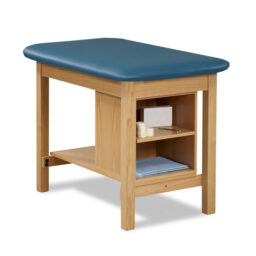 Quick ViewSelect options
Natural Wood H-Brace Taping Table w/ End Storage Shelves 27in/30in W
Item# X3071CLT $541.36 – $570.91Price range: $541.36 through $570.91 -
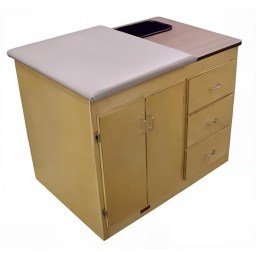 Quick ViewSelect options
Single Athletic Taping Station 36in/42in H
Item# X72BAM $1,688.57 – $1,898.57Price range: $1,688.57 through $1,898.57 -
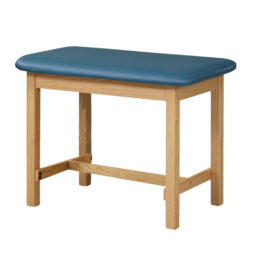 Quick ViewSelect options
 -
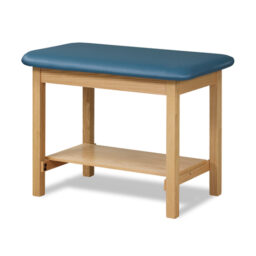 Quick ViewSelect options
Natural Wood H-Brace Taping Table w/ Shelf 27in/30in W
Item# X2071CLT $454.29 – $482.86Price range: $454.29 through $482.86


How to Choose a Treatment Table for a Chiropractic or Clinic Room
Choosing a treatment table comes down to three questions in order: who stands beside it, what they do on it, and how many years you need it to stay in service. This guide is a decision walkthrough for that purchase, written for the buyer who has already seen what the line holds and now has to pick. If you still need to see the configurations and the products, start on the taping and chiropractic tables category page. If your problem is moving a roster of athletes through taping before practice rather than fitting a treatment room, use the athletic taping tables and stations page instead.
Who Is Buying a Clinic Treatment Table, and What Makes Each Purchase Different?
Name yourself first, because the buyer decides which trade-offs matter and which ones you can ignore. Four buyers account for most orders in this category, and they are not solving the same problem.
- The solo chiropractor. One clinician, one set of body mechanics, one working style. This buyer can fit the surface to one person exactly, which is the cleanest version of this decision and usually the cheapest to get right.
- The multi-practitioner practice. Two or more clinicians of different statures share the same surface. The fit question stops being a number and becomes a range, and whoever sits furthest outside that range pays for the compromise every working day.
- The outpatient physical therapy or occupational therapy department. The treatment table is one surface among mat platforms, plinths and modality carts. Here the table is bought to fill a specific gap in the room, so the question is what the other surfaces cannot do.
- The school, campus or team health room buying a treatment surface. This buyer is often talked into a taping bench when they need a treatment table, or the reverse. If the room exists to move athletes through taping in a fixed window, you are on the wrong page.
Individual patients and home buyers occasionally look at this line as well. A table specified for repeated clinical use is built to a different duty than a home unit, and the cost difference reflects that duty rather than the appearance of the surface.
Which Decisions Actually Determine Whether the Table Works?
Three decisions decide the outcome: working height, frame rigidity against the technique performed, and the covering measured against your cleaning routine. Width, storage and finish are real considerations, but they rarely make a table unusable on their own, and the three above regularly do.
Take them in that order and one at a time. The common failure is comparing finished products against each other before any of the three has been settled, which turns the purchase into a preference contest between photographs. Settle height, settle rigidity, settle the covering, and by the time you reach the product list most of the options have eliminated themselves.
How Do You Set Working Height Against the Clinician Who Will Use It?
Measure the people, not the room. Working height is an ergonomic fit between the surface and the clinician standing at it, and it is the one dimension you cannot correct after delivery on a fixed height table.
Have each clinician stand as they would while working, arms relaxed, and note the height at which their hands fall. Do that for everyone who will use the table, including part time staff and students, then look at the spread. A single clinician or a group clustered within a few inches can be served by one fixed height. A group spread across a wide range cannot, and no amount of averaging will fix it.
Footwear, floor mats and a raised cushion all shift the working relationship, so measure in the shoes and on the floor the clinician actually works in. Where a listing states its heights, such as the Single Athletic Taping Station 36in/42in H, you are choosing between stated options rather than specifying a number, so bring your measurement to that choice instead of guessing which sounds standard.
Does the Technique You Perform Change Which Frame You Need?
Yes, and it changes it more than any other input. A surface that only has to hold a seated patient while tape is applied is answering a static load. A surface that absorbs force directed through a patient during manual therapy or an adjustment is answering a lateral one, and lateral force is what makes an underbraced frame rack, creep and eventually loosen.
- Taping and general treatment work. The patient sits, a limb is extended, and the demand on the frame is mostly vertical. Bracing still matters for a surface in daily use, but it is not the deciding input.
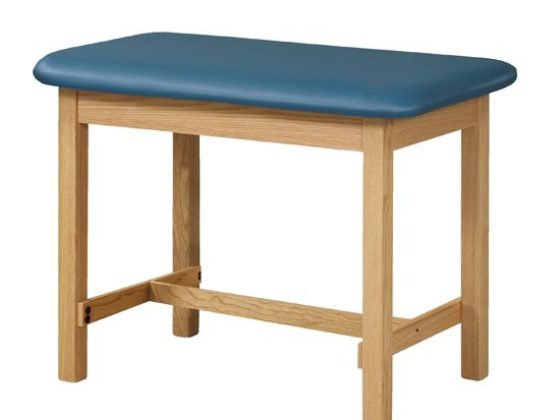
- Manual therapy and adjusting. Force is applied downward and sideways through the patient. Cross bracing, such as the H-brace construction used on the H-Brace Taping Table and the natural wood models, is what resists that. Ask how the base is braced before you ask what it is finished in.
- Techniques that need a moving section. Flexion, drop and decompression work depends on a mechanism, not a surface. If your technique needs one, say so at the start of the conversation, because a rigid table cannot be adapted into one later.
When Does Adjustable Height Earn Its Cost?
Adjustable height earns its cost when the height requirement genuinely varies, and wastes it when it does not. The trade-off is plain: an adjustable table buys you a range and gives up some rigidity, some floor footprint and a mechanism that can need service. A fixed table gives you the most rigid surface for the money and no mechanism at all, and commits you to one height forever.
Adjustable is usually worth it in three situations: clinicians of very different statures share the table, patients need to be loaded at a low height and then raised to a working height, or the room is shared across services with different needs on different days. Outside those situations, a practice that buys adjustable is usually paying for a feature it will set once and never touch again.
One honest test: if you cannot describe the second height you would actually use and who would use it, you are buying a mechanism you do not need.
How Wide Should the Surface Be for the Patients You Position?
Width is a negotiation between the patient and the clinician, and they want opposite things. A wider surface gives the patient more room to be positioned prone, supine or seated with a limb out. A narrower surface lets the clinician get closer, which matters whenever force is applied across the table rather than straight down.
Several listings in this line state their widths, for example the Natural Wood H-Brace Taping Table w/ Shelf 27in/30in W, so the choice is between stated options. Decide it by the work: if your clinicians reach across the patient repeatedly, favor the narrower option and protect their reach. If patients are positioned fully on the surface and the clinician mostly works from one side, the wider option is the more comfortable table to be treated on. Where a width is not published, ask for the manufacturer specification rather than scaling a photograph.
How Do You Compare Two Tables That Read the Same on a Spec Sheet?
When two tables state similar dimensions and similar capacity, the difference sits in four places that a summary listing rarely shows. Ask about all four and the tables usually separate quickly.
- How the capacity is rated. A static rating and a working rating are not the same claim. Ask which one the stated figure is, for the exact model and configuration you are quoting, and take it from the manufacturer specification rather than a category summary.
- How the base is braced. Two tables can share a footprint and behave nothing alike under lateral force. Ask what the bracing is and where it sits.
- How the covering is attached and sealed. Seam type and edge attachment decide whether fluid reaches the foam. This is the single most common reason a table is replaced while its frame is still sound.
- What can be replaced without replacing the table. Ask which parts are serviceable, whether the top can be recovered, and whether hardware and feet are available separately. A table with serviceable parts and one without can cost the same on day one and very different amounts across ten years.
What Determines Service Life, and Which Mistakes Cause Returns?
Service life is usually decided by the covering and the cleaning protocol, not by the frame. Frames in this line are simple and long lived. Coverings meet a disinfectant several times a day, and a covering that is not rated for the product your facility uses will craze, harden and split long before anything structural fails. Get the care instructions for the covering, put them next to your infection control policy, and read both before ordering.
The mistakes that actually produce returns are predictable:
- Buying to the room instead of to the clinician. A table chosen because it fits a corner, then worked at for a year by someone it does not fit.
- Measuring the room and forgetting the clearance. The footprint is not the space requirement. Add the sides the clinician works from, the patient approach path with any mobility aid, and the door swing.
- Measuring the room and forgetting the route to it. Doorways, corridor turns and elevator dimensions between the delivery point and the treatment room decide whether the crate ever arrives.
- Assuming assembly is included. Confirm whether the table ships assembled, partly assembled or flat, and who will assemble and level it.
- Buying a mechanism to cover an unmade decision. Adjustable height bought because nobody wanted to settle the height question is expensive indecision.
Freight returns on tables are costly and slow. Every item on that list is cheaper to check than to reverse. The wider rehabilitation equipment range follows the same rule: the constraint is almost always access, not the product.
What Should You Work Through Before You Order, and What Should You Have Ready to Call?
Work through this short list before the purchase order goes out, in this order:
- Clinician measurements. Working height for everyone who will use the table, and the spread across them.
- Technique list. What is performed on the surface, and whether any of it needs a moving section.
- Room numbers. Footprint, working clearance on each side used, patient approach path, door swing.
- Delivery route. The narrowest point between the truck and the room, plus dock or liftgate availability and who moves the crate.
- Cleaning protocol. The exact disinfectant products in use, checked against the covering care instructions.
- Parts plan. Which components are serviceable and how they are ordered.
When you call, have the clinician height range, the technique list, the room and route measurements, your disinfectant list and your timing in front of you. That is enough for a specific recommendation on the first call rather than a catalog conversation. Reach MSEC toll free at 877-706-4480, locally at 713-706-4480, or by email at inquiry@msecompany.net, and see the current options on the chiropractic and taping table listings before you call so the conversation starts from a shortlist.
Frequently Asked Questions
Should I decide the table height before or after I pick a model?
Before. Working height is the one input you cannot change after delivery on a fixed height table, and it is set by the clinicians who will stand at it rather than by the model you like. Measure everyone who will use the surface first, then use that range to decide between fixed and adjustable, and only then compare models. Reversing the order is how practices end up compromising on the thing that matters most.
How do I decide between buying one table for two clinicians or one each?
Compare the compromise against the cost. If both clinicians fall within a narrow height range and rarely need the room at the same time, one shared table is reasonable. If their working heights are far apart, or the room is booked back to back, you are choosing between an adjustable table and two fixed ones. Room space and scheduling usually decide it faster than budget does.
Is a heavier table always the more stable one?
No. Mass helps, but bracing geometry is what resists the sideways force applied during manual work. A heavy table with a poorly braced base can rack where a lighter cross braced one will not. Ask how the base is braced and where the bracing sits, and treat weight as one input among several rather than the answer on its own.
What should I ask about upholstery before ordering?
Ask for the covering material, the manufacturer care instructions, how the seams are constructed, and how the covering is attached at the edges. Then check the care instructions against the disinfectant your facility actually uses, not the one on the policy from three years ago. If the two do not agree, resolve it before ordering rather than discovering it in month eight.
How far ahead should I start this purchase?
Start early enough to cover freight scheduling, delivery access and assembly, because those steps sit outside your control. Tables in this line ship freight, and the route from the delivery point to the treatment room is usually the slowest part. If the table is replacing one in daily use, plan the changeover around your schedule and confirm what happens to the old surface.
Can MSEC help if none of the listed configurations fits my technique?
Yes. Call with the technique, the height range and the room measurements and ask what can be sourced. The listings shown are what is set up online, and the catalog behind them is larger. Describe the problem rather than a product number, since a configuration that is not listed is often still available. Reach MSEC toll free at 877-706-4480 or email inquiry@msecompany.net.
Ready to Shop Taping & Chiropractic Tables?
Browse the Taping & Chiropractic Tables line, or go up to all rehabilitation equipment. Toll free 877-706-4480 | Local 713-706-4480 | inquiry@msecompany.net
Take This Guide With You
The full Taping & Chiropractic Tables buying guide as a printable PDF, with the comparison points and the pre-order checklist. Share it with facilities, purchasing or whoever signs off.