


Weight Racks
Fixed press racks and mobile cuff weight racks with mirrors for outpatient therapy gyms, hospital rehabilitation departments, skilled nursing facilities and athletic training rooms.
Home › Rehabilitation Equipment › Weight Lifting Equipment › Weight Racks
Weight Racks for Therapy Gyms and Athletic Training Rooms
Weight racks are the structures that hold and present free loading in a therapy gym, from barbells on a fixed press rack to cuff weights on a rolling unit. MSEC lists the Commercial Olympic Press Rack and the Laminate Mobile Dual Sided Mirror w/Cuff Weight Rack in this category. Outpatient physical therapy clinics, hospital rehabilitation gyms, skilled nursing facilities and athletic training rooms buy racks so load sits where the clinician is working.
Shop Weight Racks
Everything MSEC carries in Weight Racks, shown in full. Specifications are supplied by the manufacturer. For current pricing, lead time or a quote on a purchase order, call toll free 877-706-4480.
-
 Quick ViewSelect options
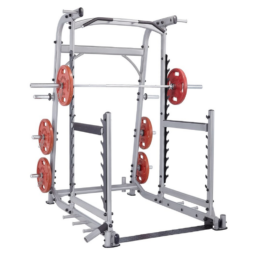
Commercial Olympic Press Rack
Item# RPONFMI$1,917.79Original price was: $1,917.79.$1,420.59Current price is: $1,420.59. -
 Quick ViewSelect options
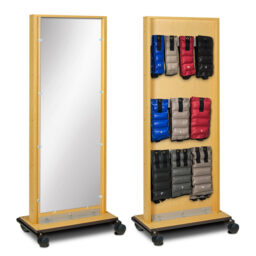
Laminate Mobile Dual Sided Mirror w/Cuff Weight Rack
Item# 9-0126CLT$537.63Original price was: $537.63.$428.57Current price is: $428.57.


Choosing Between Models?
The Weight Lifting Equipment Buying Guide walks through the decisions behind this purchase, with a comparison method, the mistakes that cause returns and a pre-order checklist.
How Do the Two Racks in This Category Differ in Practice?
One is a permanent structure for barbell work and the other is a rolling storage unit for small increments, so they answer completely different problems on a gym floor.
- Commercial Olympic Press Rack. A fixed, floor standing structure built around Olympic barbell work. It takes a permanent position with working clearance on every side, and it stays there. Late stage strengthening, work conditioning programs and athletic training rooms are where it earns its footprint.
- Laminate Mobile Dual Sided Mirror w/Cuff Weight Rack. A rolling unit storing cuff weights on both sides with a mirror, so the increments travel to the patient. It parks against a wall, rolls to the mat table or the bars, and carries a mirror for visual feedback on position.
A clinic that runs mostly small increment work in multiple areas is buying the mobile rack. A gym that runs barbell work in a dedicated zone is buying the press rack. Departments with both patterns generally end up with both, which is why the Weight Lifting Equipment line groups racks as their own subcategory rather than a single product.
What Does an Olympic Press Rack Need From the Floor and the Room?
It needs a permanent position, a floor that suits loaded equipment, clearance on every working side and a clear route in on delivery day. A press rack is the least movable item most therapy gyms own, so the position is effectively a design decision.
Start with the working envelope rather than the frame dimensions. Allow space for a person to load and unload plates at both ends, for a spotter or clinician to stand, and for the bar path itself. Then check that the surrounding traffic route still works, because a rack placed in a walkway forces patients to detour around loaded equipment.
Talk to facilities about the floor before delivery, covering the surface under the rack, any floor protection your policy requires and whether anchoring is planned. Confirm the manufacturer’s stated requirement on anchoring rather than assuming one way or the other. Confirm assembly as well: who is assembling it, what tools are needed, and whether the delivery is to the dock or to the room. The weight lifting equipment buyer guide covers how a rack fits into the wider load ladder the department is building.
Why Does a Mobile Cuff Weight Rack With a Mirror Change How a Session Runs?
It puts the increments and the visual feedback in the same place as the patient, which removes the walk that quietly reshapes a program. A clinician who has to cross the gym for a different cuff weight will often work with whatever is within reach instead.
The dual sided design means two patients or two stations can draw from the same unit at once, and the laminate finish means it reads as clinic furniture rather than gym equipment, which matters in a shared department. The mirror gives the patient a view of trunk, shoulder and limb position during the exercise, and because the unit rolls, the mirror can be positioned to the angle the clinician wants rather than the angle the wall allows.
Practical placement rules follow from that. Park the rack where it is out of the transfer path but within a step of the working area, keep the casters locked while it is in use, and agree one home position so it does not drift across the floor through a busy day.
How Should Cuff Weights Be Arranged on a Rack So the Program Stays Accurate?
Arrange them so every increment is visible and returns to a fixed place, because a rack with mixed weights is a rack that gets guessed at. The point of storing increments together is that the clinician can see at a glance which step is missing.
Give each weight a position rather than a general area, and keep the order consistent from lightest to heaviest along the rack. Use both sides for their intended purpose, for example one side for the sizes used with upper extremity work and the other for lower extremity work, so staff learn one layout. Put the return rule in writing during onboarding, since the layout is only worth what compliance with it is worth.
Audit the set on a schedule. Count what is on the rack against what the department should own and note what is missing before a clinician discovers it mid session. If the count shows a gap in the ladder rather than a lost weight, the fix is a purchase, not a search. We can quote the missing increments alongside a rack order on a single purchase order.
What Should a Buyer Confirm on the Specification Sheet Before Ordering a Rack?
Confirm dimensions, capacity, finish, casters, assembly and freight against manufacturer documentation before the purchase order is issued. Racks are simple products with expensive delivery surprises attached.
- Overall dimensions. Frame footprint and height, checked against the ceiling as well as the floor plan for a press rack.
- Stated capacity. What the manufacturer states the rack holds, confirmed against what you intend to store on it.
- Finish. The laminate or painted surface and which cleaning agents the manufacturer permits on it, so the rack fits your existing infection control protocol.
- Casters. On a mobile rack, whether the casters lock, and whether they are replaceable.
- Assembly. Whether the unit ships assembled, partly assembled or flat, and what that requires from your staff.
- Freight and access. Whether the shipment is freight, whether a liftgate is needed, and whether the route from the dock clears doorways, thresholds and elevators.
How Do You Keep Racks Safe and Serviceable in Shared Clinic Use?
Put racks on the same inspection round as the rest of the gym and check the structure, not just the surfaces. A rack is passive equipment, which is exactly why it goes uninspected until something is loose.
Check fasteners and joints at a set interval and tighten to the manufacturer’s stated requirement rather than by feel. On a mobile rack, check that all casters roll and that the locking casters still hold, because a rack that creeps while loaded is a hazard in a shared gym. Look at the laminate edges and the frame welds for damage from daily knocks, and address chips before they become a cleaning problem.
Wipe surfaces with a disinfectant the manufacturer permits on that finish, and confirm the permitted agents at purchase rather than after a surface has dulled. Keep a short equipment log with model name, install date and inspection dates, which also answers accreditation questions in one page.
When Does a Therapy Gym Need Weight Machines or Another Line Instead?
Choose a different subcategory when the patient needs the equipment to supply stability, or when the requirement is not resistance at all.
- Weight Machines. The route when the machine should control the arc and stabilize the patient, which suits earlier loaded work and clinics where one clinician supervises several patients at once.
- Weight Lifting Equipment. The parent line, for how machines and racks are meant to work together across a gym build.
- Weight lifting equipment buyer guide. The decision walkthrough for building a resistance range with no missing steps.
- Rehabilitation Equipment & Products. The hub covering treatment tables, therapeutic devices, hydrotherapy and the rest of the catalog when the gym build is part of a larger fit out.
If the rack format you need is not shown here, call 877-706-4480 toll free or 713-706-4480 locally, or email inquiry@msecompany.net with your floor plan and we will quote against it.
Frequently Asked Questions
Does the Commercial Olympic Press Rack have to be anchored to the floor?
Confirm the manufacturer’s stated requirement before installation rather than deciding on site, since anchoring requirements differ by model and by floor construction. Have facilities review the floor build up at the same time, because an anchored installation has to account for whatever sits beneath the surface. Send us the model you are quoting and the floor detail and we will confirm what the manufacturer specifies.
Can the mobile cuff weight rack be rolled while it is fully loaded?
Confirm this against the manufacturer’s documentation for the model before you make it part of the daily routine. Even where a loaded move is supported, unlock every caster first, move slowly over thresholds and use two people if the unit resists. Racks that are dragged over a lip with locked casters are how casters and frames get damaged in the first year.
Where should the mirror on a mobile rack face during a session?
That is the clinician’s call, set by what the patient needs to see and by what is behind them. Because the unit rolls, the mirror angle can be set per session rather than fixed to a wall. Practical constraints are worth agreeing in advance: keep the mirror out of a doorway sightline and away from positions that put other patients in the reflection.
How do we stop cuff weights from disappearing from the rack?
Give each increment a marked position on the rack, agree a return rule during staff onboarding, and count the set on a schedule rather than when something is missing. A layout that runs lightest to heaviest makes a gap obvious at a glance. If the count shows the ladder is short a step rather than a weight going astray, order the missing increment rather than working around it.
Do weight racks ship assembled?
Confirm the assembly state on the specification sheet before ordering, as it varies by product. Larger racks commonly ship freight in a partly assembled or flat format and need staff, tools and time on delivery day. Ask whether delivery is quoted to the dock or into the room, and arrange for someone to receive and inspect the shipment before the driver leaves.
What if we need a rack format that is not listed on this page?
Tell us what the gym is storing, how much floor or wall you have, and whether the unit needs to move. We source against manufacturer specifications rather than substituting a similar looking product. Call 877-706-4480 toll free, 713-706-4480 locally, or email inquiry@msecompany.net with your floor plan and we will confirm what is available and quote it.
Related Categories
Move up to Weight Lifting Equipment, or across to the lines ordered alongside this one.
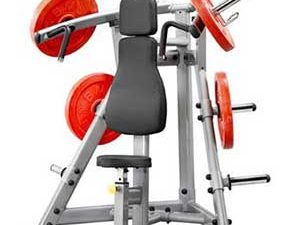
Weight Lifting Equipment
The full Weight Lifting Equipment line.
GSA contract holder • Ships nationwide • From Patient to Doctor & Everyone In Between
Talk to a Medical Equipment Specialist
Toll free 877-706-4480 | Local 713-706-4480 | inquiry@msecompany.net