
Taping Tables & Stations
Single and double position athletic taping benches in laminate base and steel frame construction, for training rooms taping ankles, knees, wrists and shoulders before practice.
Home › Rehabilitation Equipment & Products › Taping Tables & Stations
Athletic Taping Tables and Stations for Training Rooms
Athletic taping tables and stations are the standing height benches a trainer works at when taping ankles, knees, wrists and shoulders, and they are bought for throughput: how many athletes can be taped in the window before practice. MSEC supplies single and double position benches in laminate base and steel frame construction, for high school and collegiate training rooms, professional and club facilities, sports medicine clinics, and physiotherapy and physical therapy practices handling athletic caseloads. Browse the benches below or ask the pros to lay out a taping row against your room and your roster.
Shop Taping Tables & Stations by Type
Select a line to see what is available, or go up to all rehabilitation equipment.
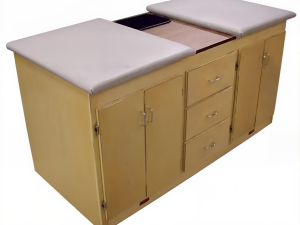
Single Athletic Taping Tables
Single and double position taping benches in laminate base and steel frame construction for training room use.
Not Sure Which to Choose?
Our Taping Tables & Stations Buying Guide walks through the decisions that actually determine the outcome: who is buying, what to compare, the mistakes that cause returns, and a pre-order checklist.
What Are Taping Tables and Stations and How Are They Used in Athletic Training Rooms?
Taping tables and stations are firm, standing height benches where an athlete sits or rests a limb while an athletic trainer applies adhesive tape, underwrap, elastic bandage or kinesiology tape from a standing position. They exist because taping is repetitive, high volume work, and a bench at the right height is what lets a trainer do it dozens of times a day without wrecking their own back and wrists.
In a training room the taping bench is the busiest piece of furniture in the building. It carries prophylactic ankle and wrist taping before practice, pre game knee and shoulder taping, post activity compression wrap and ice, and general treatment work between those. Athletic trainers, physical therapists and physician extenders all work at it, and so do student aides.
Buyers are high school and collegiate programs, professional and club organizations, sports medicine clinics, physiotherapy and physical therapy practices with athletic caseloads, and military and public safety facilities. The common thread is the pattern: many people, short window, repetitive task.
MSEC supplies these as durable equipment for institutional duty. What taping technique is used on a given ankle, knee or shoulder, and whether an athlete should be taped at all, are the treating clinician’s decisions.
How Many Athletes Can a Taping Station Handle Before Practice?
Throughput is set by three things you control at purchase: how many taping positions you have, how far a trainer moves between an athlete and their supplies, and how long an athlete takes to get on and off the bench. Bench count is the obvious lever and the one most programs overspend on.
Work the math backwards from your own roster:
- Start with the window: the minutes between athletes arriving and having to be on the field. That number is fixed and everything else fits inside it.
- Count the trainers, not the benches: a bench with nobody standing at it produces nothing. Two trainers cannot use six benches at once, but they can use a second position on each bench to have the next athlete seated and ready.
- Count the transitions: every step a trainer takes to reach tape, prewrap or scissors is repeated for every athlete. Multiply a ten second walk by sixty athletes and it is a lost practice period.
- Count the peak, not the average: the day that matters is the one where multiple teams overlap.
A smaller number of well positioned benches with supplies in arm’s reach beats a longer row of bare ones. Configuration and layout do more for throughput than bench count alone.
How Do Ankle, Knee, Wrist and Shoulder Taping Jobs Differ at the Bench?
They differ in how the athlete has to be positioned and how long they hold that position, which is what turns a body region mix into a bench count. A soccer roster is mostly ankle joint work. Throwers and linemen load the shoulder and wrist side, where muscle and joint complaints hold the bench differently.
- Ankle: the highest volume job in most training rooms, prophylactic before activity and protective after an injury. The athlete sits with the foot off the end of the bench, so end access matters more than surface width.
- Knee: the athlete sits with the leg extended along the bench, which occupies the full length and rules out a second athlete on a single bench.
- Wrist, hand and thumb: short jobs that need the forearm supported at a comfortable height and both of the trainer’s hands free.
- Shoulder and elbow: the trainer works around the athlete rather than over a limb, so standing clearance on the working side matters more than bench size.
- Post activity and post injury wrap: compression wrap and ice go on after practice, often to the same ankles and knees, so the bench is busy at both ends of the session.
Count your roster by body region before you count benches. A program taping mostly ankles gets more from two double benches than four singles, because ankle work frees the surface quickly and the queued position stays full.
What Types of Taping Benches Are Available and How Do They Differ?
This line is organized under Single Athletic Taping Tables, and the benches differ on two axes a training room actually feels: how many taping positions the surface serves at once, and what the base is built from.
| Bench | Base construction | Taping positions | Size stated in the listing | Where it fits the flow |
|---|---|---|---|---|
| Laminate Base Single Bench 24 in | Laminate base | Single position | 24 in listed | Wall run in a narrow room, one athlete at a time |
| Laminate Base Double Bench | Laminate base | Double, two positions | Not listed, confirm on the specification | One athlete taped while the next is already seated |
| Steel Frame Single Bench | Steel frame | Single position | Not listed, confirm on the specification | High abuse or damp corner of the room, one position |
| Steel Frame Double Wide Bench | Steel frame | Double wide, two positions | Not listed, confirm on the specification | Most positions per run of floor, check the delivery route first |
The sizes above are only the ones stated in the listing. Confirm any dimension or capacity that is not listed against the manufacturer specification before ordering.
Single versus double is a throughput decision, not a budget decision. A double bench lets the trainer tape continuously because the queue is already seated. A single bench adds a transition to every athlete in the window.
Laminate base versus steel frame is an environment decision. Laminate bases give a closed, finished surface that suits rooms doubling as clinic space. Steel frames suit high abuse rooms, damp areas near a hydrotherapy corner, and programs that rearrange the room often.
How Should a Training Room Lay Out Its Taping Stations?
Lay them out so the trainer never turns their back on the room and never walks more than a step for supplies, then let athletes flow past in one direction. The layout is the throughput, and it is decided long before the benches arrive.
- One way flow: athletes enter at one end, are taped, and exit at the other. Rooms where they enter and leave from the same side jam at the door on the busiest days.
- Trainer side clearance: standing room in front of the bench and room to pivot, which is the first thing sacrificed when a room is over furnished.
- Wall run versus island: a wall run is space efficient and keeps supplies on a counter or cabinet behind the trainer. An island serves both sides and doubles positions per bench, but needs clearance all the way around.
- Sightlines: a head trainer supervising student aides needs to see every position from one place.
- What sits next to the row: keep taping close to the ice and hydrotherapy corner, the area where ultrasound, electrotherapy and other modalities live, and the treatment tables.
- Stools, carts and workstations: a rolling stool lets a trainer sit for a long ankle job, and a supply cart turns any bench into a stocked position.
- Spare floor: leave room for an athlete on crutches or in a walking boot to reach a bench without the row shuffling.
Send a sketch of your room with dimensions and your peak roster to MSEC and the pros will work the bench count and arrangement with you.
What Supplies, Storage and Accessories Belong at a Taping Station?
Everything used on every athlete belongs within reach of the taping position, because each trip to a cabinet is repeated once per athlete and paid for out of the practice window.
- Consumables at the position: adhesive tape, underwrap and prewrap, elastic bandage, cohesive wrap, kinesiology tape, heel and lace pads, foam padding, scissors, skin prep.
- Splinting and casting supplies: programs handling an acute wrist or ankle injury keep splinting material near the bench, not in a back room.
- Restock without stopping: an aide should be able to restock a position while the trainer works at it.
- Under bench space, drawers and cabinets: space under the bench is free storage, but only where it does not block the athlete’s feet or the trainer’s stance.
- Waste handling: plan a bin at every position or the floor becomes the bin.
- Countable inventory: supplies in view make it obvious what is running low, which matters where tape is a budget line.
Braces, sleeves, balance and conditioning devices and other supports used in the recovery phase sit in separate lines, including Supports and Braces, and cold therapy sits under Hot and Cold Therapy Equipment. Ask the pros to quote the consumables, accessories and preferred brands alongside the benches.
Do You Need a Portable Taping Table for Travel and Away Events?
Only if you tape away from the training room, because a portable taping table and a fixed bench are different products bought for different reasons. The benches in this line are fixed room equipment sized for a permanent taping row, not folding units carried to a bus.
- Fixed benches: chosen for position count, base construction and how they hold up to daily abuse in one room.
- Portable tables: chosen for folded size, carry weight, setup time and how they survive repeated loading and unloading.
- Sideline and tournament work: often handled with a portable table plus a cart, so supplies travel with the surface.
Many programs run both: a fixed row for the daily window and one or two portable units for away games, meets and tournaments. If you need portable, folding or mobile options rather than the fixed benches listed here, ask the pros what can be sourced.
What Construction and Surface Standards Should a Taping Bench Meet?
A taping bench should have a rigid base, a sealed surface that survives daily disinfection, and edges that do not open under constant contact. Training room benches take more abuse than clinic tables because athletes sit down hard, all day, in cleats and wet gear.
- Base rigidity, materials and stability: an athlete sitting down abruptly loads the base off center. Steel handles that in a smaller section and laminate through a broader structure, and both work when built for institutional duty.
- Laminate edges: edge banding is the wear point. Once an edge opens, moisture reaches the core and the surface cannot be properly cleaned. Confirm the edge treatment on the specification.
- Steel finish: confirm the finish suits a room with moisture in the air, which any room near hydrotherapy or a shower block has.
- Top and padding: on an upholstered top, confirm the covering material, the foam under it and whether the pad is replaceable as a part.
- Cleaning protocol compatibility: check the disinfectants your program uses against the care instructions before ordering, not after the surface dulls.
- Fasteners and glides: bolted construction can be retightened over a service life, and levelling glides stop a rocking bench on an uneven floor.
- Weight capacity: confirm the rated capacity from the manufacturer specification. Do not infer it from how solid a bench looks in a photograph.
Never assume a dimension, a material or a capacity. Durability in this category comes from the base, the edges and the fasteners, not from appearance, so confirm the specification and the warranty terms in writing for the exact model.
How Should Athletic Programs and Clinics Evaluate Taping Tables and Stations?
Evaluate them against your busiest fifteen minutes, not a catalog comparison, because a taping row that works on an ordinary Tuesday and fails on game day has not solved anything.
- Peak roster and body region mix: how many athletes need taping in the same window on your heaviest day, and how much is ankle, knee, wrist or shoulder work.
- Staffing: how many trainers and aides work that window, which sets how many positions are actually productive.
- Single or double: decide whether you need a queued position at each bench. Above a certain roster size the answer is yes, which is what the Laminate Base Double Bench and Steel Frame Double Wide Bench are for.
- Room shape: a narrow room forces a wall run, a square room allows an island. Measure first.
- Environment: moisture, cleats, and whether the room doubles as clinic space for patients outside the program. This decides laminate base versus steel frame.
- Mobility: whether benches stay put or get moved for events.
- Price, availability and lead time: get all three on one quote, and confirm serviceable parts including hardware and glides.
If you are equipping a new training room, order the layout conversation before the equipment list. It usually changes the list.
What Should a Facility Confirm Before Ordering Taping Tables and Stations?
Confirm the delivery route, the assembly requirement, the floor, the cleaning protocol match and the parts arrangement before ordering. Training rooms sit deep inside field houses, and that route is where these orders go wrong.
- Freight and delivery access: benches ship freight. Confirm dock or liftgate availability, and who carries the crate from the delivery point to the training room, because that is rarely the same person.
- The route inside: measure the narrowest point between the dock and the room, including door frames, corridor turns, stair landings, and elevator dimensions and weight limits. A double wide bench is most likely to fail this check.
- Availability and lead time: confirm stock position and lead time on the quote, then plan delivery around the athletic calendar. Nobody wants a pallet in the room during preseason.
- Assembly: confirm whether benches arrive assembled, partly assembled or flat, and who assembles and levels them on site.
- Floor and floor loading: confirm the floor covering suits the feet or glides and is level enough to avoid shimming a row of benches.
- Cleaning protocol compatibility: match surfaces and finishes to your disinfectants.
- Serviceable parts: confirm replacement hardware, tops and glides before purchase.
Call 877-706-4480 toll free or 713-706-4480 local, or email inquiry@msecompany.net, with your access details and the team will flag the constraints before freight is booked.
How Does This Line Differ From Taping and Chiropractic Tables?
This line is about throughput in a training room, while the Taping and Chiropractic Tables line is about the treatment surface itself in a clinic or chiropractic setting. They share equipment vocabulary, but the buying question is different and the right page depends on which question you are answering.
Use this page when the constraint is time and volume: a roster arriving at once, a fixed window before practice, a limited number of trainers, and a room laid out so athletes move through it. The decisions here are bench configuration, position count, base construction, station layout and supply storage.
Use the taping and chiropractic tables page when the constraint is the treatment room: working height against your clinicians, table width against the technique, fixed or adjustable height, upholstery against your cleaning protocol, rated capacity, and clearance on every side a clinician works from.
Both sit inside the full Rehabilitation Equipment and Products catalog alongside the modality, strength and hydrotherapy equipment that shares a training room floor. Ordering across lines at once consolidates freight, which is worth real money when everything ships on pallets.
Frequently Asked Questions
How many taping benches does a training room need?
Size it on your peak window, not your average day. Count how many athletes need taping in the same window on your heaviest day, then count the trainers and aides working that window, because a bench with nobody at it produces nothing. Also count your body region mix, since ankle work frees a surface faster than a knee job does. Most programs get more throughput from double position benches with supplies at arm’s reach.
What is the difference between a single bench and a double bench?
A single bench serves one athlete at a time, so every athlete arrives, sits, is taped and leaves before the next starts. A double bench gives you a queued position, so the next athlete is already seated while the trainer finishes the current one. The Laminate Base Double Bench and Steel Frame Double Wide Bench remove one transition per athlete, which compounds across a roster.
Should I choose a laminate base or a steel frame bench?
Choose a laminate base where the room doubles as clinic space and you want a closed, finished surface, as with the Laminate Base Single Bench 24 in and the Laminate Base Double Bench. Choose steel frame, such as the Steel Frame Single Bench or Steel Frame Double Wide Bench, where the room takes heavy abuse, sits near moisture, or gets rearranged often. Confirm finishes against your cleaning products either way.
Do you carry portable or folding taping tables for away games?
The benches listed on this page are fixed training room equipment, not folding travel units, so a portable table is a separate conversation. If you tape at away games, meets or tournaments, tell the pros the folded size, carry weight and setup you need and ask what can be sourced. Many programs run a fixed row for the daily window and one or two portable units for travel.
Where should tape and supplies be stored?
Within reach of the taping position. Adhesive tape, underwrap, elastic bandage, cohesive wrap, kinesiology tape, heel and lace pads, scissors and skin prep are used on every athlete, so every step to a cabinet is repeated once per athlete. Plan restocking without interrupting the trainer, add a cart or drawer at the position, and put a waste bin at each bench.
Will a double wide bench fit through our doors?
Check before you order, because the double wide bench is the item most likely to fail the route. Measure the narrowest point between the delivery point and the training room, including door frames, corridor turns, stair landings and elevator dimensions and weight limits. Also confirm whether the bench ships assembled or flat, since a flat packed unit can pass a route an assembled one cannot.
When is the best time to take delivery on training room equipment?
Plan it around the athletic calendar rather than the purchasing calendar. Confirm availability and lead time on the quote first, then book into a quiet stretch. Freight arrives on pallets and benches may need assembly and levelling in the room, which is not something to run during preseason or a competition week. Confirm dock or liftgate needs and who moves the crate.
What if the bench size or configuration we need is not listed here?
Ask for it. What appears online is a portion of what MSEC supplies, and taping bench configurations, sizes, stools, supply carts and related training room equipment extend beyond the models on this page. Call 877-706-4480 toll free or 713-706-4480 local, or email inquiry@msecompany.net with your peak roster, your room dimensions and the positions you need.
Related Rehabilitation Categories
Move up to the full rehabilitation silo, or across to the lines clinics order alongside this one.
Rehabilitation Equipment & Products
The full rehabilitation silo: every line MSEC carries for therapy and recovery.
Therapeutic Devices
Electrotherapy, ultrasound and stimulation units with their electrodes and consumables.
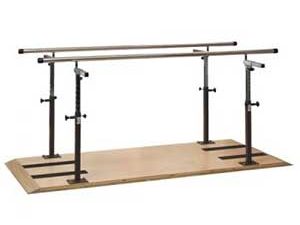
Physical Therapy Equipment
Parallel bars, rehab work tables and training stairs for gait and function work.
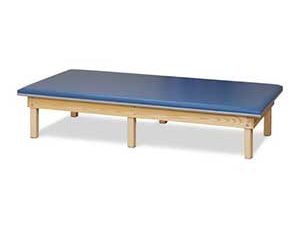
Fitness & Rehab Merchandise
Balance boards, pulleys, dynamometers, mat tables and stretching equipment.
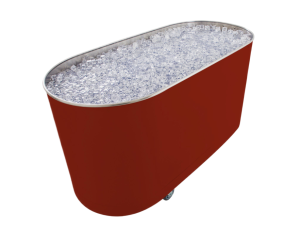
Hot & Cold Therapy Equipment
Heating and chilling units that hold packs and water at treatment temperature.
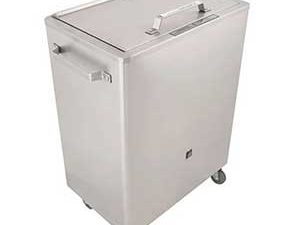
Hot & Cold Therapy & Supplies
Packs, covers and wraps: the consumable side of thermal therapy.
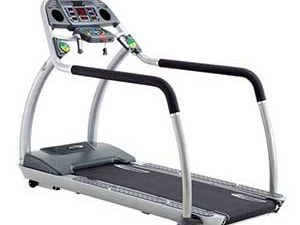
Cardio Equipment
Treadmills, bicycles, ellipticals and stair climbers built for rehab gyms.
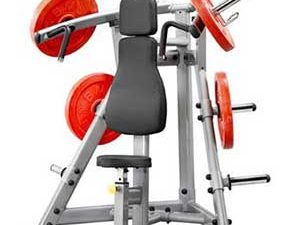
Weight Lifting Equipment
Weight machines and racks for progressive resistance in small increments.
GSA contract holder • Ships nationwide • From Patient to Doctor & Everyone In Between
Talk to a Medical Equipment Specialist
Tell us the facility, the room and the caseload and we will put the right list together. Toll free 877-706-4480 | Local 713-706-4480 | inquiry@msecompany.net