

Single Athletic Taping Tables
Single position taping benches in laminate base and steel frame construction, sized for narrow training rooms, satellite spaces and secondary treatment areas.
Home › Rehabilitation Equipment › Taping Tables & Stations › Single Athletic Taping Tables
Single Athletic Taping Tables for Training Rooms
A single athletic taping table is a bench built for one taping position, sized so an athletic trainer can work standing at a seated athlete with a leg extended. Single benches go into narrow rooms, satellite spaces and secondary treatment areas where a double bench will not fit or is not needed. MSEC supplies single position benches in laminate base and steel frame construction, alongside the double bench options on the same line.
Looking for the taping station rather than the bench? The MSEC catalog carries a separate category of the same name that holds the Single Athletic Taping Station, a height adjustable station listing. This page covers the single bench models. There is no product overlap between the two, so pick the one that matches what you are sourcing, or call 877-706-4480 and we will point you at the right listing.
Shop Single Athletic Taping Tables
Everything MSEC carries in Single Athletic Taping Tables, shown in full. Specifications are supplied by the manufacturer. For current pricing, lead time or a quote on a purchase order, call toll free 877-706-4480.
-
 Quick ViewSelect options
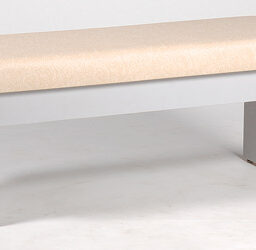
Laminate Base Double Bench
Item# WDB21MEDC Units: single$839.87Original price was: $839.87.$557.71Current price is: $557.71. -
 Quick ViewSelect options
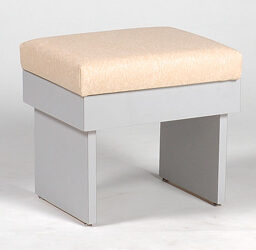
Laminate Base Single Bench 24 in
Item# WSB21MEDC Units: single$575.00Original price was: $575.00.$379.24Current price is: $379.24. -
 Quick ViewSelect options
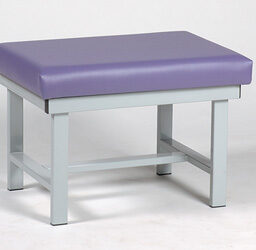
Steel Frame Single Bench
Item# XWSB21MEDC Units: single$761.98Original price was: $761.98.$563.22Current price is: $563.22. -
 Quick ViewSelect options
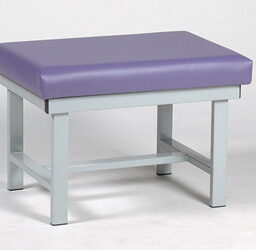
Steel Frame Double Wide Bench
Item# XWDB21MEDC Units: single$935.25Original price was: $935.25.$669.79Current price is: $669.79.

Choosing Between Models?
The Taping Tables & Stations Buying Guide walks through the decisions behind this purchase, with a comparison method, the mistakes that cause returns and a pre-order checklist.
Which Single Position Taping Benches Are in the MSEC Catalog?
Two single position benches sit in this category, and they separate on base construction. Only one of them carries a dimension in the product name.
| Bench | Base construction | Taping positions | Size stated in the listing |
|---|---|---|---|
| Laminate Base Single Bench 24 in | Laminate base | One | 24 in |
| Steel Frame Single Bench | Steel frame | One | Not listed, confirm on the specification |
The 24 in figure on the Laminate Base Single Bench is the only dimension either listing states, and the listing does not name which dimension it describes. Ask us and we will pull the full stated dimensions, capacity and finish detail from the manufacturer documentation before you order. The same line also holds the Laminate Base Double Bench and the Steel Frame Double Wide Bench, covered on the Taping Tables & Stations page.
What Does a Single Bench Do That a Double Bench Does Not?
A single bench fits where a double bench cannot, and that is the whole argument for it. It is the narrowest unit on the line, which makes it the one that clears a doorway, turns a tight corner, sits in a short wall run and leaves a walkway intact in a room that was never designed as a training room.
That has practical consequences beyond the floor plan. A single bench is easier to take delivery of, easier to reposition once it is in the building, and easier to add one at a time as a budget allows. A program that cannot commit to a full taping row in one purchase can put a single bench in this year and extend the run later.
It is also the unit that goes into rooms a double bench would dominate: a satellite athletic training room, a field house corner, a visiting team space, a coach’s office pressed into service on game day, or a treatment area where the bench spends most of the week being used for something other than taping.
The trade is throughput. One bench is one taping position, so athletes queue and every athlete adds a transition to the window. A program that is comfortable with that, or that simply does not have the floor for anything wider, is buying the right unit. A program watching the clock before practice is not.
How Do You Match a Single Bench to the Staff Who Work at It?
Match the bench to the working height of the trainer standing at it, because on a single bench there is no second position to absorb an awkward fit. The trainer works at one athlete at a time, usually leaning in over an extended leg, and a surface height that is slightly wrong is felt across a full pre practice window rather than for one athlete.
Confirm the stated surface height on the manufacturer specification before ordering, and check it against the staff who actually work the room rather than against a general figure. Then look at the approach. A single bench has one working side in most layouts, and that side needs enough clearance for the trainer to move around the athlete’s leg without backing into a wall or a supply cart.
Also confirm what the athlete does with the other leg and with a bag. A single position bench that is too short in the seated direction sends every athlete’s kit to the floor in the middle of the working space, and that is a layout problem the bench purchase cannot fix afterward.
Confirm the surface material and the edge detail at the same time. The edge is what a trainer’s forearm rests against for hours across a season and what an athlete slides across getting on and off, so the way it is formed and finished is worth reading on the specification rather than assuming from a photograph.
What Should You Check Underneath and Around a Single Bench?
Check what the base does at the floor, because the base is the difference between the two models and it affects cleaning and storage more than the top surface does. Confirm on the manufacturer specification whether the base is enclosed or open, what it is finished with, and how it meets the floor.
- Floor contact. Confirm whether the bench sits on feet, glides or a continuous base, and check that against the flooring in the room. Training rooms are frequently damp, and what sits in that moisture matters.
- Clearance underneath. Ask whether the base leaves clearance for a mop or a floor machine. A base that meets the floor all the way around is cleaned differently from one on legs.
- Storage. Confirm whether the base provides any enclosed storage. If it does not, plan where tape, wrap and scissors live before the bench arrives, since a single bench has less surface to spare than a double.
- Fixing. Confirm whether the bench is intended to stand free or to be secured, and take any anchor detail to your facilities team.
What Should You Confirm on the Specification Sheet Before Ordering a Single Bench?
Confirm every dimension, because only one appears in a product name across this pair. Work through the following before the purchase order is issued.
- Full stated dimensions. Length, width and surface height for both models, and confirm which dimension the 24 in figure on the Laminate Base Single Bench describes.
- Weight capacity. Neither listing states one. Confirm the manufacturer figure and its rating basis.
- Surface material and edge detail. What the top is finished with, how the edge is formed, and whether the top is replaceable.
- Base construction. Enclosed or open, finish, floor contact and any storage.
- Cleaning compatibility. Confirm which cleaners the manufacturer allows on the top, the edge and the base before you standardize one across the room.
- Crated dimensions and weight. Check against door widths, corridor corner turns and elevator openings on the actual delivery route, not the main entrance.
- Assembly. What is required on site and who performs it.
- Lead time. Confirm it against your season calendar, because training room equipment is easiest to install when the room is empty.
When Should You Buy a Double Bench or a Different Table Instead?
Buy a double bench when the constraint is throughput rather than floor space, because a double gives a second taping position on one unit and lets a trainer keep working while the next athlete is already seated. The Laminate Base Double Bench and the Steel Frame Double Wide Bench are the two options, and both need a delivery route check that a single bench does not.
Buy something other than a taping bench when the work is not taping. A bench is a firm seated work surface at standing height for the practitioner, not a treatment table, and programs that need a padded treatment surface, adjustable height or a different working position are looking at a different item.
Both routes start on the Taping Tables & Stations page, which holds the full line, and the taping tables and stations buyer guide works through how many positions a roster actually justifies and in what order to build them. The wider Rehabilitation Equipment & Products hub covers the treatment tables, modalities and supplies that sit around a training room. If the size or configuration you need is not listed, call 877-706-4480 toll free, 713-706-4480 locally, or email inquiry@msecompany.net.
Frequently Asked Questions
Is the 24 in on the Laminate Base Single Bench the width, the length or the height?
The listing states 24 in without naming which dimension it describes, so confirm it before ordering. Ask us and we will pull the full stated dimensions from the manufacturer documentation, including length, width and surface height. That matters more on a single bench than on a double, because a single is usually being fitted into a specific wall run or alcove where a few inches decide whether it works.
What weight capacity should we expect from a single taping bench?
Neither single bench listing states a capacity, so ask us to confirm the manufacturer figure and its rating basis before you specify it. Capacity is worth confirming in writing for a bench that athletes sit on, stand on to reach a shelf, and occasionally set a loaded kit bag on. We will supply what the manufacturer states rather than an estimate.
Can one person move a single bench?
Confirm the stated weight with us before you plan on it. A single bench is the lightest and narrowest unit on this line, which is part of why programs choose it, but weight varies with base construction and a steel frame and a laminate base are not the same. If the bench will be repositioned between seasons or moved for floor cleaning, ask for the figure at quote stage.
Does a single taping bench arrive assembled?
Confirm the assembly requirement with us before ordering, since it varies by model and by how the unit is crated. Ask what is required on site, what tools are needed and who performs the work. Also confirm crated dimensions against the actual delivery route, since training rooms are often reached through a service corridor rather than the main entrance.
Should a single bench be anchored to the wall or the floor?
Confirm the manufacturer’s intent for the model before deciding, then take it to your facilities team. Some benches are built to stand free and be repositioned, and anchoring one that was not designed for it can do more harm than good. Where a bench sits in a tight run against a wall, ask us whether an anchor detail is offered for that model.
What should we send you to match a replacement for a bench we already have?
Send the model name if you have it, a photograph of the bench from the front and the end, and a measurement of the length, width and surface height. If there is an identification plate or label on the underside, include that too. With those details we can identify what you have and confirm whether a current single bench matches the run it is going into. Call 877-706-4480 or email inquiry@msecompany.net.
Related Categories
Move up to Taping Tables & Stations, or across to the lines ordered alongside this one.
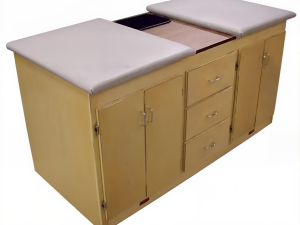
Taping Tables & Stations
The full Taping Tables & Stations line.
GSA contract holder • Ships nationwide • From Patient to Doctor & Everyone In Between
Talk to a Medical Equipment Specialist
Toll free 877-706-4480 | Local 713-706-4480 | inquiry@msecompany.net