
Foldable Stretchers
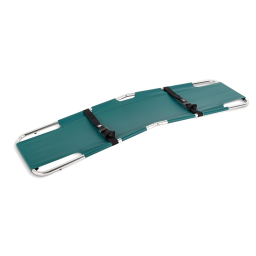
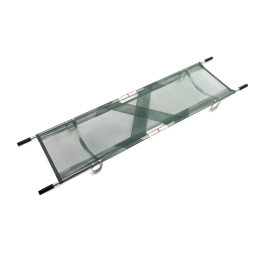
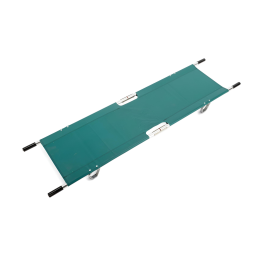
Stretchers built to be there: six folding models that collapse flat or into quarters, store on a wall bracket or behind a seat, and deploy in seconds when a patient has to move.
Home » Emergency Medical Equipment » Break-apart Stretchers » Foldable Stretchers
Folding Stretchers for Staged Readiness and Backup Transport
The foldable stretcher’s entire argument is the space it does not take. A unit that folds flat or into quarters lives in a stairwell cabinet, a vehicle trunk, a sideline kit or a workplace first aid station for years, then opens into a full-length patient carry in seconds. That is why this line sells to two very different buyers: facilities staging evacuation equipment on every floor, and EMS or event crews carrying a backup for the spaces their primary stretcher cannot enter. Six models below cover the fold patterns, frame materials and load ratings the category spans.
Shop Foldable Stretchers
Everything MSEC carries in Foldable Stretchers, shown in full. Specifications are supplied by the manufacturer. For current pricing, lead time or a quote on a purchase order, call toll free 877-706-4480.
-
Quick ViewSelect options -
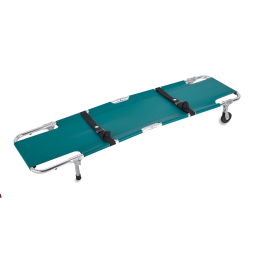
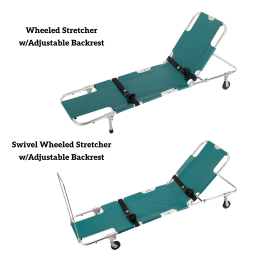
Quick ViewSelect optionsLightweight Aluminum Easy Fold Wheeled Stretcher
Item# X-206JSA Units: single $465.71 – $595.71Price range: $465.71 through $595.71 -
Quick ViewSelect options -
Quick ViewSelect optionsLightweight Aluminum Easy Fold Wheeled Stretcher w/Adjustable Backrest
Item# X-406JSA $744.29 – $878.57Price range: $744.29 through $878.57
Choosing Between Models?
The Portable & Break-apart Stretchers Buying Guide walks through the decisions behind a foldable stretchers purchase: a comparison method, the mistakes that cause returns, and a pre-order checklist, with downloadable PDF guides.
What Fold Patterns Do These Stretchers Use?
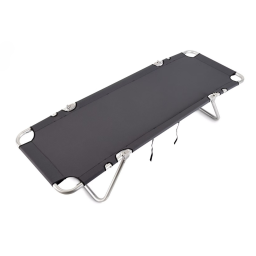
Two patterns dominate. Lengthwise-fold units collapse flat like a cot, storing long and thin, which suits wall brackets and behind-seat vehicle storage. Quarter-fold units break in both directions into a compact block, the smallest storage footprint in the category, which is why they end up in kit bags and cabinets. The trade is deployment steps: a flat fold opens in one motion, a quarter fold in two or three. Folded dimensions for every model are in the specification tables, and matching them to the actual storage spot is the first real purchasing decision.
How Quickly Do Folding Stretchers Deploy Under Pressure?
Deployment is a locking operation, not just an unfolding one, and the lock design is the thing to evaluate. Every hinge in the frame must positively lock before the stretcher takes load, and a design whose locks engage audibly and visibly is the one an untrained facility responder gets right the first time. This matters because the person opening a staged stretcher during an evacuation is usually not a medic. Simple, obvious locking is worth more in this category than any other single feature.
What Frame and Bed Materials Should Buyers Weigh?
Aluminum tube frames with coated fabric beds define most of the line: light to carry, light to mount on a wall, easy to wipe down. The fabric bed is the wear item, so inspect the specification for coated, fluid-resistant material and plan periodic checks for cuts and stitching wear wherever a unit is staged long-term. Heavier steel-framed models trade weight for rated load, a sensible trade where the stretcher will see repeated working use rather than staged readiness.
Where Should a Facility Stage Folding Stretchers?
The working rule is one per floor or evacuation zone, mounted at a marked point on the egress route rather than locked in a distant storeroom. Wall brackets keep the unit visible, off the floor and inspectable at a glance. Pairing each staged stretcher with its straps attached and a one-page deployment card turns a purchase into an actual capability, and the accessory category carries the strap and mounting layer for exactly that setup.
How Do EMS and Event Crews Use This Line Differently?
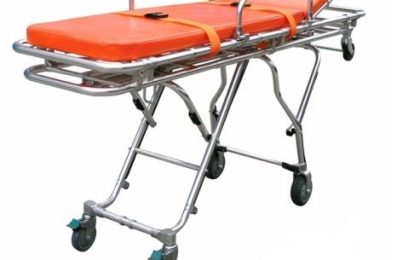
For a crew, the folding stretcher is the secondary tool: it rides in an exterior compartment and comes out for stairwells, tight interiors and long walk-ins where the wheeled cot stays at the rig. That use pattern favors the lightest quarter-fold models and puts a premium on fast, certain locking. Event and athletic buyers use the same models as their primary carry, staged at the medical tent, where the flat-fold units’ one-motion deployment often wins instead. Same product line, opposite selection logic, which is why the grid above shows every model side by side.
Frequently Asked Questions
How small does a foldable stretcher get when stored?
Quarter-fold models collapse into a compact block suitable for cabinets and kit bags, while flat-fold models store long and thin for wall brackets. Exact folded dimensions are listed on each product page.
Are folding stretchers strong enough for real patient transport?
Yes, within the manufacturer’s rated load, which is published for every model. Frame locks must be fully engaged before loading, and the rating assumes a carried patient rather than dragging or rigging use.
Who typically buys folding stretchers?
Facilities staging evacuation equipment, schools, event and athletic operators, workplaces, and EMS crews carrying a compact backup for spaces a wheeled cot cannot enter.
How many people are needed to carry a folding stretcher?
Two carriers on flat ground and short distances; four for stairs, longer carries or heavier patients. The handle layout on each model is visible in its product photos.
Do folding stretchers need maintenance while staged?
A periodic check of hinge locks, fabric condition and strap presence keeps a staged unit deployable. Most facilities fold the check into their existing emergency equipment inspection schedule.
Related Emergency Medical Categories
Move up to the full emergency line or across to the equipment families bought alongside this one.
Basket Stretchers
Rigid rough-terrain shells with rail handholds.
Plastic Stretchers
Molded washdown-ready platforms.
Stretcher Kits & Accessories
Straps, mounts, pads and parts.
MS3C EMS & Ambulance Stretchers
The wheeled ambulance cot line.
GSA contract holder • Ships nationwide • From Patient to Doctor & Everyone In Between
Talk to a Medical Equipment Specialist
Toll free 877-706-4480 | Local 713-706-4480 | inquiry@msecompany.net