Portable & Break-apart Stretchers Buying Guide
How to choose among the four portable stretcher families: matching the type to terrain and team size, what the materials trade against each other, how facilities stage units so they deploy, and the accessories that make a bare stretcher a working one.
Home » Buyer Guides » Portable & Break-apart Stretchers Buying Guide
Take This Guide With You
The full Portable & Break-apart Stretchers Buying Guide as a printable PDF, with the comparison points and the pre-order checklist. Share it with facilities, purchasing or whoever signs off.
Portable Stretchers in Stock Now
A live view of what is available in Break-apart & Portable Stretchers right now. Prices and specifications sit on each product page, and the team quotes purchase orders at 877-706-4480.
-
Quick ViewSelect options -
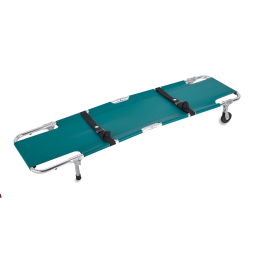
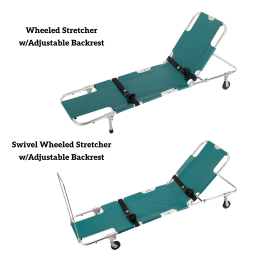
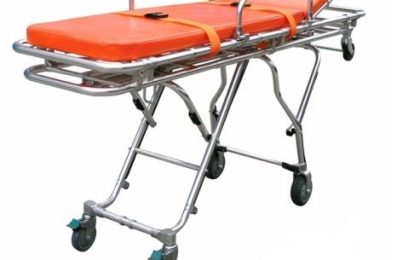
Quick ViewSelect optionsLightweight Aluminum Easy Fold Wheeled Stretcher
Item# X-206JSA Units: single $465.71 – $595.71Price range: $465.71 through $595.71 -
Quick ViewSelect options -
Quick ViewSelect optionsLightweight Aluminum Easy Fold Wheeled Stretcher w/Adjustable Backrest
Item# X-406JSA $744.29 – $878.57Price range: $744.29 through $878.57 -
Quick ViewSelect options -
Quick ViewSelect options
The Four Families and the One Question That Sorts Them
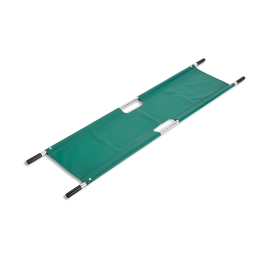
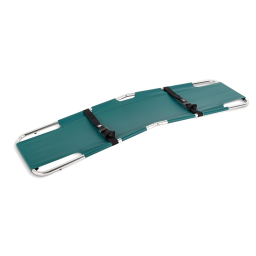
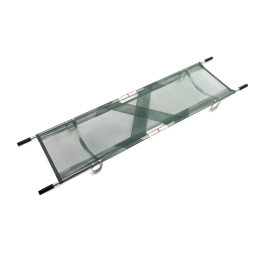
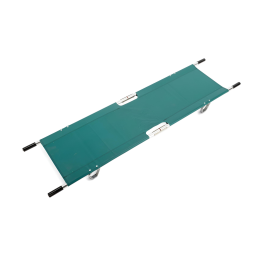
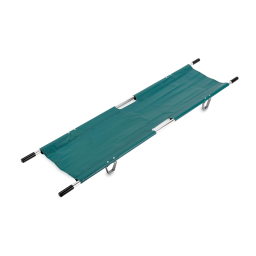
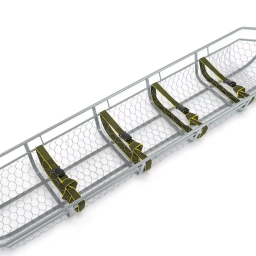
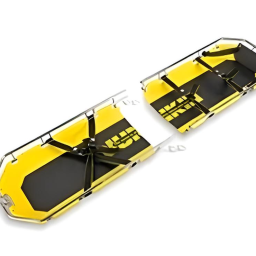
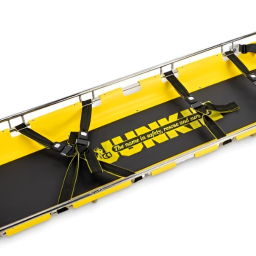
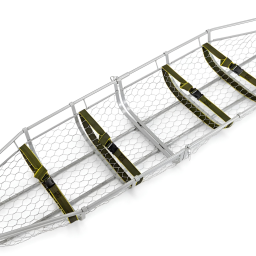
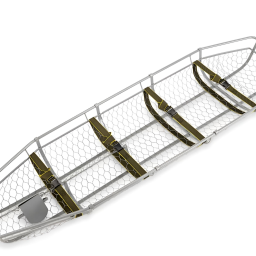
Basket, foldable, plastic and pole stretchers are four answers to one question: what is the worst ground this patient will cross, and who is carrying? Baskets own rough terrain and rope work. Foldables own staged readiness in buildings, stairwells included. Plastic units own washdown environments. Pole stretchers own the simple flat-ground carry at minimum cost. Answer the ground-and-team question honestly for the actual operation, and the family usually picks itself before a single model is compared.
Count the Carriers Before You Buy
Each design quietly assumes a team size, and buying against the assumption is how carries fail. Pole stretchers are a two-person tool on flat ground and four anywhere else. Foldable and plastic units run two to four by distance. A loaded basket over rough terrain is four to six, rotated on long evacuations. A three-person facility response team should not own a stretcher that needs six carriers, however capable it looks on paper. Staffing reality outranks specification in this family.
Materials: Fabric, Aluminum and Molded Plastic Traded Honestly
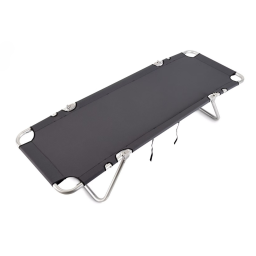
Coated fabric beds keep pole and foldable units light and cheap, and ask for periodic inspection of cuts, stitching and UV wear. Molded polyethylene takes decontamination chemistry and impact indefinitely, at the cost of bulk and a storage spot that accepts a full-length shell. Aluminum frames hold the middle on weight and durability. On any construction, the load path is what to study in the product photos: continuous welded or molded structure outlasts bolted joints in hard use.
Staging Is Part of the Purchase
A portable stretcher earns its keep only where the emergency is. The facility pattern is one unit per floor or zone, wall-mounted at a marked point on the egress route, straps attached, a laminated deployment card on the bracket. Foldables and pole units take wall brackets; baskets rack horizontally at landings or utility points. Order the mounting hardware with the stretchers, because improvised brackets are how staged equipment ends up in a closet, and a closet is where evacuation plans go to fail.
When the Buyer Needs This Family Instead of a Wheeled Cot
The families are complements. Ambulance services run a wheeled cot as primary and carry a foldable or basket for the calls the cot cannot reach. A facility with no rig usually needs only this family, staged for evacuation. Athletic and event operators pair a pole or plastic unit on the sideline with EMS transport arranged separately. And when the question is which single stretcher a building should buy first, the answer is nearly always a foldable, not a cot.
The Complete Setup: What a Bare Stretcher Is Missing
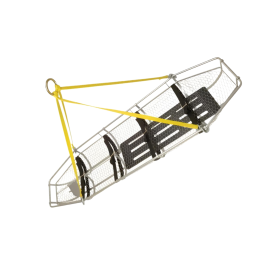
A deployable setup is the stretcher plus restraint straps sized to the frame, head immobilization where suspected spinal injury is in scope, the lifting bridle for any basket that will ever see rope or hoist work, and the mount at the staging point. The Stretcher Kits & Accessories line carries that layer, and the reliable practice is one quote covering everything, so the equipment arrives deployable instead of waiting weeks for a strap set that should have shipped with it.
The Mistakes That Cause Returns in This Family
Three recur. The stairwell buy that ignored folded dimensions, discovered when the unit does not fit its cabinet. The basket bought for a team too small to carry it loaded. And the washdown environment stocked with fabric-bed units that the first real decontamination ruins. Each one is a five-minute check against the specification table: folded size against the storage spot, carrier count against the roster, bed material against the cleaning chemistry the operation actually uses.
How MSEC Quotes Portable Stretchers
Describe the operation: the ground, the team size, the staging locations and the quantity, by phone toll free at 877-706-4480 or email inquiry@msecompany.net. The team matches families and models to the description, quotes the complete setups with straps and mounting included, consolidates freight across quantity, and accepts purchase orders. Facilities, schools, event operators and government buyers order here routinely, and MSEC is a GSA contract holder.
Pre-Order Checklist
- Worst realistic terrain and carry distance named
- Carrier count confirmed against the real response roster
- Family chosen: basket, foldable, plastic or pole
- Folded or assembled dimensions checked against the actual storage spot
- Bed and frame material matched to the cleaning and weather exposure
- Straps, immobilization and any lifting bridle on the same quote
- Wall brackets or racks ordered with the stretchers
- One deployment card written per staged unit
Frequently Asked Questions
Which portable stretcher should a building buy first?
Nearly always a foldable unit: it stores on the evacuation route, handles stairwells, and deploys with minimal training, which is the facility readiness job in one product.
How many people does a basket stretcher really need?
Plan four to six carriers for a loaded basket over rough ground, rotated on long carries. Smaller teams should look at foldable or pole designs instead.
Are plastic stretchers better than fabric ones?
They are better for washdown and contamination-heavy environments, and bulkier to store. Fabric-bed units are lighter and cheaper where the environment is kind. The cleaning regime decides.
Do portable stretchers come with straps?
It varies by model, and where straps are not bundled they belong on the original quote from the Stretcher Kits & Accessories line, because a strapless staged stretcher is not deployable.
Can one order cover stretchers for every floor of a facility?
Yes, and it should: quantity plus mounting hardware on one quote, consolidated freight, delivery together, with purchase orders accepted and GSA contract terms for public buyers.
Where should stretchers be staged in a building?
One per floor or zone, wall-mounted at a marked point on the egress route with straps attached, on the same inspection calendar as extinguishers.
Ready to Shop Break-apart & Portable Stretchers?
Browse the Break-apart & Portable Stretchers line, or call toll free 877-706-4480, local 713-706-4480, for a quote on a purchase order.
Take This Guide With You
The full Portable & Break-apart Stretchers Buying Guide as a printable PDF, with the comparison points and the pre-order checklist. Share it with facilities, purchasing or whoever signs off.