


Food Service Carts & Food Warmers
Eleven meal delivery and warming units across four lines: the equipment that moves patient meals from kitchen to bedside at temperature.
Home » Hospital & Durable Medical Equipment » Food Service Carts & Food Warmers
Meals Delivered At Temperature
Patient meal service is a logistics run with a temperature requirement. The carts and warmers in this family are built for that run: insulated and heated transport, tray capacities matched to unit sizes, and construction that handles the daily kitchen to floor cycle.
Shop The Food Service Carts & Food Warmers Lines by Type
Every line in the family with its catalog count.

Ice Caddies & Carts
5 products

Kitchen Utility Carts
4 products
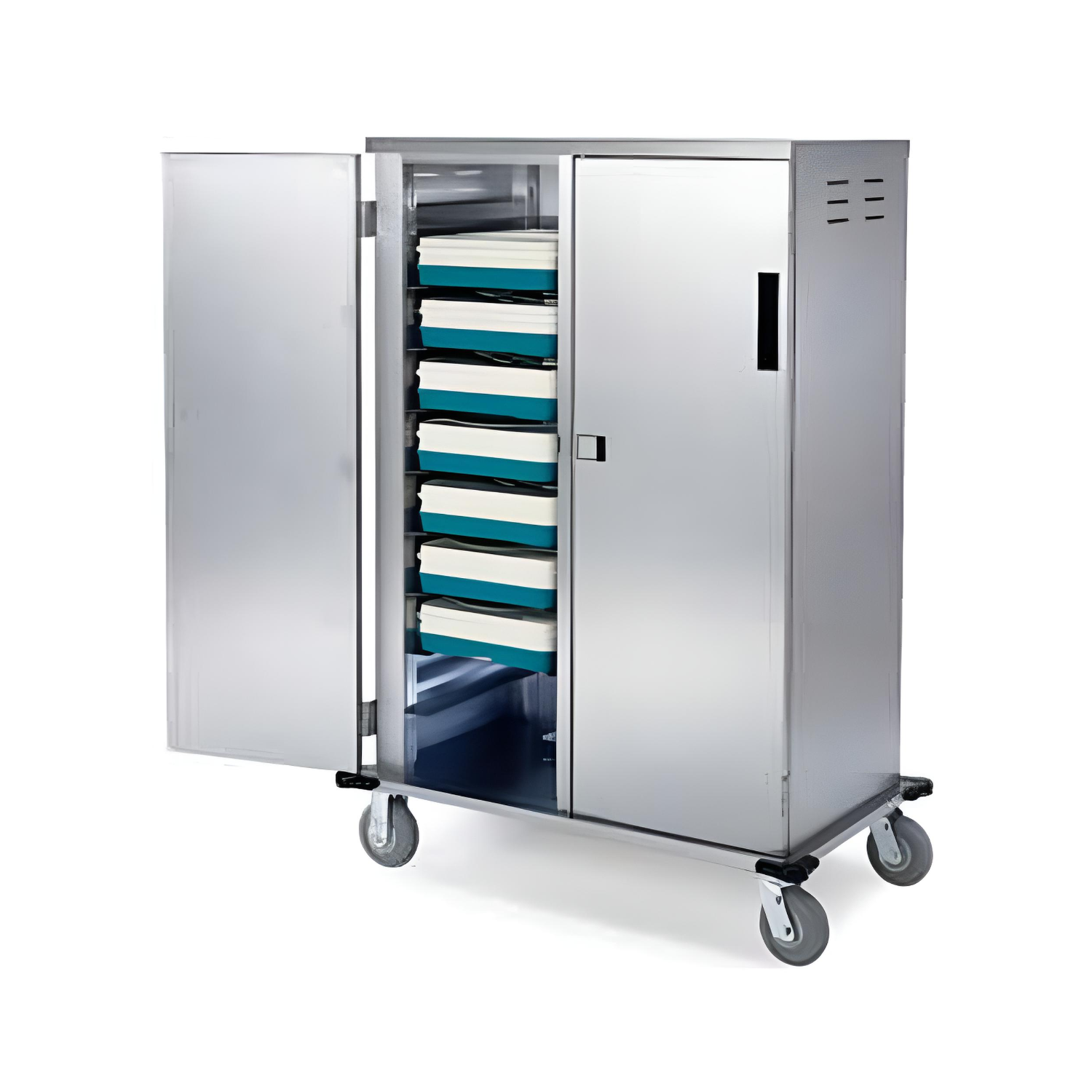
Catering Carts
1 products

Commercial Food Warmers
1 products
What Does the Food Service Family Include?
Feeding patients, residents and staff is a major daily operation in any healthcare facility, and this family covers the equipment that moves and holds food. It includes catering carts that transport meals from the kitchen to patient floors, commercial food warmers that hold prepared food at serving temperature, kitchen utility carts for moving supplies and dishes within the dietary department, and ice caddies and carts for distributing ice. Each line has its own page with products and specifications listed per model. The equipment shares a few priorities: it must keep food at the right temperature, stand up to frequent cleaning with food service sanitizers, and move smoothly over long routes that include corridors, elevators and thresholds. Dietary departments typically plan these purchases around their meal service schedule, the number of meals delivered and the distance between the kitchen and the floors they serve.
How Do Catering Carts Support Patient Meal Delivery?
Catering carts carry meals from the kitchen to patient floors, often holding many trays at once. Enclosed designs protect food from contamination and help retain temperature during transport, which matters when routes are long or pass through public areas. Open shelf designs load and unload quickly on shorter routes. Capacity is usually expressed in trays or shelves, so the right size depends on how many meals are delivered per trip and how many trips the schedule allows. Casters should handle elevator gaps and thresholds without jarring trays, and handles should give staff good control when the cart is fully loaded. Doors, latches and interior surfaces need to be easy to clean between meal services. When comparing models, check tray capacity, interior dimensions against the facility’s tray system, overall size against elevators and doorways, and the materials used for interior surfaces.
Why Do Food Warmers Matter for Food Safety?
Food warmers hold cooked food at serving temperature until it is plated or served. Keeping hot food above safe holding temperatures is a basic food safety practice, so the warmer’s ability to maintain a consistent temperature is its most important feature. Cabinet warmers hold multiple pans or trays and suit cafeterias and dietary departments that prepare food in batches. Countertop warmers fit serving lines and smaller operations. Controls should make it easy to set and verify temperature, and some units include humidity control to keep food from drying out during holding. Pan compatibility matters, since the warmer should accept the pan sizes the kitchen already uses. Facilities should follow their own food safety plans and local health codes for holding temperatures and times. Listings state capacity, temperature range, control type and pan compatibility so warmers can be matched to the operation.
What Are Kitchen Utility Carts Used For?
Kitchen utility carts move dishes, ingredients, supplies and equipment around the dietary department and between kitchen and dining areas. They are simpler than catering carts, usually open shelf designs, but they are used constantly and must handle weight, moisture and frequent cleaning. Materials matter: stainless steel tolerates sanitizers and heat, while polymer carts resist dents and corrosion and run quietly. Lipped shelves keep items from sliding off during moves. Rated capacity per shelf should match the heaviest loads the cart will carry, such as stacks of plates or cases of supplies. Casters should suit kitchen floors, which may be wet, and locking casters keep the cart still during loading. Kitchens often keep several utility carts sized for different jobs. Listings give shelf dimensions, capacity and materials, which are the main factors when comparing models.
How Are Ice Caddies Used in Healthcare Settings?
Ice caddies and carts move ice from an ice machine to patient floors, dining areas or events in a closed, sanitary container. They are designed specifically for ice, with insulated bodies, drainage for meltwater, lids that stay closed during transport and scoop holders that keep scoops off the ice surface. Using a dedicated ice caddy rather than an improvised container helps keep ice from being contaminated during transport and distribution. Capacity should match the amount of ice needed on a route without leaving large amounts to melt. Casters and handles should make the full caddy manageable over long distances. Cleaning and sanitizing the caddy regularly is part of good practice, so smooth interior surfaces and easy drainage matter. Listings state capacity, construction and drainage features so dietary teams can choose units that fit their routes and service routines.
What Materials Hold Up Best in Food Service?
Food service equipment is cleaned with sanitizers multiple times a day and often exposed to heat and moisture, so material choice affects how long equipment lasts and how easy it is to keep clean. Stainless steel resists corrosion and heat and tolerates strong sanitizers, which is why it is common in warmers and many carts. Polymer construction is lighter, quieter and resistant to dents and rust, making it a good choice for utility carts and some catering carts. Insulated bodies on ice caddies and some transport carts help maintain temperature. Seams, corners and crevices are where residue collects, so designs with smooth, accessible surfaces are easier to sanitize. Gaskets on enclosed carts should be replaceable, since they wear with use. When comparing equipment, check the listed materials against the department’s cleaning chemicals and processes so the equipment holds up through daily sanitation.
How Is Food Service Equipment Maintained?
Regular cleaning and inspection keep food service equipment safe and reliable. Carts and caddies should be cleaned and sanitized according to the department’s procedures, with special attention to door gaskets, handles and interior corners. Warmers should have their temperature verified regularly with a calibrated thermometer, and any unit that cannot hold safe temperatures should be removed from service until repaired. Casters on carts and caddies should roll smoothly and lock firmly, since wet kitchen floors make control important. Gaskets, latches and hinges wear over time and should be replaced when they no longer seal properly. Keeping a simple maintenance log for warmers and transport carts helps document temperature checks and repairs, which supports food safety programs and inspections. Standardizing on a few models makes replacement parts easier to stock and helps staff learn how to operate and clean each piece of equipment.
How Do Facilities Order Food Service Equipment?
Dietary departments typically plan purchases around meal volume, service times and delivery routes. Catering cart capacity follows the number of trays delivered per trip, warmer capacity follows batch sizes and holding times, and utility carts and ice caddies follow the tasks they support. Confirm that carts fit elevators and doorways on delivery routes and that warmers fit the available space and power. MSEC quotes individual items and full dietary department orders, accepts purchase orders from hospitals, long term care facilities, schools and government buyers, and offers GSA contract pricing for federal and VA facilities. The order desk at 877-706-4480 can help match capacity and configuration to the operation before anything ships, so equipment arrives ready to support each meal service.
How Do Facilities Plan Meal Delivery Routes?
Meal delivery is a logistics exercise. Dietary teams map the route from the kitchen to each floor, including elevators, long corridors and any outdoor connections, and time how long each run takes. That timing determines how many carts are needed to deliver every meal within its service window while keeping food at the right temperature. Long routes favor enclosed carts that retain heat and protect trays, and they may require more carts so meals are not held too long before delivery. Elevator capacity and availability during meal times affect how many carts can move at once. Cart dimensions must fit elevator cars and doorways along the route. Planning also covers the return trip, when soiled trays and dishes come back to the kitchen, often on the same carts. A clear route plan makes it much easier to size the cart fleet correctly and keep meal service on schedule.
Frequently Asked Questions
What food service equipment does MSEC carry?
MSEC carries catering carts, commercial food warmers, kitchen utility carts and ice caddies and carts. Each line has its own page with products and specifications listed per model.
How do I choose a catering cart size?
Base the size on how many trays you deliver per trip and how many trips your schedule allows. Check interior dimensions against your tray system and confirm the cart fits elevators and doorways on the route.
Why use an enclosed catering cart?
Enclosed carts protect meals from contamination and help retain temperature during transport, especially on long routes or through public areas. Open shelf carts load faster on short routes.
What temperature should a food warmer hold?
Follow your facility’s food safety plan and local health code for holding temperatures and times. Choose a warmer with controls that make it easy to set and verify temperature, and check it regularly with a calibrated thermometer.
Why use a dedicated ice caddy?
Ice caddies are designed for sanitary ice transport, with insulated bodies, drainage, closed lids and scoop holders. They help keep ice from being contaminated between the machine and the point of service.
Can MSEC quote equipment for a dietary department?
Yes. MSEC quotes individual items and full department orders, accepts purchase orders, and offers GSA contract pricing for federal and VA facilities. Call toll free 877-706-4480 or locally 713-706-4480.
Related Hospital Equipment Categories
The other equipment families in the Hospital department.

Medical Carts
390 products

Utility & Janitorial Carts
208 products

Pediatric Furnishings
149 products

Medical Tables & ENT Chairs
133 products

Hospital Room Lights
111 products

Surgical & Exam Lighting
85 products

Medical Office Cabinets
68 products

Bariatric Equipment
58 products
Talk to a Medical Equipment Specialist
Toll free 877-706-4480 | Local 713-706-4480 | inquiry@msecompany.net