

Mobile Sinks & Portable Hand Washing Stations
Nineteen self contained hand washing units across five lines, bringing running water hygiene where plumbing does not reach.
Home » Hospital & Durable Medical Equipment » Mobile Sinks & Portable Hand Washing Stations
Running Water Without The Plumbing
Hand hygiene capacity should not depend on where the pipes happen to run. Mobile sinks and portable washing stations carry their own supply and waste tanks, so clinics, screening points, temporary units and renovation zones get real running water hygiene wherever the work is.
Shop The Mobile Sinks & Portable Hand Washing Stations Lines by Type
Every line in the family with its catalog count.

Children Portable Sinks
5 products

Accessories for Portable Sinks
4 products
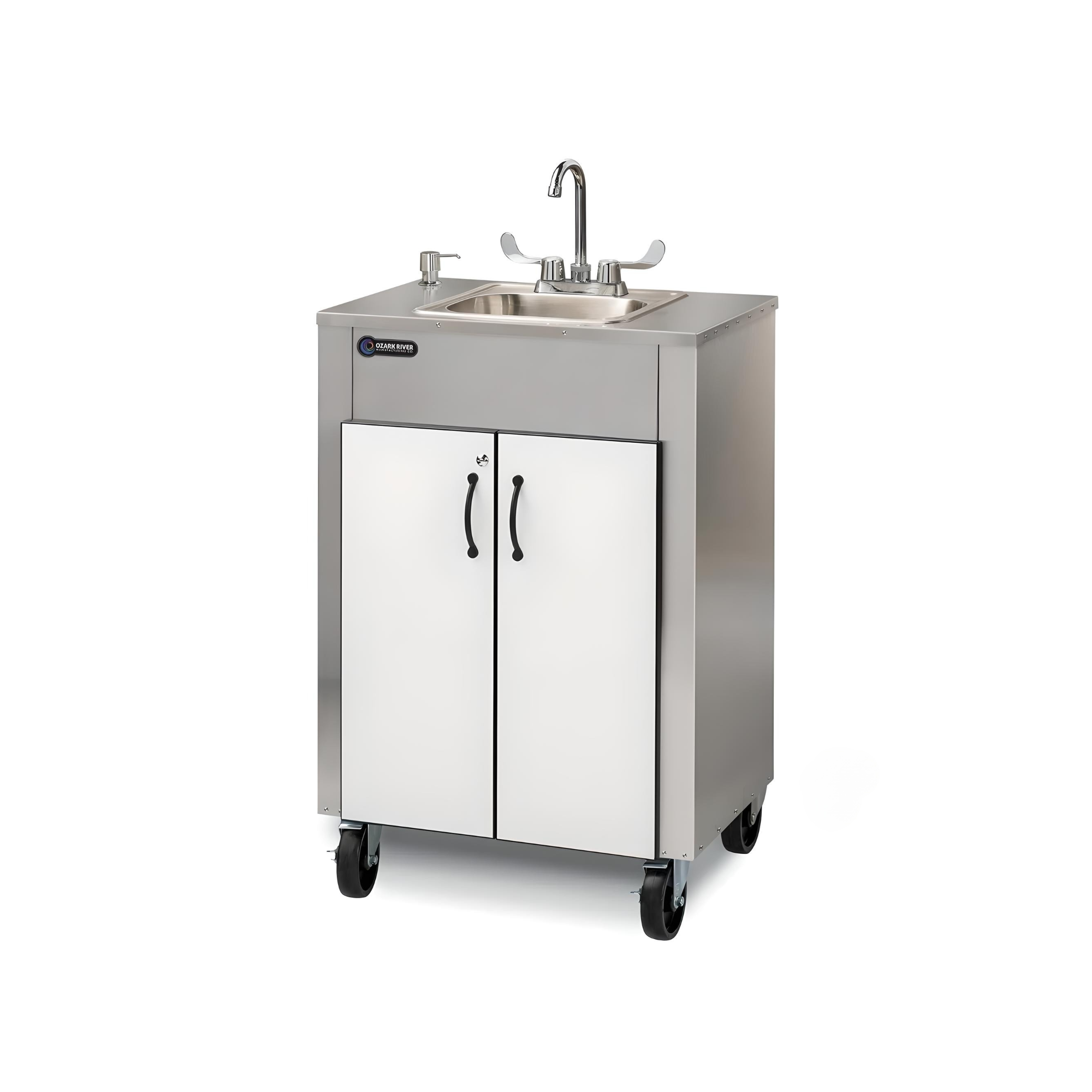
Stainless Steel Top Portable Sinks
4 products

Single Basin Portable Sinks
3 products

Wide Basin Portable Sinks
3 products
What Is a Portable Hand Washing Station?
A portable hand washing station is a self contained sink that provides running water without a plumbing connection. A fresh water tank feeds the faucet, a waste water tank collects what drains, and a pump, either electric or foot operated, moves the water. Many models add a water heater so users wash with warm water, along with soap and paper towel dispensers. The result is a real soap and water hand wash anywhere the unit can be placed or rolled. That makes portable sinks useful in clinics operating in leased or temporary spaces, screening and vaccination sites, food service points, classrooms, laboratories, events and any location where installing plumbing is impractical or temporary. This family includes single basin, wide basin, stainless steel top and children’s height models, plus the accessories and replacement parts that keep units in service. Each line has its own page with products and specifications listed per model.
How Do Single Basin, Wide Basin and Stainless Top Models Differ?
Single basin units cover standard hand washing in a compact footprint and are the most common choice for clinics, offices and screening sites. Wide basin units provide a larger washing area for rinsing utensils or equipment, or for multiple users washing at once, which suits food service and utility settings. Stainless steel top models combine the sink with a durable work surface that tolerates sanitizing chemicals, useful where the station doubles as a prep or staging area. Children’s portable sinks lower the basin to a height young users can reach without step stools, making them suitable for schools, daycares and pediatric clinics. Choosing between them comes down to who will use the sink and what they will wash. Many facilities operate more than one type, such as standard units at clinical stations and children’s units in pediatric areas, all drawing on the same accessories and service approach.
Why Do Tank Size and Water Heating Matter?
Tank capacity determines how many washes a unit provides before the fresh tank needs refilling and the waste tank needs emptying. A busy screening site may need larger tanks or more frequent service than a quiet office. Undersized tanks lead to units sitting empty, which defeats the purpose of having them. When comparing models, consider how many people will use the station, how often staff can service it, and how heavy a full tank is to carry. Water heating is the other key choice. Heated units provide warm water, which many users prefer and which some codes or local requirements may call for in certain settings, such as food service. Heaters require electrical power, so units with heat need an outlet nearby. Unheated units can operate anywhere, including outdoors. Listings state tank capacities, heating options and power requirements for each model, so the right combination can be matched to each location.
Where Are Portable Sinks Most Useful?
Portable sinks solve the problem of hand washing where there is no plumbing. Healthcare settings use them in temporary clinics, triage and screening areas, mobile units and renovated spaces while permanent plumbing is installed. Schools and daycares place them in classrooms so children can wash without leaving the room. Food service operations use them at serving stations, catering setups and temporary kitchens. Laboratories and maker spaces use them for quick cleanups. Event organizers and outdoor programs set them up wherever people gather. Facilities planning for emergencies keep units in storage to deploy quickly when needs change. Because units are mobile, a single sink can serve different locations over time. When placing a unit, consider access for refilling and emptying tanks, proximity to power for heated models, and a stable, level surface. Each listing gives dimensions and mobility details for planning placement.
What Should You Know About Child Height Units?
Children’s portable sinks put the basin and controls at a height young users can reach on their own, which encourages independent hand washing and avoids the hazards of step stools. They are designed with simple faucet operation that small hands can manage, and many keep the same tank and pump systems as standard units. Schools, daycares, pediatric clinics, children’s museums and camps use them to make hand washing part of the routine wherever children gather. When choosing a model, match the basin height to the age range served, consider tank capacity relative to group size and how often staff can service the unit, and decide whether warm water is needed. Facilities serving a wide age range sometimes place a child height unit next to a standard unit so everyone has an accessible option. Listings state basin height, tank capacity and heating options for each model.
How Are Portable Sinks Serviced and Maintained?
Routine service keeps portable sinks hygienic and reliable. Fresh water tanks should be refilled with potable water and periodically cleaned and sanitized according to the manufacturer’s guidance. Waste tanks should be emptied before they fill and cleaned regularly to prevent odors and buildup. Soap and towel dispensers need restocking. Faucets, pumps and heaters should be checked for leaks and proper operation, and electric pumps and heaters need their power cords inspected. Units that are stored between uses should be drained and dried to prevent growth in tanks and lines. Replacement parts such as tanks, pumps, faucets and dispenser components are available in the accessories line and are listed by sink model, which lets facilities repair units rather than replacing them. Assigning service responsibility to specific staff and keeping a simple service log helps ensure units are always ready when needed.
Do Portable Sinks Meet Code Requirements?
Requirements for hand washing stations vary by setting and jurisdiction. Food service, healthcare, schools and temporary events can each be governed by different codes, and local health departments may set their own rules on items such as warm water, tank capacity and dispenser types. Facilities should check the requirements that apply to their specific use and location before purchasing, then select a unit whose specifications meet them. Product listings describe each model’s features, including heating, tank capacities and dispenser configurations, which helps when comparing against a requirement. If a local inspector or the facility’s compliance team has specific criteria, sharing those with the order desk helps narrow the choices. Choosing a unit that meets the applicable requirements from the start avoids having to replace equipment after an inspection and keeps the station in use.
How Do Facilities Order Portable Sinks?
Ordering starts with where units will be used, how many people will wash at each station, whether warm water is needed, and who the users are. From there, choose between single basin, wide basin, stainless top and children’s models and select tank sizes that match the service schedule. Order spare parts such as an extra fresh tank or pump for units in heavy use. MSEC quotes individual units and multi station orders, accepts purchase orders from healthcare facilities, schools, food service operations and government buyers, and offers GSA contract pricing for federal and VA facilities. The order desk at 877-706-4480 can help match units to each location and its requirements before anything ships, so stations arrive ready to set up and use.
How Do You Choose the Right Number of Stations?
The number of stations depends on how many people need to wash at the same time and how far they should have to walk. At a screening or vaccination site, place stations where people enter and where staff work, so hand hygiene happens naturally at each step. In classrooms, one unit per room keeps children from leaving to wash. In food service, stations belong at each serving or prep point that lacks a plumbed sink. Clinics in temporary spaces typically need a sink in or near each exam area. Consider peak use rather than average use, since lines at a single station discourage hand washing. It also helps to keep one spare unit available to cover a station that is out for service or to respond to a new need. Mapping the space and the flow of people is the most reliable way to decide how many units to order and where each one should go.
Frequently Asked Questions
How does a portable sink work without plumbing?
A portable sink uses a fresh water tank to feed the faucet and a waste tank to collect drain water, with an electric or foot pump moving the water. Many models also heat the water and include soap and towel dispensers.
Do portable hand washing stations provide hot water?
Many models include a water heater for warm water, which requires an electrical outlet. Unheated models can be used anywhere. Check each listing for heating options and power requirements, and confirm whether your setting requires warm water.
How often do the tanks need to be serviced?
That depends on tank size and how many people use the station. Busy locations need more frequent refilling and emptying. Choose tank capacities that match how often staff can service the unit so it never sits empty.
Are there portable sinks designed for children?
Yes. Children’s portable sinks place the basin and controls at a height young users can reach without step stools. They suit schools, daycares and pediatric clinics.
Can I buy replacement parts for a portable sink?
Yes. The accessories line includes tanks, pumps, faucets and dispenser parts listed by sink model, so units can be repaired rather than replaced.
Can MSEC quote portable sinks for multiple locations?
Yes. MSEC quotes multi station orders, accepts purchase orders, and offers GSA contract pricing for federal and VA facilities. Call toll free 877-706-4480 or locally 713-706-4480.
Related Hospital Equipment Categories
The other equipment families in the Hospital department.

Medical Carts
390 products

Utility & Janitorial Carts
208 products

Pediatric Furnishings
149 products

Medical Tables & ENT Chairs
133 products

Hospital Room Lights
111 products

Surgical & Exam Lighting
85 products

Medical Office Cabinets
68 products

Bariatric Equipment
58 products
Talk to a Medical Equipment Specialist
Toll free 877-706-4480 | Local 713-706-4480 | inquiry@msecompany.net