
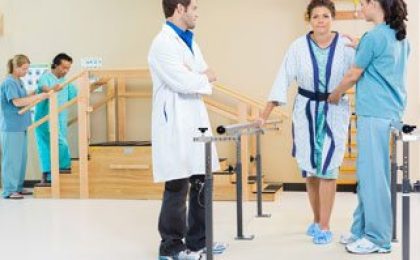
Parallel Bars
Floor mounted, wall mounted folding and freestanding adjustable parallel bars for outpatient clinics, hospital rehabilitation departments, skilled nursing facilities and athletic training rooms.
Home › Rehabilitation Equipment › Physical Therapy Equipment › Parallel Bars
Rehabilitation Parallel Bars for Therapy Gyms and Training Rooms
Rehabilitation parallel bars are a pair of height set handrails on a fixed run, giving a patient a handhold on both sides while a clinician grades weight bearing and observes gait. Clinicians use them in outpatient clinics, hospital rehabilitation departments, skilled nursing facilities and athletic training rooms for standing balance, transfer practice and walking work. MSEC supplies floor mounted, wall mounted folding and freestanding adjustable bars, so the model you choose depends on how permanently the lane can occupy the room.
Shop Parallel Bars
Everything MSEC carries in Parallel Bars, shown in full. Specifications are supplied by the manufacturer. For current pricing, lead time or a quote on a purchase order, call toll free 877-706-4480.
-
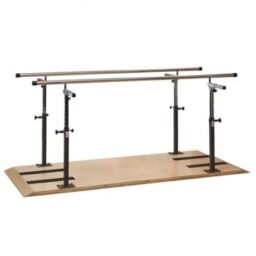 Quick ViewSelect options
Height & Width Adjustable Parallel Bars
Item# XX02-3CLT $2,198.31 – $2,845.25Price range: $2,198.31 through $2,845.25 -
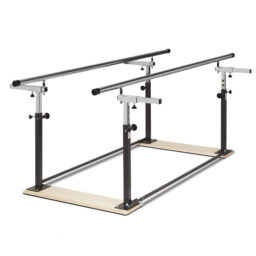 Quick ViewSelect options
Adjustable Folding Parallel Bars 7ft/10ft L
Item# XX33-3CLT $1,251.11 – $1,384.11Price range: $1,251.11 through $1,384.11 -
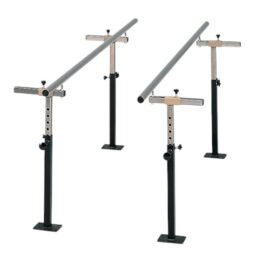 Quick ViewSelect options
Floor Mounted Parallel Bars 7ft/10ft/12ft L
Item# XX04-3CLT $1,251.89 – $1,431.60Price range: $1,251.89 through $1,431.60 -
 Quick ViewSelect options
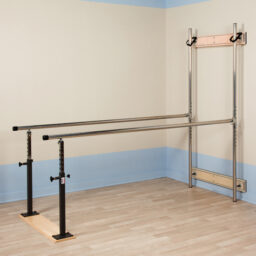
Wall Mounted Folding Parallel Bars
Item# 7033-3CLT$1,856.17Original price was: $1,856.17.$1,605.41Current price is: $1,605.41.


Choosing Between Models?
The Physical Therapy Equipment Buying Guide walks through the decisions behind this purchase, with a comparison method, the mistakes that cause returns and a pre-order checklist.
Which Parallel Bars Does MSEC Carry, and How Do the Four Models Differ?
Four models sit in this category, and they separate on mounting method, on stated length options and on whether the bars fold. Every figure below comes from the product name as the manufacturer states it.
| Model | Mounting | Lengths stated | Folds | Adjustment stated |
|---|---|---|---|---|
| Floor Mounted Parallel Bars 7ft/10ft/12ft L | Anchored to the floor | 7 ft, 10 ft, 12 ft | No | Not stated, confirm on the specification |
| Adjustable Folding Parallel Bars 7ft/10ft L | Freestanding | 7 ft, 10 ft | Yes | Adjustable |
| Wall Mounted Folding Parallel Bars | Anchored to the wall | Not stated, confirm on the specification | Yes | Not stated, confirm on the specification |
| Height & Width Adjustable Parallel Bars | Freestanding | Not stated, confirm on the specification | No | Height and width |
Where a cell reads confirm on the specification, the figure is simply not in the listing and we will pull it from the manufacturer documentation for you. For the argument about how length, height adjustment and platform options change what the bars can do, read the rehabilitation parallel bars buying guide. This page stays with the hardware.
How Does the Mounting Method Change Where the Bars Can Go?
Mounting decides which rooms are candidates before any other specification matters. There are three answers in this catalog and they are not interchangeable.
- Floor mounted. The uprights are anchored into the floor, so the lane is permanent and the surrounding floor is committed. This is the choice for a dedicated gait lane in a purpose built gym, and it is the one that needs a facilities conversation and, in a leased suite, a landlord approval before the order goes in.
- Wall mounted folding. Support comes from the wall rather than the floor, and the bars fold back flat when the session ends. The resting footprint is the smallest of the group. The constraint moves to the wall: stud framing, block and metal framed partition are not equivalent substrates, and the backing has to be confirmed with facilities before ordering.
- Freestanding. The Height & Width Adjustable Parallel Bars and the Adjustable Folding Parallel Bars 7ft/10ft L carry their own base. Nothing is drilled, which is why they suit leased space, temporary clinics and rooms that are still being laid out.
The Physical Therapy Equipment line covers how this sits alongside the rest of a gym fit out.
What Should You Look At on the Handrails, Uprights and Base?
Look at the three things a patient and a clinician actually load: the rail, the upright and whatever holds the whole assembly down. A set of bars carries body weight through a hand, often unevenly and often suddenly, so the construction detail is not cosmetic.
- Handrail. Confirm the rail material, the outside diameter and the surface finish on the manufacturer specification. Diameter is what decides whether a patient with a weak or arthritic grip can close a hand around it, and the finish is what the clinic has to clean between patients.
- Uprights and crossmembers. Confirm the frame material and the finish, and ask how the rail attaches at each upright. A rail that is clamped and a rail that is welded behave differently over years of adjustment.
- Base or anchor points. On freestanding models, confirm the base footprint and whether the base plates are drilled for optional anchoring. On floor and wall mounted models, confirm the anchor pattern and what hardware is supplied.
- Stated capacity. Confirm the weight capacity and what it is measured against, since a rating taken on a vertical load is not the same as one taken on a lateral pull.
Who Installs Parallel Bars, and What Has to Be Ready Before They Arrive?
Installation is a trade job for the two mounted models and an assembly job for the freestanding ones, and both need decisions made before the freight arrives. Nothing here is a same day unbox.
For the Floor Mounted Parallel Bars 7ft/10ft/12ft L, the floor construction has to be confirmed with facilities, the anchor positions marked, and any building or lease approval obtained. Slab thickness, what runs under the slab, and the floor covering on top all change the answer, and none of that can be settled after a crate is sitting in a hallway. For the Wall Mounted Folding Parallel Bars, the wall substrate and backing are the equivalent question, and a partition that reads as solid is often not.
For the freestanding models, confirm what assembly is required and who performs it, because an adjustable set arrives as components rather than a finished lane. Confirm crated dimensions against door widths, corner turns and elevator openings for every model, since a 12 ft rail does not negotiate a tight corridor turn. Name a receiving contact who will inspect the shipment against the packing list before the carrier leaves.
What Should You Confirm on the Specification Sheet Before Ordering Parallel Bars?
Confirm the numbers that are not in the product name, because the product name only carries length, mounting and the fact of adjustment. Work through the following before the purchase order is issued.
- Weight capacity and how it is rated. Ask what the figure covers and whether it differs for the mounted and freestanding versions.
- Handrail height range. On the adjustable models, confirm the lowest and the highest setting, not just the fact that it adjusts.
- Width range between rails. Confirm the minimum and maximum on the Height & Width Adjustable Parallel Bars.
- Overall footprint and folded depth. For folding models, the folded depth against the wall is the figure that decides whether the room works.
- Anchoring hardware. Confirm whether anchors are supplied and whether they suit your floor or wall construction.
- Crated dimensions and weight. Needed for dock, liftgate, door and elevator checks.
- Assembly and installation. Confirm what is required and who performs it.
- Serviceable parts and lead time. Confirm both before ordering, because a set of bars on backorder holds up a room opening.
How Do Parallel Bars Hold Up in Daily Clinical Use?
They hold up well, because there is very little on them to break, but the fasteners are the part that needs attention. Every adjustment, every fold and every patient who catches a rail on the way down puts load through a joint, and a set that is used across a full clinic day sees that many times over.
Build a short inspection into the same schedule the facility already runs for other equipment. Check that rail clamps and upright fasteners are tight, that adjustment pins and knobs seat fully and lock, that folding models latch in both the open and the stored position, and that anchors show no movement at the floor or wall. Look along the rails for finish damage that could catch a hand, and check the base plates or feet for anything that has worked loose.
Confirm the cleaning instruction for the rail finish and the frame with the manufacturer documentation before standardizing a disinfectant across the gym, and ask us which replacement parts are available for the model you own. Replacement hardware years after purchase is a routine request, not an unusual one.
When Does a Clinic Need Training Stairs or a Rehab Work Table Instead?
Parallel bars support work in a straight line with a handhold on both sides, so when the task is not that, another item in the line fits better. Two sit alongside this category.
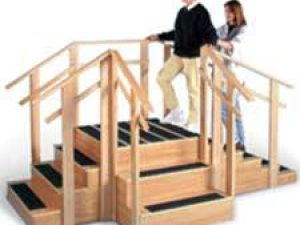
- Training Stairs. When the work is stepping, step over step patterns or a transition between surfaces, the equipment loads one leg at a time and occupies a block of floor rather than a lane. See Training Stairs.
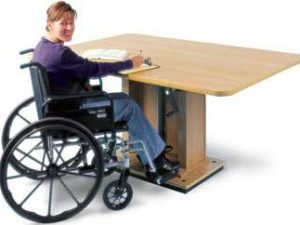
- Rehab Work Tables. When the work is seated, table top, upper limb or fine motor, a clinician needs a working surface and a cutout to stand in, not a walking lane. See Rehab Work Tables.
A clinic equipping a treatment room from nothing usually buys across all three, and the order in which they arrive matters to the budget. The physical therapy equipment buyer guide walks that sequence through, and the wider Rehabilitation Equipment & Products hub covers the lines beyond this one. If the configuration you need is not listed, call 877-706-4480 toll free or email inquiry@msecompany.net.
Frequently Asked Questions
Can folding parallel bars be left folded between sessions?
Yes, that is what they are built for. Both the Wall Mounted Folding Parallel Bars and the Adjustable Folding Parallel Bars 7ft/10ft L are designed to be stored folded and opened when the lane is needed, which is why multipurpose rooms choose them. Confirm the folded depth on the manufacturer specification before committing, because that figure decides how much floor the room actually gets back.
Do floor mounted parallel bars have to be anchored into concrete?
Not necessarily, but the floor construction has to be confirmed before ordering rather than after. Slab thickness, what runs beneath it, and the floor covering on top all change what anchoring method is appropriate, and that is a facilities decision at your building. Ask us for the anchor pattern and the hardware supplied with the model, and take both to your facilities team before the purchase order is issued.
Are handrails and hardware available separately years after purchase?
Ask us with the model name and any identification plate on the frame and we will confirm what the manufacturer still lists. Replacement fasteners, adjustment knobs, pins and feet are routine requests on equipment that stays in service for a long time. Availability depends on the model and the production run, which is why the identification details matter more than the purchase date.
How are parallel bars crated and delivered?
They ship freight, and the crate for a longer set is long rather than heavy, which changes what the delivery route has to allow. Confirm crated dimensions and weight with us, then check dock availability, liftgate need, door widths, corridor corner turns and elevator openings. Name a receiving contact to inspect the shipment against the packing list before the carrier leaves the site.
Can a set of bars be moved to a different room later?
The freestanding models can, which is the practical argument for them in a suite that may be reconfigured. Mounted models can be removed and reinstalled, but that is a second installation with new anchor points and, in a leased space, a second approval and a floor or wall repair where the old anchors were. If a move is likely within the equipment’s life, factor that in at the specification stage.
What should be checked during a routine inspection of parallel bars?
Check that rail clamps and upright fasteners are tight, that adjustment pins and knobs seat and lock fully, that folding models latch in both the open and stored positions, and that anchors show no movement at the floor or wall. Run a hand along the rails for finish damage that could catch skin. Log anything that moves, and take the set out of service until the hardware is corrected.
Related Categories
Move up to Physical Therapy Equipment, or across to the lines ordered alongside this one.
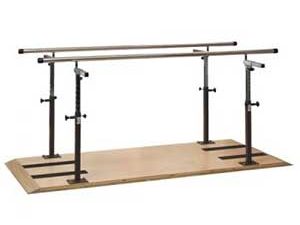
Physical Therapy Equipment
The full Physical Therapy Equipment line.
GSA contract holder • Ships nationwide • From Patient to Doctor & Everyone In Between
Talk to a Medical Equipment Specialist
Toll free 877-706-4480 | Local 713-706-4480 | inquiry@msecompany.net