

Ankle Supports
Ankle straps, splints, supports and wraps for the ankle and foot complex, sized from a tape measurement read against the manufacturer chart, for clinics, training rooms and home recovery.
Home › Rehabilitation Equipment › Supports & Braces › Ankle Supports
Ankle Supports for Clinics, Training Rooms and Home Recovery
Ankle supports are worn devices for the ankle and foot complex, sized to the patient from a tape measurement read against the manufacturer’s chart for that model. MSEC groups them into ankle straps and splints and ankle supports and wraps, and stocks positioning and immobilization items alongside them. Buyers are outpatient physical therapy clinics, orthopedic practices, hospital departments, athletic training rooms, skilled nursing facilities and patients continuing recovery at home after an ankle sprain or surgery.
Shop Ankle Supports by Type

Choosing Between Models?
The Supports & Braces Buying Guide walks through the decisions behind this purchase, with a comparison method, the mistakes that cause returns and a pre-order checklist.
What Does MSEC List Under Ankle Supports?
Two subcategories of worn devices, plus positioning and immobilization items held at the category level.
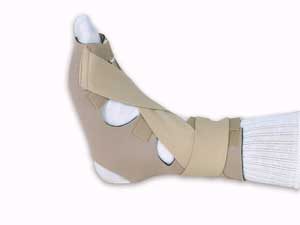
- Ankle Straps & Splints. Devices that hold the ankle and foot in a set position, or restrict a specific movement, using a strap system or a rigid or semi rigid component.
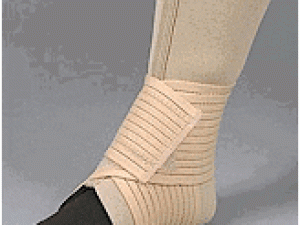
- Ankle Supports & Wraps. Sleeves, wraps and compression style supports worn around the ankle, applied for circumferential support rather than for holding a joint in a fixed position.
- Leg Elevator Full Foam 45° Angle. A full foam elevation support that holds the lower limb at a fixed angle. It is not strapped to the body, so it is chosen by the surface it sits on rather than by a circumference.
- Inflatable Air Splints Kit. Inflatable splints that immobilize a limb segment temporarily. Selection is by limb segment rather than patient size, because the splint conforms as it is inflated. These end up in response bags, training rooms and transport kits.
The first two are sized to a patient and the second two are not, which is why they are bought in completely different ways. Everything below about tape measurements and sizing charts applies to the worn devices. The elevation support and the splint kit are specified by the limb and the setting instead.
How Do Ankle Straps and Splints Differ From Ankle Supports and Wraps?
They differ by whether the device limits a movement or applies pressure around the joint. That distinction decides which subcategory an order belongs in, and it is where most ordering confusion in this region starts.
- Straps and splints carry a structural element. A strap system that holds the foot in a set relationship to the leg, or a rigid or semi rigid upright along the sides of the ankle, is there to restrict motion in a direction the clinician has identified. Fit is governed by where the structure sits against the bone, so the measurement landmark matters more here than anywhere else in the region.
- Supports and wraps work circumferentially. A sleeve or a wrap applies pressure around the ankle and, on many designs, across the instep and heel. There is usually more tolerance in the fit, and adjustable wrap styles cover a wider circumference band than a pull on sleeve does.
Vocabulary overlaps badly across this market. Buyers say brace, support, sleeve, wrap, strap, stirrup, stabilizer and splint for items a manufacturer may catalog under any of those words. When you request a quote, describe the movement the clinician wants restricted and the measurement you took rather than the word your facility happens to use, and we will match it to the right subcategory.
Where Do You Put the Tape to Measure an Ankle?
Put it where the chart for that model tells you to, and read the number against that manufacturer’s own chart rather than a size label. The parent line covers why the chart beats the label; what follows is specific to this body region, where three different measurements are in common use and they are not interchangeable.
- Ankle circumference. Usually taken around the narrowest part of the ankle, above the ankle bones. Charts differ on whether the tape crosses the bones or sits above them, and the same ankle gives two different numbers, so read the chart’s own wording.
- Figure of eight. A measurement that runs around the instep and under the heel as well as around the ankle. Charts that ask for it are describing a device that wraps the foot, not just the ankle, and an ankle circumference cannot be substituted for it.
- Calf circumference. Asked for by taller devices whose uprights or straps extend up the leg. It decides whether the top of the device closes.
- Shoe size. Some models band by shoe size because the device sits inside footwear. Where a chart asks for it, ask which shoe, because athletic and dress sizes differ on the same foot.
Measure the ankle being braced. Swelling after an injury, prior surgery and limb dominance all mean left and right are often not the same size, and measuring the uninjured side is the most common shortcut that produces a return. Keep the tape snug rather than tight, record the number alongside the size you ordered, and use a flexible tape rather than string transferred to a ruler. The supports and braces measuring guide walks through taking the measurement and what to do when it lands on a boundary between two sizes.
Will the Ankle Support Fit Inside the Patient's Shoe?
Ask before ordering, because a device that does not fit in the shoe stops being worn within days. Most ankle supports are designed to be worn inside footwear, which makes shoe volume part of the specification rather than an afterthought.
- Profile at the ankle bones. A device with rigid uprights takes more room on both sides of the ankle than a fabric sleeve. That extra bulk lands exactly where a shoe upper is tightest.
- Bulk across the instep and heel. Straps that cross the instep or cup the heel change how the shoe closes and how the heel seats in the shoe.
- The shoe the patient owns. A lace up athletic shoe absorbs a device that a dress shoe, a work boot or a slip on will not. Ask which the patient wears daily, not which they wore to the appointment.
- Both feet. A device on one foot changes the height of that side, so the patient may need to adjust laces or use a different insole on the other foot to stand level.
For facilities stocking a range, this is the reason low profile and higher profile models both sell. Ask which category a model falls into before committing to a bulk order, since a stockroom full of devices that will not go into work boots is an expensive lesson in a setting where most patients wear them.
What Should a Facility Confirm Before Ordering Ankle Supports in Quantity?
Confirm which chart applies and which sizes you actually turn over, because quantity buying in this category goes wrong on size distribution rather than on the product itself.
- The current chart for that exact model. Charts belong to the model, not the brand, and they get revised. Work from the current manufacturer specification rather than from the copy in your binder.
- Which measurement the chart asks for. Ankle circumference, figure of eight, calf or shoe size, as above. Record it on your order form so staff measure the same way every time.
- Side specificity. Whether the model is universal or left and right specific, because a side specific device ordered for the wrong side cannot be fitted at all.
- Size distribution. Which sizes your caseload actually consumes, rather than an even spread across the range.
- Packaging quantity. Whether the item is sold singly or in multiples, and whether each unit is individually packaged for patient issue.
- Materials. Ask the manufacturer about the materials used if your facility screens for latex content, and confirm what the device tolerates in laundering.
- Cleaning and reuse. Whether the model is intended for single patient use or can be laundered between patients, and to what instructions.
- Lead time. Particularly ahead of a sports season, when training rooms order the same sizes at the same time.
Call 877-706-4480 or 713-706-4480 with your measurements and we will check them against the chart before the order goes out.
When Does a Patient Need Elevation or Immobilization Instead of a Worn Ankle Support?
When the ankle is not going into a shoe at all. A worn support is sized to a limb for use during activity, and two items in this category answer a different situation entirely.
- Leg Elevator Full Foam 45° Angle. Specified when the limb needs to rest at a fixed angle on a bed or a treatment surface. It is chosen by the surface and the limb it supports, not by a circumference, so no measurement chart applies.
- Inflatable Air Splints Kit. Specified for temporary immobilization of a limb segment, which is why these live in response bags, athletic training rooms and transport kits rather than on a fitting shelf.
If the order is for a different body region, the full line covers knee, wrist and hand, elbow, shoulder and back. Knee braces and supports measure at thigh and calf circumference, wrist devices measure at the wrist and hand dominance decides the side, and none of those landmarks transfer from the ankle. The Supports & Braces category page sets the regions out, and the measuring and fitting guide covers the measurement itself. For the worn ankle devices, go straight to Ankle Straps & Splints or Ankle Supports & Wraps. Everything here sits under Rehabilitation Equipment & Products with the rest of the rehabilitation lines, and if the model or size you need is not shown, email inquiry@msecompany.net.
Frequently Asked Questions
The chart asks for ankle circumference. Is that above or below the ankle bones?
Read the chart’s own wording, because manufacturers differ and the two points give different numbers on the same ankle. Many charts specify the narrowest part of the ankle just above the bones, but a device that wraps the foot may instead ask for a figure of eight around the instep and heel. If the chart is unclear, send us the model and we will confirm the landmark.
Do ankle supports come in pediatric sizes?
Some models run a size range that reaches children and some do not, and it varies by model rather than by brand. Take the measurement the chart asks for on the child rather than working from age or shoe size, then send us the number with the model you are considering. Where the measurement falls below the published range, we will look for a model that covers it.
Can we order ankle supports in bulk for a team or a training room?
Yes, and the useful preparation is a size count rather than a headcount. Measure the athletes, group the numbers against the chart for the model you want, and tell us the distribution along with whether the model is side specific. Ask about lead time early in the season, because training rooms tend to order the same sizes in the same weeks.
Is the Leg Elevator Full Foam 45° Angle sized to the patient?
No. It is a full foam support that holds the lower limb at a fixed angle, so it is chosen by the surface it rests on and the limb it supports rather than by a circumference measurement. There is no sizing chart to read against. Confirm the dimensions on the manufacturer specification against the bed or treatment surface it will be used on.
Does an ankle support do the same job as an air splint?
No, and they are not substitutes. A worn ankle support is sized to the limb and applied for use during activity, while an inflatable splint conforms around a limb segment for temporary immobilization and is selected by segment rather than by patient size. Facilities usually stock both for different situations rather than choosing between them.
A patient's measurement sits between two sizes on the chart. What do we do?
Go back to the chart for that exact model rather than applying a general rule, since manufacturers differ on how their bands overlap and an adjustable wrap behaves differently from a pull on sleeve at a boundary. Send us the measurement, the model and whether there is swelling, and we will check it against the current chart before you order.
Related Categories
Move up to Supports & Braces, or across to the lines ordered alongside this one.
Supports & Braces
The full Supports & Braces line.
GSA contract holder • Ships nationwide • From Patient to Doctor & Everyone In Between
Talk to a Medical Equipment Specialist
Toll free 877-706-4480 | Local 713-706-4480 | inquiry@msecompany.net