

Ankle Straps & Splints
Ankle straps and splints for immobilization, including the Inflatable Air Splints Kit stocked for EMS response bags, athletic training rooms and hospital transport kits.
Home › Rehabilitation Equipment › Supports & Braces › Ankle Supports › Ankle Straps & Splints
Ankle Straps and Splints for Immobilization in Clinics, Training Rooms and the Field
Ankle straps and splints are immobilization devices that hold the ankle and foot in a set position or restrict one movement, using straps, a rigid component or an inflatable sleeve. They are splinting supplies rather than worn ankle supports, and are specified by clinicians, athletic trainers, emergency medical services (EMS) and hospital departments. MSEC lists the Inflatable Air Splints Kit here. Whether a splint is applied at all, and to which patient, is the treating clinician’s decision.
Shop Ankle Straps & Splints
Everything MSEC carries in Ankle Straps & Splints, shown in full. Specifications are supplied by the manufacturer. For current pricing, lead time or a quote on a purchase order, call toll free 877-706-4480.
-
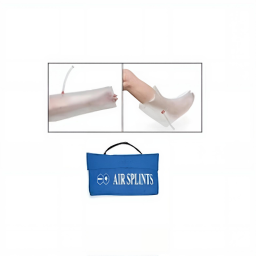 Quick ViewSelect options
Choosing Between Models?
The Supports & Braces Buying Guide walks through the decisions behind this purchase, with a comparison method, the mistakes that cause returns and a pre-order checklist.
What Is Listed Under Ankle Straps and Splints Right Now?
One item: the Inflatable Air Splints Kit. That is the whole of this category today, and it is worth being plain rather than implying a range that does not exist.
- It is a kit, not a single ankle splint. The product is cataloged as a kit, so the limb segments it covers are stated by the manufacturer. Read that listing before you assume it matches the segments your bag is missing.
- It is specified by limb segment, not by a tape measurement. An inflatable splint conforms to the limb as it is inflated, so no sizing chart applies. What the ankle supports page says about measurement landmarks belongs to the worn devices, not to this kit.
- It is bought by the setting. Kits are stocked as first response supplies, where a limb is held still away from a fitting room.
A lace up ankle stabilizer, a stirrup style splint and a strapped night splint are all real options in the wider market, and none is stocked here today. Call with the model and we will source it.
How Does an Inflatable Splint Differ From a Strapped or Rigid Ankle Splint?
By what holds the position. An inflatable splint is a sleeve closed around the limb and then inflated, so air pressure inside the sleeve maintains the position. A strapped or rigid splint uses an upright, a shell or hook and loop straps sized to the patient, and the structure maintains it. A brace is a worn device chosen off a sizing chart, which is why Ankle Brace sits beside this category rather than inside it.
That difference drives the whole purchase:
- Stocking. One inflatable kit covers a range of limb sizes, where strapped splints and braces need a size run.
- Storage. Deflated splints fold into a bag. Rigid splints and braces take shelf depth and cannot be compressed.
- Who applies it. Inflatable splints are applied by trained responders and clinical staff under protocol at the point of injury. Strapped devices and braces are fitted in a clinic against a chart.
- Straps and closures. Where straps are present, the closure is what staff handle one handed under pressure, so closure type belongs on the comparison.
- Duration of use. Inflatable splints are used temporarily, not as an alternative to a device worn through a plan of care.
Where Do Inflatable Splint Kits Actually Get Stored?
In the bag, not on the fitting shelf. That is the practical reason this category sits apart from the worn devices beside it, and it changes which specifications matter.
- EMS and response bags, where packed size and weight compete with everything else in the bag.
- Athletic training rooms and sideline kits, where the kit travels to away fixtures and is checked back in.
- Transport and interfacility kits, where a limb has to be held still while a patient is moved.
- Industrial first aid rooms, school athletic programs and occupational health, where the person applying it is trained but is not fitting to a measurement.
The clinical picture that puts a kit in use is documented before the bag is opened. Clinicians and responders assessing an acute ankle injury record the mechanism, the pain the patient reports, visible swelling and any deformity, and immobilization of the limb is one part of the protection step in acute injury handling, alongside rest, ice, compression and elevation. Compression and elevation sit with the worn and positioning items in the sibling ankle category; splinting and strapping sit here. Because the kit is carried, packed dimensions and how quickly it deploys matter more than the footprint figures that govern clinic equipment.
What Should You Check on the Specification Sheet Before Ordering an Air Splint Kit?
Check what the manufacturer decides, because none of it can be assumed from a category name.
- Segments included. Which limb segments the kit contains, and whether individual splints can be bought separately to replace one without replacing the kit.
- Inflation method. Whether inflation is by valve or by pump, and whether a pump ships with the kit or is ordered alongside it.
- Valve and closure options. How the splint is secured and released, and whether straps, a zipper or both are used, since that is what staff train on.
- Materials. Ask the manufacturer about material content if your facility screens for latex, and what the sleeve tolerates.
- Single use or reusable. Whether the model is intended for one patient or can be cleaned and returned to the bag, and to whose instructions.
- Carry case and packed size. Measured closed, against the compartment it lives in.
- Lead time. Particularly before a sports season, when training rooms restock at once.
MSEC will confirm any of these against the manufacturer documentation before you commit.
What Accessories Should Be Quoted Alongside the Kit?
The inflation accessory, the carry case and the replacement segments, because the parts that keep a splint in service are ordered separately more often than not. MSEC is Medical Supplies and Equipment Company, and splinting supplies work like the rest of the catalog: what is listed is the starting point and the quote is where the order takes shape.
- Inflation accessories. Whether a hand pump or bulb is included or ordered alongside, and what the replacement options are.
- Replacement segments. Whether a single splint is sold on its own, which decides whether a damaged segment costs a splint or a kit.
- Carry case. Whether a case ships with the kit and whether a spare can be ordered.
- Consumables around the splint. Bandages, tape and straps are ordered from the wider first aid supplies list rather than from this category.
Price is not published on this page, because it moves with the manufacturer, the configuration and the quantity on the purchase order. Send a quote request to inquiry@msecompany.net, or call toll free 877-706-4480 or locally 713-706-4480 with the kit, the accessories and the count, and you will get current pricing in writing. A facility attaching a price to a requisition should ask for the quote in that form.
How Do You Keep a Splint Kit Ready Between Uses?
Check it on the same schedule you check the bag it lives in, because a splint that will not hold air is discovered at the worst possible moment. Inflatable equipment fails quietly, unlike a rigid device or a braced support where damage shows.
- Inflate and inspect to the manufacturer’s instructions, looking at seams, the valve, the straps and the closure rather than only the body of the sleeve.
- Clean to the stated instructions and log it, so infection control has a record for reusable items moving between patients.
- Repack as folded in the manner the manufacturer specifies, since creasing a sleeve wrongly damages it.
- Restock after every use. Assign that to a named role, not to whoever unpacks the bag.
Which Ankle Category Should You Be Ordering From?
Order from this one only if you want temporary immobilization out of a bag. If the ankle is to be supported rather than held still, or braced to a measurement, the right category is beside this one.
- Ankle Supports & Wraps holds circumferential sleeves and wraps, plus the positioning item for a limb resting on a surface. Go there if the ankle is not being splinted.
- Ankle Brace is part of the structure of this line and is not stocked today. For a braced ankle device, call with the movement the clinician wants restricted.
- Plantar Fasciitis Splints is also structural rather than stocked, and is where a foot specific night splint belongs.
- Ankle Supports covers the whole region, including where to put the tape and whether a device fits inside a shoe.
- Measuring and Fitting Guide walks the sizing decision through for the worn devices in supports and braces.
- Rehabilitation Equipment & Products holds the rest of the rehabilitation catalog.
To talk a kit through with a person, call toll free 877-706-4480, locally 713-706-4480, or email inquiry@msecompany.net.
Frequently Asked Questions
Does the Inflatable Air Splints Kit cover limbs other than the ankle?
It is cataloged as a kit rather than as a single ankle splint, so the limb segments included are stated by the manufacturer on the product listing. Read that before ordering, especially if you are filling a specific gap in a response bag. If the segment you need is not in the kit, call and ask whether it is available on its own.
How is an inflatable splint inflated, and does a pump come with it?
That is set by the manufacturer for the model and should be confirmed on the specification sheet rather than assumed. Ask whether inflation is by valve or by pump, whether a pump ships with the kit, and how the splint is released. Your staff train on that mechanism, so it is worth settling before the order rather than after.
Can an air splint be cleaned and put back in the bag after use?
Only if the manufacturer states it is reusable, and only to their cleaning instructions. Some inflatable products are intended for a single patient. Confirm which applies before you build a restock routine around it, and keep a cleaning record for anything reusable that moves between patients so infection control has documentation.
We want a wrap for an ankle, not a splint. Are we on the wrong page?
Yes. A wrap or sleeve applies pressure around the joint rather than holding it in a set position, so it belongs in Ankle Supports and Wraps beside this category. If you are unsure which of the two an order is, describe the movement the clinician wants restricted rather than the word your facility uses, and we will match it to the right listing.
The splint model our service standardizes on is not listed. Can you get it?
Usually yes. What is shown online is not the limit of what we supply, and splints in particular are often bought to a service protocol rather than picked from a shelf. Send the model, the manufacturer and the segments you need to inquiry@msecompany.net, or call toll free 877-706-4480 or locally 713-706-4480.
How do we get current pricing for a splint kit on a purchase order?
Ask for a quote. Price is not published on the category page because it moves with the manufacturer, the configuration and the quantity, and a written quote is what a facility attaches to a requisition. Send the kit, any accessories and the count to inquiry@msecompany.net, or call toll free 877-706-4480 or locally 713-706-4480, and ask for the price in writing.
Related Categories
Move up to Ankle Supports, or across to the categories beside this one.
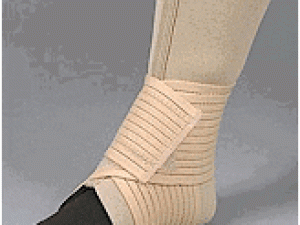
Ankle Supports
The full Ankle Supports category.

Ankle Brace
Part of the catalog structure.
Plantar Fasciitis Splints
Part of the catalog structure.
GSA contract holder • Ships nationwide • From Patient to Doctor & Everyone In Between
Talk to a Medical Equipment Specialist
Toll free 877-706-4480 | Local 713-706-4480 | inquiry@msecompany.net