

Rehab Work Tables
Kidney shaped multi patient therapy tables with cutouts, in adult adjustable and child pediatric configurations, for outpatient clinics, occupational therapy rooms and hospital rehab departments.
Home › Rehabilitation Equipment › Physical Therapy Equipment › Rehab Work Tables
Rehab Work Tables for Therapy Gyms and Occupational Therapy Rooms
A rehab work table is a kidney shaped therapy table with cutouts along its curved edge, so the clinician stands inside a cutout and reaches the patient without leaning across the surface. Outpatient physical therapy clinics, occupational therapy rooms, hospital rehab departments, skilled nursing facilities and pediatric programs use them for seated upper limb, fine motor, coordination and functional task work. MSEC stocks adult and pediatric configurations, and the differences between them are cutout count, height adjustment and who sits at the table.
Shop Rehab Work Tables
Everything MSEC carries in Rehab Work Tables, shown in full. Specifications are supplied by the manufacturer. For current pricing, lead time or a quote on a purchase order, call toll free 877-706-4480.
-
 Quick ViewSelect options
 -
 Quick ViewSelect options


Choosing Between Models?
The Physical Therapy Equipment Buying Guide walks through the decisions behind this purchase, with a comparison method, the mistakes that cause returns and a pre-order checklist.
Which Rehab Work Tables Does MSEC Stock, and What Separates Them?
Two models, and they separate on three things: cutout count, the patient population they are configured for, and whether the top adjusts in height.
| Model | Cutouts | Configured for | Height |
|---|---|---|---|
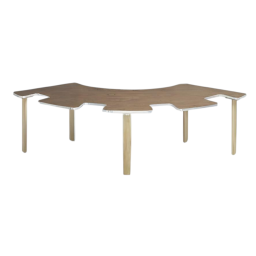
| Multi-Patient Kidney Table 4 Cutouts | 4 | Child and pediatric therapy | Fixed |
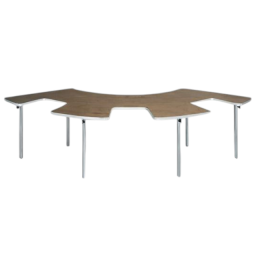
| Adjustable Multi-Patient Kidney Table 3 Cut Outs | 3 | Adult therapy | Adjustable |
The Multi-Patient Kidney Table 4 Cutouts is configured for child and pediatric therapy and carries four cutout positions, so more than one child can work at the table with a clinician at each station. The Adjustable Multi-Patient Kidney Table 3 Cut Outs is configured for adult therapy and adds height adjustment, which is what lets the same table serve a seated patient, a wheelchair user and standing work in the same session.
Cutout count is not only about how many patients fit. Each cutout is a clinician position, so a four cutout table supports a busier station pattern, while three cutouts on a larger adult footprint leaves more working surface per patient. Confirm surface dimensions, adjustment range and clearance against the manufacturer specification for whichever model you are quoting, because those figures decide the room layout more than the model name does.
How Many Cutouts Does Your Caseload Actually Need?
Count the sessions you run at a table at the same time, not the patients on the schedule. A cutout is a clinician standing position, so the useful number is the number of staff who need to be at the table at once plus the seats each of them supervises.
- One clinician, one patient at a time. Either model works and the decision moves to height adjustment and surface size instead.
- One clinician supervising a small group. Extra cutouts let the clinician move around the curve to each patient without walking the long way around the table.
- Two or more staff at the table. This is where four cutouts earn their keep, particularly in pediatric programs where a therapist and an aide work side by side.
- Shared room, mixed use. If the table doubles as a group activity surface between treatment sessions, the number of seats matters more than the number of cutouts.
Departments commonly buy the wrong way around here. They count patients, order the table with the most cutouts, then find the working surface between stations is tighter than the tasks need. Measure the task first: a fine motor board, a stacking activity or a functional task setup each occupy a different amount of tabletop, and that is the number that should drive the choice.
Does the Table Need Height Adjustment?
It needs height adjustment if more than one seating type comes to the table, and it does not if the table serves a single population in one kind of chair. That is the whole decision.
The Adjustable Multi-Patient Kidney Table 3 Cut Outs carries adjustment for exactly that reason. An adult caseload rarely arrives in one chair: a patient in a standard therapy chair, a wheelchair user and a patient working from standing all need a different top height for the same task, and a fixed table forces two of those three to compensate with their shoulders. Adjustment also matters for the clinician, because a surface set for the patient is often the wrong height for the person working beside them for eight hours.
A fixed height table is the simpler machine and there is less on it to fail or to service. Where a pediatric room runs one chair type and one age band, the fixed four cutout table is the straightforward buy. Where the room is shared, specify the adjustment range from the manufacturer specification and check that the bottom of that range still clears the chairs you own.
How Much Clearance Do Wheelchair Users Need at a Kidney Table?
Measure the chairs you actually have, then compare those numbers with the clearance dimension on the manufacturer specification. Three measurements decide whether a wheelchair user can pull in and hold a workable posture.
- Armrest height. If the underside of the tabletop sits below the armrests, the chair stops short of the table and the patient works at arm’s length.
- Knee clearance. The vertical space from the floor to the underside of the top, and how far back that clearance runs before a frame member interrupts it.
- Overall chair width. This decides how many chairs fit around the curve at once, which is a different question from how many cutouts the table has.
The frame under the top is the detail buyers skip. A table can publish a generous height and still be unusable if an apron or a cross brace sits where the knees go, so ask where the structure runs, not just how high the top is. Take the measurements from the heaviest chair in the department rather than the lightest, and take them with the footrests on, since that is how the patient arrives.
Where Does the Table Go in the Room, and Who Stands Where?
Put the table where the clinician can reach every cutout without crossing a traffic lane, and leave seat depth plus chair maneuvering room on the outer curve. A kidney table is specified on footprint, but it is used on the space around it.
- Inside the curve. This is the clinician’s working position. It needs standing room and a clear path between cutouts, not a wall.
- Outside the curve. Seating for the patients, plus the room a wheelchair needs to turn and back out without moving the table.
- Approach. One clear route in and out that does not pass behind a seated patient doing a balance or reaching task.
- Services. If activities at the table use powered devices or a lamp, decide where the cord runs before the table is positioned, because a cord crossing the clinician’s path is a trip hazard in the busiest part of the room.
In a shared gym the table usually ends up against a wall to save floor, which cancels the reason for buying a kidney shape at all. If floor space is that tight, the wider Physical Therapy Equipment line is worth reviewing before the order, since the layout question rarely belongs to one item on its own.
What Should You Confirm on the Specification Sheet Before Ordering a Rehab Work Table?
Confirm the dimensions and the clearance first, then everything that decides whether the table gets through the door and stays in service.
- Surface dimensions and cutout positions. Overall length and depth, plus where the cutouts fall along the curve.
- Height or adjustment range. The fixed height, or the full range and the mechanism that delivers it.
- Clearance under the top. Knee height and the depth of that clearance before a frame member interrupts it.
- Weight capacity. As the manufacturer states it, particularly if patients will lean or push on the edge during transfers.
- Top material, edge and finish. What the surface tolerates, and whether the edge is sealed against fluids.
- Cleaning compatibility. Which disinfectants the manufacturer approves, so the table fits the protocol the department already runs.
- Assembly and freight. Whether the table ships assembled or flat, the crate dimensions, and whether your door widths, elevator and corridor turns will take it.
- Serviceable parts. Casters or glides, the adjustment mechanism and any hardware that can be replaced rather than condemning the table.
Have the room dimensions, the door widths and your chair measurements on hand when you call 877-706-4480 or 713-706-4480, and we can check the fit before the purchase order goes out.
When Does a Therapy Gym Need Parallel Bars or Training Stairs Instead?
When the goal is mobility rather than table top work. A rehab work table is a working surface for seated tasks, and it does not train gait, stepping or transfers.
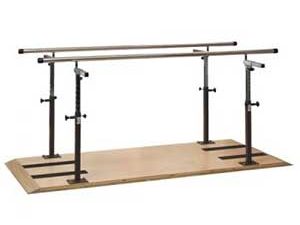
- Parallel Bars. The right line when the session is walking, standing tolerance or graded weight bearing with a handhold on both sides. Floor mounted, wall mounted folding and adjustable models cover permanent and multipurpose rooms.
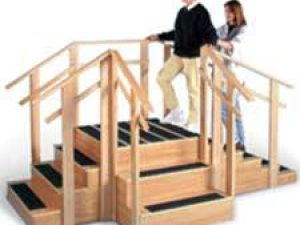
- Training Stairs. The right line for stepping, step over step patterns and surface transitions, including curb and ramp training sets.
Most departments end up with a table and at least one of the two, and the sequencing question is which comes first in a room that is not yet fully equipped. That is exactly what the physical therapy equipment buyer guide works through. For how the three item types divide the floor, see the Physical Therapy Equipment category page, and for the other rehab gym lines including mat tables, cardio and strength equipment, start at Rehabilitation Equipment & Products. If you need a table size or configuration that is not listed, call us or email inquiry@msecompany.net.
Frequently Asked Questions
Can one kidney table serve both pediatric and adult patients?
It can if the height adjusts and the seating works for both, which is why the adjustable model exists. The limit is usually the chair rather than the table: a child at an adult table needs a seat that brings them to a working height without their feet dangling. Check the adjustment range on the manufacturer specification against both populations before assuming one table covers the caseload.
How many chairs actually fit around a rehab work table?
That depends on the overall dimensions and on the width of your chairs, not on the cutout count. Cutouts are clinician positions. Measure your widest chair, including armrests, and lay the seats out along the outer curve on paper before you order. Wheelchairs take considerably more room than therapy chairs, and they need turning space behind the seat as well.
Does a rehab work table ship assembled?
Confirm it per model before the order goes in, because it changes what you need at the dock. Ask for the crate dimensions and weight along with the assembly answer, then check them against your door widths, elevator and corridor turns. A table that fits the room perfectly and will not make the turn into the building is the most avoidable problem in this category.
Is a rehab work table the same thing as a treatment table or a mat table?
No. A rehab work table is a seated working surface with cutouts for the clinician, used for upper limb, fine motor and functional task work. A treatment table or mat table supports a patient lying or sitting on it for hands on treatment and floor based therapy, and it carries body weight. They are specified on completely different criteria and sit in different MSEC lines.
What should we check on a table before it goes into daily use?
Check that the top is level and stable when leaned on at the edge, that every fastener the assembly instructions name is torqued, that the adjustment mechanism moves through its full range without binding, and that glides or casters all contact the floor. Then confirm your disinfectant is on the manufacturer’s list of compatible disinfectants before the first clinical session rather than after.
Can you quote a work table size or configuration that is not listed?
Yes, ask. Tell us the surface dimensions you need, the cutout count, whether the top has to adjust, the populations who will use it and the door widths it has to pass through. We will check availability and lead time and come back with options. Call 877-706-4480 or 713-706-4480, or email inquiry@msecompany.net.
Related Categories
Move up to Physical Therapy Equipment, or across to the lines ordered alongside this one.
GSA contract holder • Ships nationwide • From Patient to Doctor & Everyone In Between
Talk to a Medical Equipment Specialist
Toll free 877-706-4480 | Local 713-706-4480 | inquiry@msecompany.net