Short Wave Diathermy Units
Cart mounted and standalone short wave diathermy units for rehabilitation departments, physical therapy clinics and hospital therapy services.
Home › Rehabilitation Equipment › Therapeutic Devices › Diathermy Units & Accessories › Short Wave Diathermy Units
Short Wave Diathermy Units for Rehabilitation Departments
Short wave diathermy units are deep heating modality equipment that couples electromagnetic energy into tissue through an applicator positioned over the body area under treatment. MSEC stocks them under diathermy units and accessories, inside the wider therapeutic devices line. Rehabilitation departments, physiotherapy and physical therapy clinics and hospital therapy services specify them. Whether the modality is used at all, and every setting on the unit, is the treating clinician’s decision.
Shop Short Wave Diathermy Units
Everything MSEC carries in Short Wave Diathermy Units, shown in full. Specifications are supplied by the manufacturer. For current pricing, lead time or a quote on a purchase order, call toll free 877-706-4480.
-
 Quick ViewSelect options
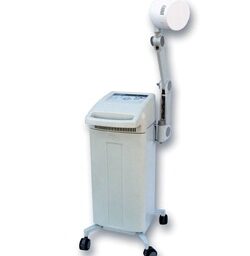
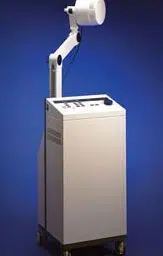
AutoTherm 391 Shortwave Diathermy w/ Cart
Item# 193EMMET$13,950.13Original price was: $13,950.13.$10,333.43Current price is: $10,333.43. -
 Quick ViewSelect options
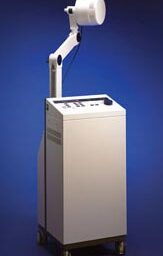
AutoTherm 395 Shortwave Diathermy
Item# 593EMMET$19,651.74Original price was: $19,651.74.$14,556.84Current price is: $14,556.84.
Choosing Between Models?
The Therapeutic Devices Buying Guide walks through the decisions behind this purchase, with a comparison method, the mistakes that cause returns and a pre-order checklist.
What Is Shortwave Diathermy, and How Is It Different From Microwave Diathermy?
Shortwave diathermy is a deep heating modality. The unit generates energy in a radio frequency band and an applicator couples that electromagnetic energy into tissue below the skin. Microwave diathermy is a separate technology using a different part of the spectrum, and the two are not interchangeable. A department asking for shortwave is asking for this class of unit, not for a microwave applicator.
Two coupling methods are described in the physiotherapy literature.
- Capacitive coupling places the body area between plates or pads, with the spacing and any toweling between applicator and skin handled as the manufacturer documents it.
- Inductive coupling uses a drum or coil applicator laid over the area, which is how larger muscle groups and joint regions such as the shoulder, hip, knee and lumbar spine are usually covered.
Manufacturers also document continuous and pulsed modes of application, and which mode is selected belongs to the plan of care. The physiological effects attributed to deep heating agents, including local circulation and tissue temperature effects, are described in the clinical literature and are outside what a supplier states. Questions about pain relief, inflammation, healing, acute against chronic presentation, or whether the modality has a place in a given episode of care go to the treating clinician.
What Short Wave Diathermy Units Does MSEC Stock?
Two units, both from the AutoTherm line: the AutoTherm 391 Shortwave Diathermy w/ Cart and the AutoTherm 395 Shortwave Diathermy. The practical difference between them is how the unit is housed and moved, not what class of equipment it is.
- AutoTherm 391 Shortwave Diathermy w/ Cart ships with its cart, so the unit, its applicators and its cabling travel as one piece between treatment rooms.
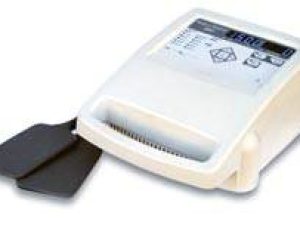
- AutoTherm 395 Shortwave Diathermy is the unit on its own, which suits a department that already has mounting or a dedicated modality room and does not need another cart taking floor space.
Output ratings, applicator types, timer ranges and electrical requirements are stated by the manufacturer and appear on each product listing. Confirm them against your room rather than assuming the two units are identical apart from the cart. Current pricing, availability and lead time are quoted per order, so ask for a quote rather than working from a figure carried over from an earlier purchase.
Should the Unit Arrive on Its Own Cart or Go on Existing Mounting?
The cart decision is a workflow decision, not a clinical one. A cart earns its place when the unit moves between rooms.
- Order the cart version when the unit is shared across treatment rooms, when there is no dedicated modality room, or when applicators, cables and pads need a managed home between sessions. Loose applicators and drum arms are what get damaged.
- Order the standalone unit when it lives in one room on an existing bench or mount, when floor space is genuinely tight, or when the department already owns a suitable cart.
Check caster size against your floor surface and any thresholds the cart has to cross, and confirm the cart shelf layout actually holds the applicators and supplies staff carry with the unit. In a clinic that runs range of motion work and gait training in the same hour, the unit moves several times a day, and a cart is the difference between one person moving it and two.
Which Room, Power and Applicator Details Decide Whether the Unit Can Be Installed?
Confirm these against the manufacturer specification sheet, not against a similar unit already on the floor.
- Electrical supply. Circuit rating and receptacle type, agreed with facilities before delivery rather than after.
- Applicator compatibility. Which applicator types the unit accepts, which ship with it, and which are ordered separately. See diathermy units and accessories for what pairs with these units.
- Room and siting requirements. Manufacturers state siting guidance for this class of equipment because it emits electromagnetic energy. Read it and involve facilities and biomedical engineering, since it affects where the unit may sit relative to other equipment and other treatment areas.
- Footprint and clearance. The full envelope of the cart with applicator arms positioned over a treatment area, not the parked dimension.
- Cleaning protocol. Which disinfectants the manufacturer allows on the housing, the applicators and any surface that contacts skin or toweling.
- Serviceable parts. Which components are field replaceable, what the service interval is, and who services the unit locally.
- Delivery access. Door widths, elevator dimensions and whether inside delivery is needed.
MSEC will confirm any of these against the manufacturer documentation before you commit. Call toll free 877-706-4480 or locally 713-706-4480.
How Do Diathermy Units Sit Alongside the Rest of the Modality Inventory?
Diathermy is one modality among several a department runs, and it is rarely the first one bought. Most rehabilitation departments build the modality bench in this order: hot and cold therapy first because it is used every session, then electrical stimulation, then therapeutic ultrasound, with diathermy specified where the plan of care calls for a deep heating agent.
Across the therapeutic devices line that means diathermy sits next to therapeutic ultrasound machines, TENS units and the electrodes and lead wires that keep stimulation equipment running. Ultrasound and diathermy are both described as deep heating technologies, and clinicians regard them as different tools rather than substitutes, because the applicator, the body area covered and the therapist time at the table are not the same. If you are working out which to buy first, the Therapeutic Devices Buying Guide takes that decision apart.
What matters for the purchase is that supplies and service are the ongoing cost on every one of these, and they do not interchange between modalities. Applicators, electrodes, gel and pads are budgeted line by line, not pooled.
Who Decides Whether Diathermy Is Used, and Who Signs the Purchase Order?
The treating clinician decides on use, and purchasing decides on the order. MSEC supplies the equipment and the manufacturer documentation that comes with it. We do not advise on whether a modality suits a patient, which patients should or should not be treated, or what settings, duration or frequency to apply. Those are clinical decisions made under a plan of care by a physical therapist, physiotherapist, occupational therapist or physician.
On the purchasing side the signature usually comes from a rehabilitation director or clinic owner in an outpatient setting, and from materials management or supply chain in a hospital, with biomedical engineering asked to sign off on siting and service before capital equipment is accepted. Our specialists work that half of the job: which unit fits the room, what the electrical and siting requirements are, which applicator types pair with which unit, what the supplies cost over the life of the unit, and what lead time to expect. Nothing on this site should be read as a statement about the regulatory status or clinical effect of any device.
Where Should a Buyer Go From Here?
If you are comparing diathermy units specifically, stay on this page and work from the two AutoTherm listings and their specification sheets. If you are still deciding which modality to add, go up a level.
- Diathermy Units & Accessories for the applicator types, cables and accessories that pair with these units.
- Diathermy Accessories is the sibling category beside this one. It is part of the catalog structure and holds nothing listed to order today, so ask about applicators, cables and pads by phone.
- Therapeutic Devices for the full modality line, including ultrasound, stimulation and laser equipment.
- Therapeutic Devices Buying Guide for the procurement walkthrough: who approves, combination against separate units, and the compatibility checks that keep a unit from sitting unused.
- Rehabilitation Equipment & Products for everything else in the rehabilitation catalog, from treatment tables to recovery and mobility equipment.
To talk a specific unit through with a person, call toll free 877-706-4480, locally 713-706-4480, or email inquiry@msecompany.net.
Frequently Asked Questions
Is shortwave diathermy the same thing as microwave diathermy?
No. Both are deep heating technologies, but they use different parts of the electromagnetic spectrum and different applicator hardware, and a unit built for one is not a substitute for the other. If a specification or a grant document says microwave diathermy, confirm which technology is actually wanted before the order goes in. The units listed here are shortwave.
What types of applicators do shortwave diathermy units use?
Manufacturers describe two coupling approaches: capacitive applicators, where the body area sits between plates or pads, and inductive drum or coil applicators laid over the area. Which applicator types a given unit accepts, and which ship with it, are stated on the specification sheet. Ask us to confirm compatibility before ordering a spare rather than after.
Which departments usually own a shortwave diathermy unit?
Hospital rehabilitation departments, outpatient physical therapy and physiotherapy clinics, sports medicine and athletic training rooms, and some skilled nursing facilities running recovery and range of motion programs all specify this class of unit. Ownership of the equipment sits with the department, while the decision to use the modality in any episode of care sits with the treating clinician working under a plan of care.
Does a short wave diathermy unit need a dedicated room?
Manufacturers publish siting guidance for this class of equipment because it emits electromagnetic energy, and that guidance can affect where the unit sits relative to other equipment and other treatment areas. Read it and involve facilities, safety and biomedical engineering before deciding where the unit lives. MSEC can supply the documentation so siting is settled before delivery.
What should a receiving team check when a diathermy unit is delivered?
Check the carton count against the packing list, that the cart and the unit arrived together where a cart was ordered, that every applicator and cable listed is in the box, and that the model on the unit plate matches the order. Record the model and serial number at receiving, because service and parts requests start from it.
Can MSEC source diathermy equipment that is not listed here?
Yes. The listed catalog is not the full extent of what we can supply. If you need a specific model, a replacement applicator, a discontinued part or a manufacturer your department already standardizes on, call and our specialists will source it and quote it. Call toll free 877-706-4480 or locally 713-706-4480, or email inquiry@msecompany.net.
Related Categories
Move up to Diathermy Units & Accessories, or across to the categories beside this one.
Diathermy Units & Accessories
The full Diathermy Units & Accessories category.
Diathermy Accessories
Part of the catalog structure.
GSA contract holder • Ships nationwide • From Patient to Doctor & Everyone In Between
Talk to a Medical Equipment Specialist
Toll free 877-706-4480 | Local 713-706-4480 | inquiry@msecompany.net