
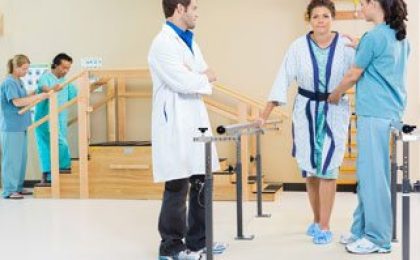
Diathermy Units & Accessories
Shortwave diathermy equipment for hospital rehabilitation departments, outpatient physical therapy clinics and athletic training rooms, including cart mounted and unit only configurations.
Home › Rehabilitation Equipment › Therapeutic Devices › Diathermy Units & Accessories
Shortwave Diathermy Units and Accessories for Rehabilitation Departments
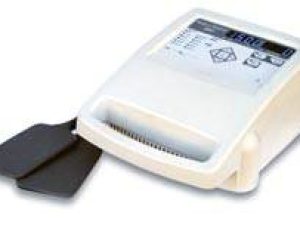
A shortwave diathermy unit is a clinic modality unit that generates high frequency electromagnetic energy and delivers it through applicators positioned by the clinician. MSEC carries shortwave diathermy equipment under Short Wave Diathermy Units, including the AutoTherm 391 Shortwave Diathermy w/ Cart and the AutoTherm 395 Shortwave Diathermy. Hospital rehabilitation departments, outpatient physical therapy clinics and athletic training rooms buy these units, and the treating clinician decides whether the modality and its settings suit a given patient.
Shop Diathermy Units & Accessories by Type
Choosing Between Models?
The Therapeutic Devices Buying Guide walks through the decisions behind this purchase, with a comparison method, the mistakes that cause returns and a pre-order checklist.
Which Shortwave Diathermy Units Does MSEC Carry, and How Do the Two AutoTherm Models Differ?
MSEC lists two shortwave diathermy units, and the difference between them is the mounting configuration rather than a different modality. Both sit in the Short Wave Diathermy Units subcategory of this page.
- AutoTherm 391 Shortwave Diathermy w/ Cart. Supplied with a cart, so the unit arrives as a rolling station rather than something your department has to find a surface for. The cart carries the unit at working height and moves it between treatment bays on one floor.
- AutoTherm 395 Shortwave Diathermy. Listed without a cart. This is the choice when the unit will live in one bay on an existing counter or an equipment table the department already owns, or when facilities has a mounting plan of its own.
Read the configuration in the product name as a commitment about your floor plan, not a minor accessory decision. A unit bought without a cart that later has to move between rooms becomes a two person lift every time, and a cart added after the fact has to be confirmed against the unit rather than assumed to fit. The Therapeutic Devices line explains how diathermy sits alongside the other modality units, so this page stays on the diathermy decision itself.
What Should a Department Confirm on the Specification Sheet Before Ordering a Diathermy Unit?
Confirm the electrical requirement, the physical footprint, the applicator set, the freight path and the parts position before the purchase order is issued. Each item is far cheaper to resolve on paper than at the loading dock.
- Electrical supply. Check the manufacturer’s stated voltage, amperage and receptacle type against the circuit actually serving that treatment bay, and confirm whether your biomedical program adds the unit to its electrical safety inspection schedule.
- Applicators and cables supplied. Confirm exactly which applicators, cables and supports ship with the unit and which are ordered separately. The applicator set drives what the unit can be used for on day one.
- Footprint and cart dimensions. A cart mounted unit needs a parked position plus a working path, not just a square of floor.
- Freight and access. Establish whether the shipment is parcel or freight, whether a liftgate is needed, and whether the route from the dock runs over thresholds, ramps or an elevator sill.
- Serviceable parts and lead time. Ask which components are stocked for that model and what the typical lead time is, because a diathermy unit out of service takes a full modality off the schedule.
How Much Treatment Room Space Does a Cart Mounted Diathermy Unit Actually Need?
Plan for the unit, the cart, the treatment table and the clinician working from both sides, which is more room than the unit’s own dimensions suggest. Departments that measure only the cart footprint end up with a modality that is technically installed and practically hard to use.
Work through the room in this order. Start with the table or plinth position, because that is fixed by patient access and transfer space. Add the arc the applicator arms need to reach the treatment site from the parked cart position, then add clinician standing room on the working side. Only then check that the cart can leave the bay without moving the table, since a unit that has to be shuffled around furniture tends to stay where it was left.
Cord routing matters as much as floor area. A cart mounted unit that has to reach a receptacle across a walkway creates a trip hazard that infection control and safety rounds will flag, so confirm the receptacle position in the bay before you commit to a cart configuration rather than a fixed counter position.
What Accessories and Consumables Does a Diathermy Unit Take Over Its Working Life?
The applicators, their cables and their supports are the parts that move, so those are the parts a department replaces. The generator itself is largely fixed for the service life of the unit.
- Applicators and supports. Order and record the applicator types the department actually uses, along with the arm or support hardware that holds them in position during a session.
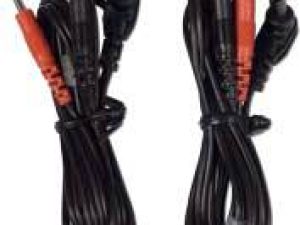
- Cables and connectors. Any cable that flexes at a connector is a wear part. Note the connector type on the unit plate so a replacement can be matched without guesswork.
- Positioning and draping supplies. Whatever your protocol calls for between the applicator and the patient should be stocked to the same par level as your other modality consumables.
- Cleaning products. Confirm with the manufacturer which disinfectants are permitted on the housing, the applicator surfaces and the cables before standardizing a wipe across the department.
Related cables and carry items are grouped under Electrotherapy Accessories, and the therapeutic devices buyer guide covers how to confirm compatibility before ordering a part for a unit you already own.
How Is a Shortwave Diathermy Unit Kept in Service Year After Year?
Keep a written equipment log for the unit and treat the applicator cables as scheduled wear items, because those two habits account for most of the avoidable downtime in this category. A modality unit that no one logs is a modality unit that fails without warning.
Record the model and serial number from the unit plate the day it arrives, and keep that record with the department’s equipment file rather than taped to the unit where it will be cleaned off. When a part is needed, those plate details let us confirm what the manufacturer specifies for that serial range instead of matching on model name alone, which is where older units get the wrong part.
Inspect cables at the connector and along any point that bends during normal positioning. Check that the cart casters still roll and lock, since a caster that drags is the usual reason a mobile unit stops being moved. Add the unit to your facility’s electrical safety inspection program on the schedule your biomedical department sets, and keep the operator manual with the unit so a new therapist is not working from memory.
When Does a Department Need a Different Therapeutic Device Instead of Diathermy?
Order from a different subcategory when the physical agent the clinician plans to use is not shortwave energy, since these units are not interchangeable with the other modality equipment in the line.
- Therapeutic Ultrasound Machines. The right route when the department is specifying ultrasound rather than shortwave equipment, including combination units that pair ultrasound with stimulation.
- Neuromuscular Stimulators. Multi channel clinic NMES units for bay based electrical stimulation work with the clinician present.
- Light & Laser Therapy Equipment & Accessories. Therapeutic laser equipment for clinician directed programs.
- Electrotherapy Accessories. Cables, carry cases and support items for units already in service.
If you are still deciding which modalities the department should own, start at the Therapeutic Devices line or the therapeutic devices buyer guide, then come back here once shortwave diathermy is on the list. The full Rehabilitation Equipment & Products hub covers tables, gym equipment and hydrotherapy alongside the modality lines.
How Should a Buyer Compare Two Diathermy Quotes That Look the Same?
Compare what is included, what is serviceable and what the room has to provide, because the generator price on its own rarely explains the difference between two quotes. Put both quotes side by side and line them up on the same rows.
- Configuration. Is a cart included, as it is on the AutoTherm 391 Shortwave Diathermy w/ Cart, or is the unit quoted on its own like the AutoTherm 395 Shortwave Diathermy?
- Applicator set. Which applicators and supports are in the quoted price, and which appear as separate lines?
- Freight terms. Is delivery quoted to the dock, inside, or to the room, and does it include a liftgate?
- Parts and support. What is stocked for the model, what is the stated lead time, and what documentation arrives with the unit?
Call 877-706-4480 toll free or 713-706-4480 locally, or email inquiry@msecompany.net, and we will confirm what each configuration includes before you issue the purchase order.
Frequently Asked Questions
What is the difference between the AutoTherm 391 and the AutoTherm 395?
The listed difference is the cart. The AutoTherm 391 Shortwave Diathermy w/ Cart is supplied as a rolling station, while the AutoTherm 395 Shortwave Diathermy is listed without one. Choose the cart configuration if the unit will move between bays or has no permanent counter position, and the unit only configuration if facilities has already allocated a fixed surface for it in one treatment room.
What electrical supply should we confirm before a diathermy unit is delivered?
Confirm the manufacturer’s stated voltage, amperage and receptacle type against the circuit that actually serves the treatment bay, not the one nearest the door. Ask your facilities team whether that circuit carries other equipment, and check with your biomedical program whether the unit joins an electrical safety inspection schedule once it is commissioned. Send us the room details and we will confirm the stated requirement for the model you are quoting.
Can we move a diathermy unit between two floors of the building?
A cart configuration is designed to roll within a floor, not to serve as a lift device between them. If the unit has to reach a second floor, confirm the elevator car dimensions, the sill transition and the route width before you order, and plan for two people on the move. Departments that share a unit across floors usually find a second fixed position is easier to manage than a daily relocation.
What should we record before ordering a replacement part for an older diathermy unit?
Record the model and serial number from the unit plate, the connector type on the port you are replacing, and any part number printed on the existing item. Photograph the plate if the print is worn. With those details we can confirm what the manufacturer specifies for that serial range rather than matching on model name alone, which is where parts for older units are most often ordered incorrectly.
Do you supply diathermy applicators separately from the unit?
Applicators and related accessories are listed in this category and in Electrotherapy Accessories, and what ships with a given unit is stated in the product listing. Before ordering a spare, confirm the host unit model and serial number and the connector type. If the item you need is not shown on the site, call 877-706-4480 or email inquiry@msecompany.net with the plate details and we will source against the manufacturer specification.
Can MSEC advise whether shortwave diathermy is right for a particular patient?
No. Selection of a modality, its settings and its suitability for an individual patient are decisions for the treating clinician and the department’s own protocols. What we can do is confirm equipment specifications, configurations, included applicators, electrical requirements and parts availability, so the clinical decision your department has already made can be matched to the right unit.
Related Categories
Move up to Therapeutic Devices, or across to the lines ordered alongside this one.
Therapeutic Devices
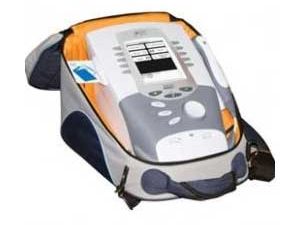
The full Therapeutic Devices line.

GSA contract holder • Ships nationwide • From Patient to Doctor & Everyone In Between
Talk to a Medical Equipment Specialist
Toll free 877-706-4480 | Local 713-706-4480 | inquiry@msecompany.net