

Electrotherapy Accessories
Cables, connector sets and transport cases that keep clinic electrotherapy units in service, supplied to therapy departments, outpatient clinics and athletic training rooms nationwide.
Home › Rehabilitation Equipment › Therapeutic Devices › Electrotherapy Accessories
Electrotherapy Accessories for Clinical Stimulation Units
Electrotherapy accessories are the cables, connectors and carrying cases that sit between a clinic stimulation unit and the electrodes placed on the patient. They are not the unit, and they are not the pad that touches the skin. They are the parts in the middle, and in a busy department they are the parts that come out of service first. MSEC supplies electrotherapy accessories for physical therapy departments, outpatient clinics, athletic training rooms and home programs, including the Bifurcation Cable Set and the Therapy System Transportable Carry Bag.
Shop Electrotherapy Accessories
Everything MSEC carries in Electrotherapy Accessories, shown in full. Specifications are supplied by the manufacturer. For current pricing, lead time or a quote on a purchase order, call toll free 877-706-4480.
-
 Quick ViewSelect options
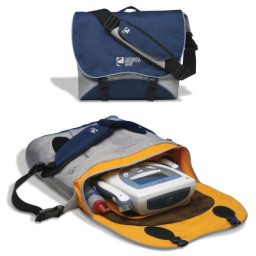
Therapy System Transportable Carry Bag
Item# 76472CHT$216.96Original price was: $216.96.$170.84Current price is: $170.84. -
 Quick ViewSelect options
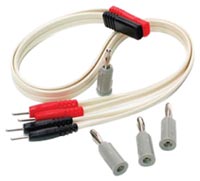
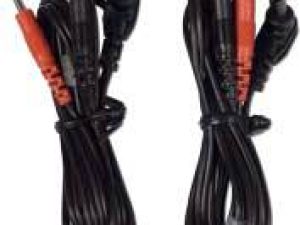
Bifurcation Cable Set
Item# 0302MET$81.19Original price was: $81.19.$60.14Current price is: $60.14.


Choosing Between Models?
The Therapeutic Devices Buying Guide walks through the decisions behind this purchase, with a comparison method, the mistakes that cause returns and a pre-order checklist.
What Counts as an Electrotherapy Accessory Rather Than a Consumable?
An electrotherapy accessory is a durable part that carries current, connects a channel or protects the unit, and it is expected to last through many treatment sessions rather than being discarded after one. That is the line this category draws. Pads and sponge electrodes are consumed and reordered on a schedule, and they live in Electrodes & Lead Wires. Cables, connector sets and transport cases are specified once, used until they wear, then replaced by part.
The practical difference is how you buy them. A consumable goes on a standing reorder tied to caseload. An accessory is bought against a specific unit, by connector type and channel layout, and a wrong accessory does not simply sit on a shelf. It takes the modality off the schedule until the correct part arrives. That is why this page is organized around identification rather than around volume.
Everything here supports the units described on the Therapeutic Devices line, which sits inside Rehabilitation Equipment & Products.
Which Electrotherapy Accessories Are in the MSEC Catalog?
Two items sit in this category: the Bifurcation Cable Set and the Therapy System Transportable Carry Bag. One carries the signal, the other carries the unit.
- Bifurcation Cable Set. A lead assembly whose name states its construction. A bifurcated lead splits a single output into two branches so one channel can serve two electrode sites. Confirm the connector style, the branch lengths and the unit models it is listed for against the manufacturer specification before ordering.
- Therapy System Transportable Carry Bag. A padded case for moving a portable therapy system between treatment rooms, satellite sites, home visits and an athletic training room. Confirm the internal dimensions against the unit and the accessories you intend to carry with it.
If the part you need for your unit is not shown here, call the toll free line at 877-706-4480 or email inquiry@msecompany.net with the model and serial from the equipment plate. Much of what a therapy department reorders is a manufacturer part number that has never had its own catalog listing.
How Does a Bifurcated Lead Change What One Channel Can Do?
A bifurcated lead lets a single output channel feed two electrode positions instead of one, which is why clinicians reach for it when a treatment setup calls for more contact points than the unit has channels. The unit still sees one channel. The current path is simply divided at the branch.
That has two consequences a buyer should understand before ordering. First, a bifurcation cable set does not add channels to a stimulator. A unit with two channels still has two channels, and a department that genuinely needs more independent outputs is looking at a different unit rather than a different cable. Second, branch length matters at the treatment table. Short branches limit how far apart the two electrode sites can sit, and a lead that is too long coils on the floor and gets rolled over by a cart.
Selection of a setup and its parameters is the treating clinician’s decision. What this page can tell you is what the hardware physically does, and which part number matches the unit you already own.
Why Do Cables and Lead Sets Fail Before the Unit Does?
Cables fail first because they are the only part of the system that moves every single time the unit is used. A stimulator housing sits still. The lead is pulled, coiled, stretched across a plinth, wrapped around a handle and unplugged several times a day, and the stress concentrates at two points: the strain relief where the cable enters the connector, and the branch on a bifurcated set.
What that means for a department is that cables belong on a replacement plan, not a repair plan. Signs a clinical team should log include intermittent output when the lead is moved, a connector that no longer seats firmly, visible kinking near the strain relief, and exposed conductor anywhere along the run. A lead in that condition should be taken out of service and replaced with the part the manufacturer lists for the unit.
Storage extends cable life more than anything else. Loose coils rather than tight wraps, hung rather than dropped in a drawer, and kept away from the wheels of a treatment cart. The therapeutic devices buyer guide works through how to phase spares into a budget cycle.
When Does a Portable Therapy System Need a Transport Case?
A transport case earns its place the moment a unit leaves the room it was installed in. That happens more often than facilities plan for: a shared unit moving between two treatment rooms on different floors, a home health visit, a satellite clinic covered two days a week, a sideline or an away event, and any unit that travels in a vehicle.
The risk is rarely the housing. It is the connectors and the leads packed loose beside it. A unit that arrives with a bent pin or a crushed connector is out of service for the length of a parts lead time, and the case costs a fraction of that downtime. The Therapy System Transportable Carry Bag is specified for that job.
Before ordering, confirm the internal dimensions against your unit, and decide what else travels with it. A case sized for the unit alone will not hold the unit plus a cable set plus a supply of pads, and a department that has to carry a second bag usually stops carrying the first one.
What Should You Confirm on the Specification Sheet Before Ordering an Electrotherapy Accessory?
Confirm that the accessory is listed for your exact unit, because connectors that look alike are frequently not interchangeable. Work through this list before the purchase order is issued.
- Unit model and serial. Read them from the equipment plate, not from memory or from a purchase record. Manufacturers revise connectors across production runs of the same model name.
- Connector style and pin layout. Pin count, spacing, keying and whether the connector is locking or friction fit.
- Channel and branch layout. How many outputs the lead serves, and whether the set is supplied per channel or for the whole unit.
- Cable length. Measure from where the unit sits to the far end of the treatment surface, then allow for the clinician working around the patient.
- Quantity per pack. Cable sets are sometimes listed per pair rather than per lead.
- Cleaning compatibility. Confirm which disinfectants the manufacturer allows on cable jackets and connector housings before you standardize a wipe across the department.
- Availability and lead time. Confirm both, because an accessory on backorder takes a modality off the schedule.
When Do You Need an Electrode, a Stimulator or an Ultrasound Accessory Instead?
Buyers land on this page looking for three different things, and only one of them is here. Route yourself before you order.
- If the pad or sponge is worn. That is a consumable, not an accessory. Go to Electrodes & Lead Wires.
- If the unit itself is failing or the department needs more outputs. Go to Neuromuscular Stimulators for clinic stimulation units, or TENS Units for clinic and take home transcutaneous units.
- If the part is a sound head or a coupling accessory. Ultrasound parts are matched by frequency and live in Therapeutic Ultrasound Applicators & Accessories, with the units themselves in Therapeutic Ultrasound Machines.
- If the part belongs to a shortwave unit or a laser. See Diathermy Units & Accessories or Light & Laser Therapy Equipment & Accessories.
Not sure which one you are holding? Send a photograph of the connector and the equipment plate to inquiry@msecompany.net and we will identify it.
Frequently Asked Questions
How do I work out which cable set my stimulator takes?
Start at the equipment plate on the unit and record the model name, the model number and the serial number exactly as printed. Then photograph the output socket on the unit and the connector on your existing lead. Connector styles change across production runs of the same model name, so the serial matters as much as the model. Send both to inquiry@msecompany.net or call 877-706-4480 and we will match the part.
Does a bifurcation cable set give my unit more channels?
No. A bifurcated lead splits one channel into two branches so a single output can reach two electrode sites. The unit still has the number of independent channels it shipped with, and each branch carries the same output as the channel feeding it. If your department needs genuinely independent outputs running different setups at once, the answer is a different unit rather than a different cable.
How should lead wires be stored between treatments?
Coil them loosely and hang or lay them rather than winding them tightly around the unit or dropping them into a drawer. Tight wraps and sharp bends concentrate stress at the strain relief where the cable enters the connector, which is where leads usually fail. Keep them off the floor and away from cart wheels. Storage habit does more for cable life in a busy department than anything else you can buy.
Is a carry bag worth ordering if the unit already has a handle?
A handle protects the housing. A case protects the connectors, the sockets and the leads, and those are the parts that take a unit out of service. If the unit ever travels in a vehicle, moves between floors, or is packed alongside cables and pads, the case is the cheaper half of the pair. If the unit never leaves one treatment room, it is optional.
Can I clean cables with the same disinfectant we use on the unit housing?
Confirm it first with the manufacturer documentation for both items. Cable jackets, connector housings and rigid equipment housings are different materials, and a wipe cleared for one is not automatically cleared for another. Ask us for the cleaning instructions that apply to the specific part number and we will supply what the manufacturer states. Standardizing a disinfectant before you check is how a department ends up with cracked jackets.
What information do you need from us to quote an electrotherapy accessory?
Send the unit model and serial from the equipment plate, a photograph of the output socket, and the part number from the old accessory if it is still legible. If you know the cable length or branch layout you need, include that. With those details we can confirm the correct part, the pack quantity and current lead time. Call 877-706-4480 toll free or 713-706-4480 locally, or email inquiry@msecompany.net.
Related Categories
Move up to Therapeutic Devices, or across to the lines ordered alongside this one.
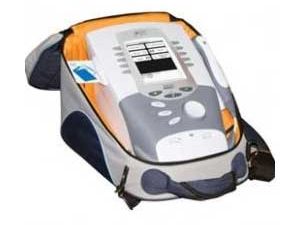
Therapeutic Devices
The full Therapeutic Devices line.

GSA contract holder • Ships nationwide • From Patient to Doctor & Everyone In Between
Talk to a Medical Equipment Specialist
Toll free 877-706-4480 | Local 713-706-4480 | inquiry@msecompany.net