
Elliptical Trainers
Standing low impact elliptical trainers for supervised conditioning in rehab gyms, with the step up height, resistance, clearance and freight checks to confirm before ordering.
Home › Rehabilitation Equipment › Cardio Equipment › Elliptical Trainers
Elliptical Trainers for Rehab Gyms and Therapy Departments
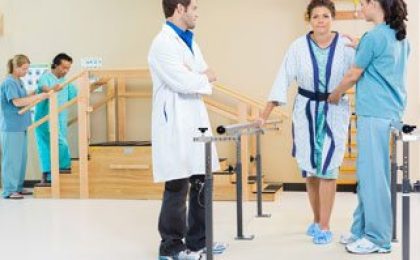
An elliptical trainer is a standing machine whose pedals travel a fixed, guided path, so both feet stay in contact with the pedals throughout the stride. Clinicians use them in supervised conditioning programs in hospital rehab departments, outpatient clinics, skilled nursing facilities and athletic training rooms. The patient steps up onto the pedals to start, which is why entry height, standing balance requirements and the clearance around the machine matter as much as the console does.
Shop Elliptical Trainers
Everything MSEC carries in Elliptical Trainers, shown in full. Specifications are supplied by the manufacturer. For current pricing, lead time or a quote on a purchase order, call toll free 877-706-4480.
-
 Quick ViewSelect options
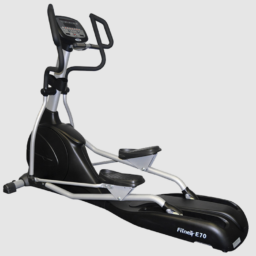
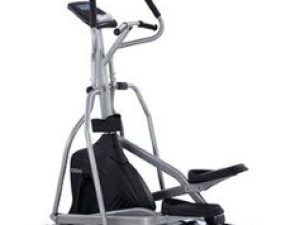
Elliptical Cross Trainer
Item# 07EFMI$3,371.03Original price was: $3,371.03.$2,497.06Current price is: $2,497.06.

Choosing Between Models?
The Cardio Equipment Buying Guide walks through the decisions behind this purchase, with a comparison method, the mistakes that cause returns and a pre-order checklist.
What Parts of an Elliptical Trainer Does a Rehab Buyer Actually Evaluate?
Six parts, and only one of them is the console. The machine is a frame, a pair of pedals on a guided articulation, a resistance mechanism, an upper handle arrangement, a console and a set of levelling feet, and each one shows up in a different part of the purchase.
- Frame and footprint. Decides where the machine can stand and how much clear floor the room loses to it.
- Pedals and articulation. Decides the step up height and where the feet sit through the stride.
- Resistance mechanism. Decides how finely the load can be set and how quiet the machine is beside a treatment bay.
- Upper handles. Confirm on the specification whether they move with the stride or are fixed, since that changes what a patient has to hold and coordinate.
- Console. Decides what staff can read from across the room.
- Levelling feet. Decide whether the machine sits still on an uneven floor.
Which patient is appropriate for a standing machine is a clinical judgment, made by the treating clinician rather than at the point of purchase.
Which Elliptical Trainers Are Listed in This Category?
The listing in this category is the Elliptical Cross Trainer. The name states the machine type and nothing else, so stride length, step up height, resistance range and increments, upper handle configuration, console features, weight capacity, machine dimensions and power requirement are all confirmed against the manufacturer specification for the exact model before ordering.
That is not a limitation so much as the normal way this category is bought. Two machines described with the same words can differ on every figure that matters to a rehab gym. Tell us the room dimensions, the ceiling height, the floor covering and whether the machine is replacing an existing one, and we will confirm the current specification and configuration against those constraints. Call 877-706-4480 toll free or 713-706-4480 local, or email inquiry@msecompany.net.
Which Specifications Separate One Elliptical Trainer From Another?
Five figures do most of the separating, and none of them appear in a machine name. Ask for each one in writing before comparing two machines on price.
- Step up height. How far a patient has to lift a foot to reach the pedal at its lowest point in the path. This is the figure that decides who can get on unaided.
- Stride length. The distance the pedal travels. A fixed stride suits a range of heights differently than an adjustable one, and some machines state it and some do not.
- Resistance range and increments. The lowest setting and the size of each step matter far more in a rehab gym than the top of the range.
- Weight capacity. Take it from the manufacturer specification, never from how solid the frame looks.
- Overall dimensions and machine height. Needed for both the floor plan and the ceiling check below.
Where a figure is not stated in the listing, treat that as a question for the quote rather than an assumption. The cardio equipment buyer guide works through how to compare two machines whose names differ more than their specifications do.
Why Does Ceiling Height Matter More on an Elliptical Than on Other Cardio Machines?
Because the patient stands on pedals that are already raised off the floor, so the useful measurement is the machine’s pedal height plus the height of the tallest person who will use it, not the height of the machine alone. A room that comfortably holds a treadmill or a recumbent bicycle can still put a patient’s head close to a ceiling fixture on an elliptical.
Measure three things before the order goes in. Confirm the pedal height at its highest point from the manufacturer specification. Measure the finished ceiling height at the exact spot the machine will stand, not at the middle of the room. Then look up and note anything that hangs below that ceiling: lights, sprinkler heads, ducting, ceiling mounted track or a curtain rail.
Do the same for the sides. Staff supervise from beside the machine and often need to reach the console and the patient at the same time, so the clear space on the approach side is working space rather than spare space.
What Should a Facility Confirm Before Ordering an Elliptical Trainer?
Confirm the delivery route, the power arrangement, the floor and the parts position, in that order, because those four decide whether the machine is usable on the day it lands rather than weeks later.
- Freight and delivery access. These machines ship freight. Confirm dock or liftgate, who moves the crate from the delivery point to the gym, and the narrowest doorway, corridor turn or elevator on the route.
- Assembly. Confirm whether the machine arrives assembled, part assembled or flat, and who assembles and levels it on site.
- Power. Confirm whether the console is self powered by the user’s motion or needs an outlet, and where that outlet is relative to the machine’s position.
- Floor and floor loading. Confirm the floor covering suits the feet, that the surface is level enough not to need shimming, and that floor loading is acceptable where the gym is not on a ground slab.
- Cleaning protocol compatibility. Confirm which agents are permitted on grips, console and painted surfaces before standardizing on a wipe.
- Serviceable parts, availability and lead time. Confirm the parts position and get lead time and warranty terms in writing for the exact model.
What Wears Out First on an Elliptical Trainer in a Rehab Gym?
The moving joints and the contact points, long before the frame. A clinical gym runs a machine at low resistance for long periods with frequent starts and stops, which loads articulation and fasteners more than it loads the drive.
- Pedal fasteners and articulation. Check monthly for play, and listen for a knock that appears under load.
- Handle bolts. Retighten on a schedule, especially where patients pull on the handles during transfer.
- Levelling feet. A machine that rocks slightly is usually a foot that has backed off, not a bent frame.
- Grips and console overlay. These take the disinfectant every day, which is why the permitted agent list belongs on the cleaning cart.
- Console power. Where the console takes batteries, hold spares so a display failure does not take the machine out of documentation use.
Keep the model and serial number in the equipment log, because parts for cardio equipment are quoted against the serial range rather than the model name.
When Should a Buyer Choose a Different Machine Instead?
When the task the gym is rehearsing is not a standing, low impact stride. The elliptical fills the middle of the ability range, and the three neighboring categories fill the ends of it.
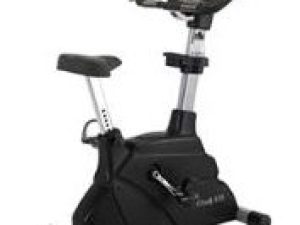
- The patient cannot stand through a session or cannot step up: Exercise Bicycles keep the patient seated and give the most open entry in the room.
- The program is working toward stairs: Stair Climbers rehearse the stepping pattern directly.
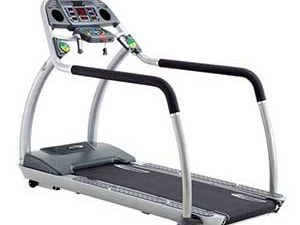
- The program is gait work: Treadmills are the functionally specific choice for walking, with handrails and a reachable stop.
A gym that already holds a bicycle and a treadmill covers the widest spread of ability, and an elliptical is usually the machine that fills in between them rather than the first one bought. For how the four machine types sit together, see Cardio Equipment, and for sizing the room and the order start with the buyer guide. The wider therapy catalog sits under Rehabilitation Equipment and Products.
Frequently Asked Questions
Does an elliptical trainer need to be plugged in?
Confirm it on the specification for the exact model, because some consoles are powered by the user’s own motion and others need an outlet. Ask before the floor plan is fixed, since a machine that needs power has to stand within reach of an outlet without a cord crossing the walking route. Where an outlet is required, confirm what else is already on that circuit.
How much ceiling height does an elliptical trainer need?
Add the machine’s highest pedal height, taken from the manufacturer specification, to the height of the tallest person who will use it, then measure the finished ceiling at the exact position the machine will stand. Note anything hanging below that line, including lights, sprinkler heads and ceiling track. This check is specific to standing machines and is easy to skip when a room already holds other cardio equipment.
We already have a bicycle and a treadmill. Do we need an elliptical as well?
It depends on what sits unfilled between them. A bicycle covers seated work and a treadmill covers gait, and an elliptical adds standing, low impact work with both feet staying on the pedals. If your caseload rarely needs that middle step, a second unit of a machine you already queue for may serve the schedule better. Your clinicians decide what the caseload requires.
What routine maintenance does an elliptical need between services?
Check pedal fasteners and articulation for play, retighten handle bolts, confirm the levelling feet are still seated, and clean grips and console with agents the manufacturer permits. Log anything that develops a knock under load rather than waiting for it to worsen. Hold console batteries where the model uses them, so a blank display does not take the machine out of use unnecessarily.
What should we record before ordering a replacement part?
Record the model name and the serial number from the machine, along with the part location and what the fault looks like under load. Cardio parts are usually quoted against a serial range rather than a model name, so a serial saves a round of questions. Photographs of the part and of the serial plate speed it up further. Ask for availability and lead time in the same message.
Can you supply an elliptical configuration that is not shown here?
Tell us the constraints and we will confirm what is available. The useful details are the room dimensions and ceiling height, the floor covering, the doorway and corridor widths on the delivery route, and whether the machine is replacing an existing one you want matched. Call 877-706-4480 toll free or 713-706-4480 local, or email inquiry@msecompany.net for availability and lead time.
Related Categories
Move up to Cardio Equipment, or across to the lines ordered alongside this one.
GSA contract holder • Ships nationwide • From Patient to Doctor & Everyone In Between
Talk to a Medical Equipment Specialist
Toll free 877-706-4480 | Local 713-706-4480 | inquiry@msecompany.net