
Exercise Bicycles
Professional recumbent and upright exercise bicycles for outpatient rehabilitation gyms, hospital rehab departments, cardiac programs and skilled nursing facilities.
Home › Rehabilitation Equipment › Cardio Equipment › Exercise Bicycles
Exercise Bicycles for Rehabilitation Gyms and Clinics
Exercise bicycles are seated cardio machines that let a patient work the legs through a repeated cycle with very little weight bearing and no standing balance requirement. Clinicians use them in outpatient rehabilitation gyms, hospital rehab departments, cardiac programs, skilled nursing facilities and athletic training rooms. MSEC supplies two configurations for clinical use, the Professional Recumbent Exercise Bike and the Upright Professional Indoor Exercise Bike, and the choice turns on how the patient gets on and how much back support the seat provides.
Shop Exercise Bicycles
Everything MSEC carries in Exercise Bicycles, shown in full. Specifications are supplied by the manufacturer. For current pricing, lead time or a quote on a purchase order, call toll free 877-706-4480.
-
 Quick ViewSelect options
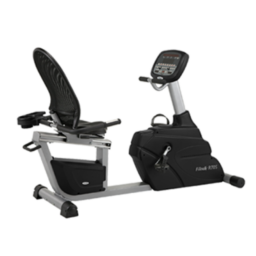
Professional Recumbent Exercise Bike
Item# 07RFMI$2,451.84Original price was: $2,451.84.$1,816.18Current price is: $1,816.18. -
 Quick ViewSelect options
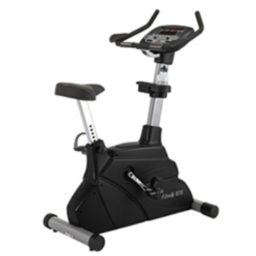
Upright Professional Indoor Exercise Bike
Item# 07BFMI$2,322.98Original price was: $2,322.98.$1,822.58Current price is: $1,822.58.


Choosing Between Models?
The Cardio Equipment Buying Guide walks through the decisions behind this purchase, with a comparison method, the mistakes that cause returns and a pre-order checklist.
What Separates the Recumbent and Upright Bikes in the MSEC Catalog?
Two models sit in this category, and they separate on riding position, which changes entry, support and footprint.
| Model | Riding position | Back support | Entry |
|---|---|---|---|
| Professional Recumbent Exercise Bike | Seated and reclined, pedals forward of the body | Seat back as part of the design | Step through or step over a low frame, confirm on the specification |
| Upright Professional Indoor Exercise Bike | Seated upright, pedals below the body | None, the rider supports the trunk | Over the frame onto a saddle, confirm on the specification |
Neither product name carries a dimension, a capacity or a resistance figure, so every number a purchasing file needs comes from the manufacturer specification. Ask us and we will pull it. The Cardio Equipment line covers how bicycles sit alongside the other machine types, and the Rehabilitation Equipment & Products hub covers the wider catalog.
How Does the Seat Adjust, and Who Adjusts It Between Patients?
The seat is adjusted by whoever is running the session, usually several times an hour, so the adjustment mechanism matters more in a clinic than it ever does in a gym. A machine that needs a tool, two hands and a kneel to reposition will drift toward being set once and left.
On an upright bike, the adjustment that matters most is saddle height, and the figure to confirm is the lowest saddle position rather than the highest. That is what decides whether a shorter patient can reach the pedal through the bottom of the stroke. On a recumbent bike, the adjustment is seat carriage position along the rail, which sets the distance from seat back to pedal and therefore how much knee flexion and extension the stroke demands.
Confirm three things on the specification before ordering: the full adjustment range at both ends, whether the adjustment is tool free, and whether the carriage or post carries a numbered scale. A numbered scale is worth more than it looks, because it lets a clinician record a setting in the notes and reproduce it at the next visit instead of re-fitting the patient every session.
What Should You Look For in the Resistance System on a Clinic Bike?
Look at how finely the resistance can be stepped and how it is changed, not at the top of the range. A clinic bike spends most of its working life at the bottom of its scale, and the increments there are what decide whether a program can be progressed in a meaningful way.
Confirm the resistance type on the manufacturer specification, the number of levels available, and whether the levels are stepped or continuous. Then confirm where the control sits. A control on the console is reached differently from a control on the frame, and on a recumbent bike a patient with limited trunk rotation may not be able to reach a frame mounted knob at all without breaking position.
Also confirm what happens to resistance when the machine is powered down, if it is powered at all. Some systems hold their setting and some reset, and a department that starts every session by dialing back from a default learns that quickly. Ask us for the stated resistance specification on either model before the purchase order is issued.
Does a Clinic Exercise Bike Need a Power Outlet?
Confirm it per model, because consoles are supplied both ways and the answer changes where the machine can go. Some clinical bikes generate their own display power from the rider’s pedaling, and some require a receptacle for the console, for a powered resistance system or for both.
If the model you choose requires power, confirm the manufacturer’s stated electrical requirement, the location of the nearest receptacle, and the cord length. Then look at the route the cord takes. A cord crossing a walking path in a rehab gym is a hazard in a room where patients are already being assessed for balance, and it is the sort of thing a facilities team will flag after installation rather than before.
A self powered console removes that problem but adds another: the display only reads while the patient is pedaling, so a clinician cannot set up a program on a stationary machine. Neither behavior is a fault. They are simply different, and the time to find out which one you are buying is before the crate is opened, not during a first session.
How Do Pedals, Straps and Foot Position Affect Who Can Use the Bike?
The pedal interface decides whether a patient’s foot stays where the clinician places it, and it is the most overlooked line on a specification sheet. On both models, confirm the pedal type, whether a cage or a strap is fitted, and whether that strap is adjustable and removable.
- Cages and straps. They keep a foot located on the pedal through the stroke. They also add a step in getting on and off, and a patient who cannot reach down to release a strap cannot leave the machine unaided.
- Pedal surface. Confirm the surface and whether the pedal is reversible, since one face is often flatter and more accommodating than the other.
- Crank length and pedal path. Confirm the stated crank length. It sets how much hip and knee travel the stroke demands, and it is not adjustable on most machines.
- Q factor and pedal spacing. Confirm the lateral distance between pedals if a patient needs a wider or narrower foot position.
Which of these suits a given patient is the treating clinician’s decision. Our job is to confirm what the manufacturer states so that decision is made from real figures.
What Should You Confirm on the Specification Sheet Before Ordering an Exercise Bike?
Confirm the figures neither product name carries, which is all of them. Work through the following before the purchase order is issued.
- User weight capacity. Confirm the stated figure and whether it differs between the two models.
- Saddle or seat adjustment range. Both ends of the range, plus whether adjustment is tool free and whether the scale is numbered.
- Machine footprint and height. Length, width and overall height, which you will need against the room layout and any low ceiling or soffit.
- Step through height or step over height. The figure that decides how a patient gets on.
- Resistance specification. Type, number of levels and where the control sits.
- Console readouts and power source. What the display shows, and whether it needs a receptacle.
- Crated dimensions and weight. Needed for dock, liftgate, door width, corner turn and elevator checks.
- Assembly. What is required on site and who performs it.
- Serviceable parts and lead time. Confirm which wear parts are stocked and confirm lead time before ordering.
When Should a Rehab Gym Buy a Treadmill, Elliptical or Stair Climber Instead?
Buy a different machine when the task the clinician needs is not seated cycling. Three sit alongside this category and each rehearses something a bicycle cannot.
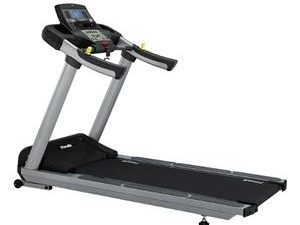
- Walking and gait work. A bicycle does not rehearse walking. See Treadmills.
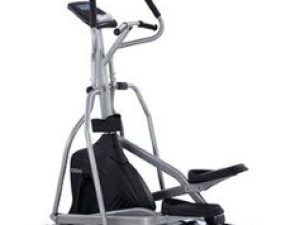
- Standing low impact conditioning. When the program calls for a standing, weight bearing pattern with both feet staying on the pedals, see Elliptical Trainers.
- Stair negotiation. When the functional goal is stairs, see Stair Climbers.
Most rehab gyms start with a bicycle because it is the machine the widest range of patients can use on day one, then add the others as the caseload justifies them. The cardio equipment buyer guide works through that sequence and the room count behind it. If the configuration you need is not listed here, call 877-706-4480 toll free, 713-706-4480 locally, or email inquiry@msecompany.net.
Frequently Asked Questions
What is the practical difference between the recumbent and upright bike for a clinic?
The recumbent model seats the patient in a reclined position with a seat back and the pedals forward of the body. The upright model seats the patient on a saddle with the pedals below. That changes trunk support, how the patient gets on and off, and the footprint the machine takes in the room. Confirm seat adjustment range and entry height on the specification for both before choosing.
Can the seat be adjusted without tools between patients?
Confirm it per model on the manufacturer specification. In a clinic the seat moves several times an hour, so a tool free adjustment with a numbered scale is worth specifying deliberately rather than discovering after delivery. The numbered scale lets a clinician record a patient’s setting and reproduce it at the next visit instead of re-fitting from scratch each time.
Does an exercise bike arrive assembled?
Confirm the assembly requirement with us before ordering, since it varies by model and by how the unit is crated. Ask what is required on site, what tools are needed, who performs the work and roughly how long it takes. Also confirm crated dimensions against your door widths, corner turns and elevator openings, because a crated bike is bulkier than the assembled machine.
What does the seat back on the recumbent model change for the clinician?
It gives the patient trunk support as part of the machine rather than something the clinician has to add, and it changes how the patient is positioned relative to the pedals. Whether that support suits a particular patient is the treating clinician’s decision. What we can confirm from the manufacturer specification is the seat back dimensions, the carriage adjustment range and the distance from seat back to pedal.
How is an exercise bike cleaned between patients?
Confirm the manufacturer’s cleaning instruction for the seat, handlebars, console face and frame finish before you standardize a disinfectant across the gym. Consoles, upholstered seats and painted frames are different materials, and a wipe cleared for one is not automatically cleared for another. Ask us for the documentation that applies to the model you are buying and we will supply what the manufacturer states.
Which wear parts should a rehab gym hold for its exercise bikes?
Ask us which parts the manufacturer stocks for the model you own, then hold the ones your usage pattern consumes. Pedals, straps, seat pads and console batteries are the items most often requested on clinical bikes. Record the model and serial from the machine plate in your equipment log so a reorder is a short call rather than an identification exercise.
Related Categories
Move up to Cardio Equipment, or across to the lines ordered alongside this one.
GSA contract holder • Ships nationwide • From Patient to Doctor & Everyone In Between
Talk to a Medical Equipment Specialist
Toll free 877-706-4480 | Local 713-706-4480 | inquiry@msecompany.net