
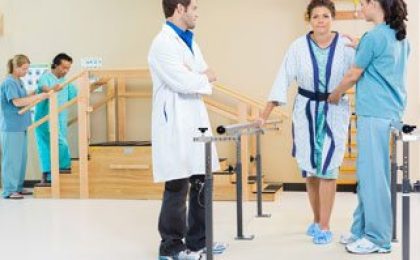
Stair Climbers
Stepping machines for patients working toward stair negotiation, specified on entry height, stepping action and clearance for outpatient clinics, hospital rehab departments and training rooms.
Home › Rehabilitation Equipment › Cardio Equipment › Stair Climbers
Stair Climbers for Rehabilitation Gyms and Training Rooms
A stair climber is a stepping machine that loads one leg at a time in a closed chain pattern, rehearsing the movement that stairs at home and at work demand. Outpatient physical therapy clinics, hospital rehab departments, cardiac and pulmonary rehabilitation programs, athletic training rooms and skilled nursing facilities specify them for patients working toward stair negotiation. MSEC lists two machines here, and they differ in stepping action, which is the specification that decides who on your caseload can use them.
Shop Stair Climbers
Everything MSEC carries in Stair Climbers, shown in full. Specifications are supplied by the manufacturer. For current pricing, lead time or a quote on a purchase order, call toll free 877-706-4480.
-
 Quick ViewSelect options
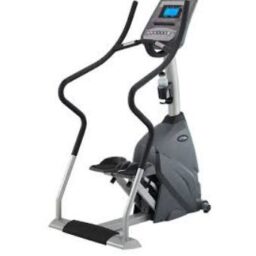
Professional Exercise Stair Stepper
Item# 01TSPFMI$2,918.38Original price was: $2,918.38.$2,161.76Current price is: $2,161.76. -
 Quick ViewSelect options
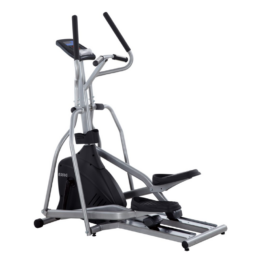
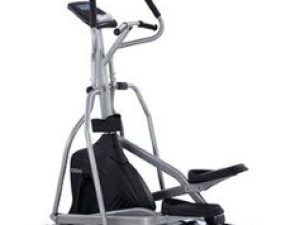
Standard Elliptical Exercise Climber
Item# GS55EFMI$2,023.01Original price was: $2,023.01.$1,498.53Current price is: $1,498.53.


Choosing Between Models?
The Cardio Equipment Buying Guide walks through the decisions behind this purchase, with a comparison method, the mistakes that cause returns and a pre-order checklist.
Which Stair Climbers Does MSEC List, and How Do the Two Models Differ?
Two machines sit in this category, and the difference is the path the foot travels.
- Professional Exercise Stair Stepper. A stepping machine, where the foot travels up and down through a stepping pattern. This is the action closest to a flight of stairs.
- Standard Elliptical Exercise Climber. A climbing machine on an elliptical path, where the foot follows a guided oval rather than a straight rise and fall. The feet stay on the pedals throughout.
That distinction matters more than any headline number. A stepping pattern asks the patient to unload one leg and load the other in sequence, while a guided elliptical path keeps both feet supported and carries the leg through the return. Two patients with the same diagnosis can manage one of those and not the other, which is why gyms that can afford both often buy both rather than two of the same machine.
Step height, stride path, resistance range, pedal or step dimensions and the machine’s own weight and footprint all come from the manufacturer specification sheet for each model. Ask us for both sheets and compare them side by side rather than comparing the product names, because the names describe the action and not the numbers.
How High Is the First Step, and Why Does That Decide Who Can Use the Machine?
The height a patient has to raise a foot to get onto the machine is the first specification to check, because it screens out users before any resistance setting matters. A patient who cannot safely mount the machine never gets to the workout it was bought for.
- Height of the step or pedal at rest. Measure it, or get it in writing, and compare it with the step height your patients already manage in the clinic.
- What they hold while mounting. Where the handrails start, how far forward they reach, and whether a patient can hold on with both hands during the transfer onto the machine.
- Whether the step moves during mounting. A machine whose pedals sink under weight as the patient steps on presents a different task from one that holds position.
- How the patient gets off. Exit is the half of the transfer that gets skipped in a showroom demonstration, and it is where fatigue makes the difference.
Bring these questions to the specification sheet before the machine is on the floor. Where entry height rules out a large share of your caseload, the answer is usually a different machine type rather than a different climber, and the sibling categories below are where that decision goes.
Do the Two Pedals Move Independently, and Why Does It Matter?
Confirm it on the specification sheet, because it changes what the machine asks of the patient. On a linked system the pedals are tied together, so one rising pedal drives the other down and the machine carries part of the pattern. On an independent system each leg does its own work through the full travel.
The practical consequences are straightforward. Linked pedals give a more predictable rhythm and a patient with one weaker leg gets some assistance from the stronger side. Independent pedals expose that asymmetry instead, which is useful when a clinician wants to see it and unhelpful when the session goal is endurance. Neither is better in the abstract, and which one suits a patient is the treating clinician’s judgment.
Ask the same question about resistance. What matters for a rehabilitation caseload is what the machine does at its lowest useful setting and how finely the steps between settings are graded, not what the top of the range reaches. A machine whose lowest setting is still demanding has a narrower clinical use than its specification sheet suggests.
How Much Room Does a Stair Climber Need, Including Overhead?
Plan for the machine footprint, a working perimeter, and the ceiling height above the highest point the patient’s head reaches while stepping. Overhead clearance is the measurement stair climbers need and most other cardio machines do not.
- Overhead. Add the patient’s standing height to the highest position the step or pedal reaches, then check that against the ceiling, and against anything hanging from it such as lights, sprinkler heads, ducts or a ceiling mounted track.
- Behind the machine. Clinicians frequently stand behind or beside a patient on a climber, so the space cannot be reclaimed by pushing the unit against a wall.
- Beside the machine. Enough room for a walker, a wheelchair or a second person during transfers on and off.
- Floor. The machine’s weight and its contact points, plus whether it sits on a mat and what that does to the entry height.
Basement rehabilitation gyms and converted rooms with dropped ceilings are where this goes wrong. Measure the ceiling in the exact spot the machine will stand rather than at the middle of the room, because the obstruction is rarely in the middle.
Who Supervises a Patient on a Stair Climber?
The facility decides that under its own policy, and the treating clinician decides whether a given patient uses the machine at all and at what level. MSEC supplies the equipment and the manufacturer’s documentation.
What a buyer can plan for is the equipment side of supervision. Confirm where the stop control sits and whether it can be reached from the floor as well as from the machine. Confirm the handrail configuration, since a rail that only runs forward gives a clinician standing beside the patient nothing to work around. Confirm that the console can be read by someone standing next to the patient rather than only by the person on the machine, because that is how a supervised session actually runs.
Keep the manufacturer’s operating instructions with the machine, not in an office. Every stair climber on a rehabilitation floor eventually gets used by someone who was not there on the day it was delivered.
What Should You Confirm on the Specification Sheet Before Ordering a Stair Climber?
Confirm the entry height, the footprint and the power requirement first, then work through what keeps the machine in service.
- Step or pedal height at rest, and travel. The numbers behind the entry and exit question above.
- User weight capacity. As the manufacturer states it, checked against the caseload you actually see.
- Footprint, machine weight and overhead requirement. Including whether the figure quoted is the machine alone or the machine on its mat.
- Power. Whether the unit is self powered by the user’s motion or needs a receptacle, what the console needs, and where that outlet is in the room.
- Handrails and stop control. Configuration, reach and position.
- Resistance range and increments. Particularly at the low end.
- Serviceable parts. Which components are replaceable, what the lead time on them is, and who services the machine locally.
- Freight and delivery. Crate dimensions and weight, whether a lift gate is needed, and whether the crate will make the turns between the dock and the gym.
- Cleaning compatibility. Which disinfectants the manufacturer names for the contact surfaces and the console.
Have the room dimensions, the ceiling height at the machine position and your door widths ready when you call 877-706-4480 or 713-706-4480.
When Is a Treadmill, Exercise Bicycle or Elliptical Trainer the Better Buy?
When the patient cannot yet manage a stepping pattern, or when the session goal is a different functional task. A stair climber is the most demanding machine in this line for a patient with limited leg strength or restricted knee range of motion, and a gym that owns only a climber covers a narrow band of the caseload.
- Exercise Bicycles. The most supported option, with the patient seated and weight bearing through the legs kept low. Recumbent models add back support and a lower entry.
- Elliptical Trainers. Standing and weight bearing but low impact, with the feet staying on the pedals through a guided path.
- Treadmills. The most functionally specific choice for gait work on a moving surface, and the one that needs the most attention to entry and handrail support.
Most rehabilitation gyms buy a bicycle and a treadmill first and fill the middle of the range afterward, which is where a climber earns its place. The cardio equipment buyer guide works through that sequencing against a caseload, the Cardio Equipment category page compares all four machine types, and Rehabilitation Equipment & Products holds the rest of the rehab gym lines. If the model you need is not listed, email inquiry@msecompany.net and we will check availability.
Frequently Asked Questions
Which of the two stair climbers is easier for a patient to get onto?
Compare the entry height on both specification sheets rather than assuming from the machine names, because that figure varies by model and revision. Ask us for both documents and check the step or pedal height at rest against the step height your patients already manage in the clinic. That single number screens more patients in or out than any other on the sheet.
Does a stair climber need to be plugged in?
Confirm it per model. Some stepping machines are driven entirely by the user and need no supply, some need a receptacle for the console alone, and some are mains powered throughout. The answer changes where the machine can stand, so settle it before the room layout is fixed rather than after the unit is craned into place.
How much ceiling height does a stair climber need?
Take the highest position the step reaches, add the standing height of your tallest patient, and leave clearance above that. Then check the specific spot the machine will occupy for lights, sprinkler heads, ductwork and ceiling mounted equipment. Converted rooms and basement gyms with dropped ceilings are where this measurement is most often missed.
Can one stair climber serve both a rehabilitation caseload and staff fitness use?
Physically yes, and it is worth thinking through before you agree to it. Shared use raises the duty cycle, which brings service and replacement forward, and it puts the machine in demand at the times clinicians want it. If the machine is shared, confirm the weight capacity, the service parts position and who is responsible for booking it.
What should staff check on a stair climber before a session?
Check that the steps or pedals are secure with no lateral play, that the handrails are tight, that the stop control works and can be reached from the floor, that the resistance responds through its range, and that nothing has been left on the platform. Then follow the maintenance schedule in the manufacturer’s manual for anything beyond that.
Is a stair climber the same thing as a stepper or a step machine?
Buyers use all three words for the same machine type, and manufacturers are not consistent either. MSEC lists the Professional Exercise Stair Stepper and the Standard Elliptical Exercise Climber in this category. When you request a quote, describe the stepping action you want and the entry height your patients need rather than relying on the name, and we will match it.
Related Categories
Move up to Cardio Equipment, or across to the lines ordered alongside this one.
GSA contract holder • Ships nationwide • From Patient to Doctor & Everyone In Between
Talk to a Medical Equipment Specialist
Toll free 877-706-4480 | Local 713-706-4480 | inquiry@msecompany.net