

Hemostats and Kelly Clamps: Types, Uses and How to Choose
Ask any surgical tech to name the instrument they reach for most and the answer is usually a hemostat. Hemostatic forceps clamp vessels, hold tissue, grip sutures and secure drapes in nearly every procedure performed in an operating room, emergency department or clinic. Yet buyers searching for them run into a wall of names: Kelly clamps, Crile forceps, mosquito forceps, Rochester-Pean, Ochsner. This guide explains what a hemostat is, how the major patterns differ and how to choose the right ones from the full MSEC range of surgical forceps.
What Is a Hemostat and How Is It Used?
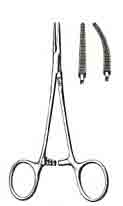
A hemostat is a ring-handled surgical instrument with a ratcheted locking mechanism and serrated jaws, designed to clamp blood vessels and control bleeding. The name comes from hemostasis, the stopping of blood flow. Squeeze the rings together and the ratchet engages in stages, letting the clinician set and hold clamping pressure without continuous grip strength. That self-locking action is what separates hemostats from thumb forceps, which hold only as long as the user squeezes.
Beyond vessel occlusion, clinicians use hemostats to bluntly dissect tissue planes, pass ligatures around vessels, grasp fascia, hold tendon ends, remove splinters and clamp tubing. EMS crews carry them for securing lines and clamping umbilical cords in field deliveries. Even outside medicine, the same pattern shows up in labs, electronics work and fly fishing, which is one reason search interest in hemostats runs far beyond hospital purchasing departments.
How Do Hemostats Actually Stop Bleeding?
The jaws of a hemostat carry transverse serrations that grip a vessel evenly along its length. When the vessel is clamped, flow stops mechanically; the surgeon then ties off the vessel with a ligature or seals it with electrosurgery before releasing the clamp. The ratchet usually has three positions, letting the user match clamping force to the delicacy of the tissue. Fine-pattern instruments with lighter serrations protect small vessels, while heavy patterns with deeper serrations and sometimes toothed tips hold thick tissue bundles that would slip out of a delicate jaw.
What Are the Main Types of Hemostatic Forceps?
Most hemostats on a tray belong to one of a handful of classic patterns. The differences are size, jaw length, serration depth and whether the tip is straight or curved.
Mosquito Forceps (Halstead)
The smallest common pattern, typically about 5 inches, with fine jaws for delicate vessels and pediatric work. Mosquito forceps are the instrument of choice when the vessel is small and the field is tight, and they are stocked in both straight and curved tips.
Kelly Clamps
The Kelly clamp is the workhorse mid-size hemostat, usually around 5.5 inches, with serrations that cover roughly the lower half of the jaw. That partial serration makes a Kelly slightly gentler than a fully serrated pattern of the same size. Kelly forceps handle medium vessels, blunt dissection and general clamping duty in nearly every service line. If a facility stocks only one hemostat pattern in quantity, it is almost always the Kelly.
Crile Forceps
Often confused with the Kelly, the Crile is the same general size but carries serrations along the full length of the jaw. The practical difference: a Crile grips along its entire jaw surface, while a Kelly concentrates grip at the distal portion. Both appear on general surgery trays, and many facilities standardize on one or the other.
Rochester-Pean and Rochester-Ochsner
These are the heavy, longer patterns, commonly 6.25 to 10 inches, built for large vessels, thick tissue and deep cavities. The Rochester-Pean is fully serrated without teeth; the Rochester-Ochsner adds 1×2 interlocking teeth at the tip for tissue that must not slip. MSEC stocks the full family of Rochester hemostatic forceps in straight and curved patterns and multiple lengths.
Straight or Curved: Which Jaw Should You Stock?
Both, in most settings. Straight jaws give maximum visibility and grip for surface work, suture handling and clamping tubing. Curved jaws follow tissue planes, reach around vessels and keep the operator’s hand out of the line of sight in deeper fields. Surgical convention places curved hemostats in the dominant role for vessel work, which is why curved patterns usually outnumber straight on a general tray. Browse the MSEC selection of curved hemostat forceps and straight hemostat forceps to compare patterns side by side.
What Is the Difference Between a Hemostat and a Kelly Clamp?
A Kelly clamp is a hemostat. Kelly is one specific pattern within the hemostatic forceps family, the mid-size design with serrations on the distal half of the jaw. The confusion comes from usage: in many ORs the word hemostat defaults to the small mosquito pattern, while Kelly refers to the mid-size instrument, even though both are technically hemostats. When ordering, rely on the pattern name, length and tip style rather than the generic term, so the tray you build matches the tray your surgeons expect.
How Are Hemostats Different From Other Surgical Clamps?
All hemostats are clamps, but not all clamps are hemostats. Occluding clamps for bowel and vascular work carry specialized atraumatic jaws, towel clamps have penetrating points for securing drapes, and tube-occluding clamps protect soft tubing. If the job is controlling bleeding or grasping general tissue, a hemostatic pattern is the right call; for organ-specific occlusion, look at the broader range of surgical clamps MSEC supplies. Hemostats also pair naturally with surgical scissors on nearly every setup, from suture removal kits to major trays.
What Should Buyers Check Before Ordering?
Five specifications determine whether a hemostat performs and lasts.
Material and finish. Look for surgical-grade stainless steel that tolerates repeated steam sterilization. A satin or matte finish reduces glare under surgical lights.
Ratchet engagement. The ratchet should close smoothly through all positions and release with one-handed pressure, without springing open on its own. A ratchet that slips under load is a safety defect, not a wear item to tolerate.
Jaw alignment. Closed jaws should meet evenly along their full length with no light gap. Misaligned jaws crush unevenly and let vessels slip.
Length for the field. Match instrument length to working depth: 5 inch patterns for surface and pediatric work, 5.5 to 6.25 inches for general use, 7 to 10 inches for deep cavities and bariatric cases.
Reprocessing compatibility. Confirm the instrument is rated for your sterilization method, and inspect box locks regularly, since debris and cracking concentrate there first.
Building a Standard Tray: How Many of Each?
Facilities differ, but a common general surgery setup carries curved mosquitoes, curved and straight Kellys or Criles, and two or more long Rochester patterns, with counts scaled to the service. Clinics running laceration and minor procedure trays usually standardize on mosquitoes plus one mid-size pattern. Order a margin above the minimum: hemostats migrate between trays, go missing into sharps counts and wear at the box lock, and a backordered clamp should never be the reason a tray is incomplete. For volume pricing on tray builds across the complete range of surgical instruments and supplies, MSEC quotes by line item or full set.
MSEC has supplied hemostatic forceps and surgical instruments to hospitals, surgery centers, clinics and EMS agencies nationwide since 2003, and holds GSA contract V797P-2194D for government buyers. Not sure which patterns your trays need? Ask the pros at 877-706-4480 (toll free) or 713-706-4480 (Houston local) and we will help you specify the right instruments the first time.
Frequently Asked Questions
What is a hemostat used for?
A hemostat clamps blood vessels to control bleeding during procedures. Clinicians also use the locking, serrated jaws for blunt dissection, grasping tissue, passing ligatures, holding sutures and clamping tubing, which makes it one of the most used instruments on any surgical tray.
Is a Kelly clamp the same as a hemostat?
A Kelly clamp is one pattern of hemostat: the mid-size design, about 5.5 inches, with serrations on the lower half of the jaw. All Kelly clamps are hemostats, but the hemostat family also includes mosquito, Crile, Rochester-Pean and Rochester-Ochsner patterns.
What is the difference between Kelly and Crile forceps?
Size is similar; the serrations differ. A Crile carries serrations along the full jaw, while a Kelly is serrated only on the distal half. The Crile grips along its whole jaw surface, and the Kelly concentrates grip at the tip, which some surgeons prefer for vessel work.
When should I use curved versus straight hemostats?
Straight jaws suit surface work and suture handling where visibility is direct. Curved jaws follow tissue planes, reach around vessels and work better in deep fields. Most trays carry both, with curved patterns in the majority for vessel clamping.
Are mosquito forceps just small hemostats?
Yes. Mosquito forceps, also called Halstead mosquito forceps, are the smallest common hemostat pattern at about 5 inches, with fine jaws for delicate vessels, pediatric cases and tight fields. They come in straight and curved tips like the larger patterns.
How long do hemostats last?
Quality stainless steel hemostats survive years of use and sterilization cycles when reprocessed correctly. Inspect the box lock for cracks and debris, confirm the ratchet holds under load and check jaw alignment regularly; failure in any of those checks is the signal to replace.
Related Pages
- Surgical Forceps: The complete MSEC forceps catalog across every pattern and specialty.
- Curved Hemostat Forceps: Curved-jaw hemostats for vessel work and deep fields.
- Straight Hemostat Forceps: Straight-jaw patterns for surface work and suture handling.
- Rochester Hemostatic Forceps: Heavy Rochester-Pean and Rochester-Ochsner patterns for large vessels.
- Mosquito Forceps: Fine Halstead patterns for delicate and pediatric work.
- Surgery Clamps: Occluding, towel and specialty clamps beyond the hemostat family.
- Medical Carts Guide: Nine cart types for hospitals and clinics, from medication to crash carts.
- Custom Stainless Steel Sinks Guide: Scrub sinks and custom stainless fabrication for clinical rooms.
No related posts.