
Whirlpool Sports Medicine: How Training Rooms Put a Whirlpool to Work
A working guide for athletic trainers, team physicians and sports physical therapists on where a whirlpool fits in a sports medicine program, which tub suits which body part, and what to settle before one is ordered.
Home › Rehabilitation Equipment › Hydrotherapy Whirlpool Tubs › Whirlpool in Sports Medicine
What Whirlpool Therapy Means in a Sports Medicine Program
In sports medicine, a whirlpool is a stainless tank of water moved by a turbine, used by an athletic trainer, team physician or physical therapist as one modality inside a written care plan. It is hydrotherapy with a specific job: immersing a limb, the lower body or most of the body in water that the clinician has set to a chosen temperature, with agitation the clinician can adjust. The whirlpool is never the plan on its own. It is one tool in the same room as the taping table, the ice machine, the ultrasound unit and the rehab floor.
Medical Supplies & Equipment Company (MSEC) has supplied athletic departments, outpatient clinics, hospitals and government buyers since 2003. Our hydrotherapy whirlpool tubs line currently lists 61 products across eight families, and the question we are asked most often by training room staff is not which tub is best. It is which tub fits the athletes, the room and the protocols they already run. This page answers that question from the sports medicine side. For a model by model look at the large immersion tubs themselves, go to Sports Hydrotherapy Whirlpool Tubs.

What Is Whirlpool Therapy in Sports Medicine? Seven Things Every Training Room Should Know
Whirlpool therapy in sports medicine is the supervised use of water immersion and turbine agitation as part of an athlete’s treatment and conditioning plan. These seven points are what separate a whirlpool that earns its floor space from one that becomes storage.
- The clinician sets the parameters, not the equipment. Water temperature, immersion depth, agitation and session length come from the supervising athletic trainer or physician and the facility’s written protocol. The tub’s job is to hold what they set, reliably, every time.
- Body part decides the tub family. A wrist, hand, foot or ankle goes in an extremity tank. Lower body immersion calls for a lo-boy or a sports tub. Standing or seated immersion to the chest calls for a hi-boy or a large capacity sports tub.
- Temperature direction decides the hardware. Warm immersion, cold immersion and contrast programs need different support equipment. A facility that runs cold water daily usually plans a chiller or a dedicated cold therapy tank from the start.
- Throughput decides the capacity. A high school room treating a handful of athletes after practice and a college department cycling a full roster have very different fill, drain and turnaround demands.
- Supervision is part of the setup. A whirlpool is placed where staff can see it, with a GFCI protected outlet, a nonslip floor and a clear exit route, so no athlete is ever in the water unobserved.
- Cleaning is a written routine, not a habit. Drain, clean and disinfect between athletes according to the manufacturer’s instructions and the facility’s infection control policy, and log it.
- The whirlpool works alongside other modalities. Taping, bracing, compression, therapeutic exercise and electrotherapy all share the same room and the same schedule, so the whirlpool is planned into that flow, not bolted on after.
Who Uses a Sports Medicine Whirlpool, From High School to the Pros
Sports medicine is not one buyer. The same question, “which whirlpool should we buy,” comes from at least six very different rooms, and each one ends up with a different answer.
High school athletic training rooms. Best for a single certified athletic trainer covering many sports. Space is tight, purchases run through a district purchasing office, and one versatile tub usually has to cover ankles after football and shoulders after baseball. A mobile extremity whirlpool in the 22 to 45 gallon range, or an 85 gallon sports tub where the room allows, is the common starting point.
College and university athletic departments. Best for high volume rooms with several staff. These departments often run two or three tubs side by side: extremity tanks for quick lower leg and forearm work, and one or more large sports tubs for lower body and full body immersion, frequently paired with a cold plunge.
Professional and semi professional teams. Best for dedicated recovery suites. Capacity, fill speed and temperature control matter most here, which is why plunge therapy packages with a chiller and heater unit appear on these orders.
Outpatient sports physical therapy clinics. Best for mixed caseloads of athletes and general orthopedic patients. Entry height and transfer safety become part of the decision, which points toward lo-boy tubs, hi-boy tubs with steps, or a hydrolift whirlpool.
Hospital sports medicine and rehab departments. Best for clinical settings with strict infection control and documentation. Stationary tubs with dedicated plumbing and a clear cleaning log are the norm.
Government, military and public agencies. Best for buyers who need a contract vehicle. MSEC holds GSA contract V797P-2194D, which lets federal facilities purchase through an established schedule.
Warm, Cold or Contrast Water: How the Clinician's Choice Shapes the Equipment
Whether the water is warm or cold is a clinical decision, made by the athletic trainer or physician for a specific athlete at a specific point in recovery. Warm immersion is commonly used by clinicians before exercise or mobility work. Cold immersion is commonly used in post practice and post competition recovery routines. Contrast programs alternate between the two. We do not recommend temperatures or times, and neither should any equipment supplier. What we can do is make sure the equipment supports whatever protocol your staff writes.
That has practical consequences. A warm water whirlpool depends on the building’s hot water supply and a way to verify temperature before every immersion, usually a thermometer and a thermostatic mixing valve. A cold program depends on ice, or better, a chiller. Rooms running cold immersion as a daily part of the schedule often add a dedicated unit from our cold therapy tanks line, which lists 23 products, rather than tying up the main whirlpool with ice. Contrast programs usually need two tanks side by side, one at each temperature, so athletes can move between them without waiting on a refill.
If your staff already know the protocol, tell us what it is when you ask for a quote. It decides whether a tub alone is enough or whether a package with a 2 horsepower chiller and heater unit makes more sense.
Matching the Whirlpool to the Body Part: Extremity, Lo-Boy, Hi-Boy and Sports Tubs
The most common purchasing mistake we see is buying by capacity alone. Start with the part of the body your staff treat most, then choose a family, then a capacity and frame. Here is how the MSEC catalog maps to sports medicine use, counted from our live listings.
| Tub family | Listed capacities | Models listed | Typical sports medicine use |
|---|---|---|---|
| Extremity whirlpools | 15 to 45 gallons | 12 | Hand, wrist, elbow, foot, ankle and lower leg |
| Lo-boy whirlpools | 75 to 105 gallons | 7 | Seated lower body immersion, hips, knees and legs |
| Hi-boy whirlpools | 60 to 105 gallons | 8 | Deeper immersion to the trunk and shoulders |
| Sports whirlpools | 85, 90 and 110 gallons | 15 | Training room lower body and full body immersion, including plunge packages |
| Hydrolift whirlpools | Lift assisted | 4 | Athletes or patients who cannot step into a tub |
| Podiatry whirlpools | Foot and ankle | 4 | Chairside foot work |
| Slant back whirlpools | Reclined | 2 | Reclined back and lower body positioning |
| Whirlpool accessories | Parts and add ons | 9 | Seats, steps, covers and replacement parts |
Most frames come as stationary, stationary with legs, or mobile on casters. Mobile tanks are moved empty and used where they stand, so a mobile frame still needs a fill point and a drain route at its working position. If you are unsure which family fits, the Hydrotherapy Rehabilitation Tubs Clinical Guide walks through the comparison in more depth.

Comparing Tubs Side by Side?
The Hydrotherapy Rehabilitation Tubs Clinical Guide covers construction, turbines, temperature control and capacity in detail, and the MSEC buyer guide library covers the rest of the rehab room.
Where the Whirlpool Sits Among Other Sports Medicine Modalities
A sports medicine room is a sequence. An athlete might be evaluated, spend time in the water, move to a table for manual work or therapeutic ultrasound, then finish with exercise, taping or a brace. Planning the whirlpool means planning its neighbors.
Taping and preparation. Taping tables and stations sit close to the entrance because they see the most traffic before practice. Keep the whirlpool far enough away that splash never reaches tape, prewrap and supplies.
Supports, splints, wraps and compression. Ankle, wrist and knee supports are applied after water work and after taping. Our supports and braces line and ankle straps and splints are commonly stocked in the same room, together with compression wraps and ice bags.
Electrotherapy and ultrasound. Clinicians often pair water immersion with other modalities from our therapeutic devices range, including therapeutic ultrasound machines. Keep electrical equipment well clear of the wet zone.
Exercise, balance and flexibility. Return to play work happens on the rehab floor: balance boards, stretching equipment, free weights and weight lifting equipment. A whirlpool placed between the treatment tables and the rehab floor keeps athletes moving in one direction.
Mobility aids. Injured athletes may arrive on crutches, walkers or in wheelchairs. Leave a clear, dry path and consider steps with handrails or a lift assisted tub for anyone who cannot climb in safely.
Running a Safe Whirlpool Session: A Checklist for Athletic Trainers
Every facility writes its own policy, and your team physician signs off on it. The points below are the practical, equipment side items we see in well run training rooms.
Before the session. The athlete has been evaluated and the whirlpool is on their plan. Water temperature is checked with a thermometer, not by hand. The turbine is inspected, the GFCI outlet has been tested and the floor around the tub is dry.
During the session. A staff member can see the athlete at all times. Jewelry and tape are removed. The athlete knows how to call for help, and the clinician can shut off the turbine from where they stand.
After the session. The athlete exits using handholds or steps, the session is recorded on the athlete’s chart, and the tub is drained and cleaned before the next person uses it.
Contraindications and precautions, such as open wounds, certain cardiovascular conditions, loss of sensation or infection, are screened by the clinician. Those are medical decisions and they belong to your medical staff.

Cleaning and Disinfecting a Shared Training Room Whirlpool
A training room whirlpool is shared by many athletes in a single afternoon, which makes the cleaning routine as important as the tub. Follow the manufacturer’s instructions for use for your model, and use disinfectants that the manufacturer approves for stainless steel and for the turbine.
Most facilities we supply build their routine around four steps: drain the tank completely, clean visible residue from the tank walls and drain, disinfect the tank and run the turbine through the disinfectant solution so the internal passages are treated, then rinse and dry before refilling. A written log posted near the tub, with date, time and initials, is what inspectors and athletic directors ask to see.
Replacement drain parts, turbine components and covers are listed in Hydrotherapy Whirlpool Tub Accessories. Record the model and serial number when the tub is installed so parts can be matched later.
Quotes, Purchase Orders and Delivery for Schools, Teams and Clinics
MSEC has been in business since 2003, ships nationwide and holds GSA contract V797P-2194D. Here is what our customer service team needs to quote a sports medicine whirlpool accurately, and what you should check on your side.
What to send us. The body parts you treat most, how many athletes you expect per day, whether you run warm, cold or contrast water, the room size, and whether you need a stationary, legged or mobile frame. If a purchase order must go through a district, university or government office, tell us so the quote matches their format.
What to check on site. The delivery route from the dock to the room, including door widths, elevators and turns. The floor’s ability to carry a filled tub. The electrical supply and GFCI protection. Hot and cold water supply and a drain within reach of the tub’s working position.
What to ask before you order. Lead time, freight method, whether liftgate delivery is needed, and the shipping and returns terms that apply to large equipment. Our specialists answer these by phone at 877-706-4480 toll free or 713-706-4480 local, or by email at inquiry@msecompany.net.
Whirlpool Sports Medicine: Frequently Asked Questions
What is whirlpool therapy in sports medicine?
It is the supervised use of a turbine driven water tank by an athletic trainer, team physician or physical therapist as one part of an athlete’s care plan. The clinician chooses the water temperature, immersion depth, agitation and session length, and the whirlpool is used alongside other modalities such as exercise, taping and bracing.
How do athletic trainers use a whirlpool with sports injuries?
Athletic trainers use a whirlpool as a step within a treatment session, for example warm immersion before mobility work or cold immersion within a post practice recovery routine. The injury, the stage of recovery and the facility’s protocol decide how and whether it is used for a given athlete.
Is warm or cold water used in whirlpool therapy?
Both, and sometimes both in the same session in a contrast program. The choice is a clinical one made by the supervising clinician. From an equipment standpoint, warm programs rely on hot water supply and temperature verification, while daily cold programs usually add a chiller or a dedicated cold therapy tank.
How long should a whirlpool session last?
Session length is set by the supervising athletic trainer or physician under the facility’s written protocol, based on the athlete and the goal of the session. MSEC does not recommend treatment times. We can help you choose equipment that makes the protocol easy to follow, such as timers, thermometers and turbines the clinician can shut off from the tubside.
What equipment does a sports medicine whirlpool setup need?
At minimum a whirlpool sized to the body parts you treat, a GFCI protected outlet, hot and cold water supply, a drain route, a nonslip floor, a thermometer and an approved disinfectant. Many rooms add steps or a seat, a cover, a chiller for cold programs and a cleaning log posted by the tub.
Are there risks to using a whirlpool for sports injuries?
Yes, which is why whirlpool use is screened and supervised by clinicians. Precautions commonly screened include open wounds, infection, loss of sensation and certain cardiovascular conditions. Facility level risks such as electrical safety, slippery floors and cross contamination are managed with GFCI protection, dry floors and a written cleaning routine.
Can MSEC help a school or team choose and quote a whirlpool?
Yes. Call 877-706-4480 toll free or 713-706-4480 local, or email inquiry@msecompany.net with the body parts you treat, your daily athlete count, your water temperature program and your room details. We quote schools, colleges, clinics, hospitals and GSA buyers nationwide.
Related Pages in Rehabilitation Equipment
Continue into the rehabilitation equipment catalog, or go straight to the lines ordered alongside a sports medicine whirlpool.
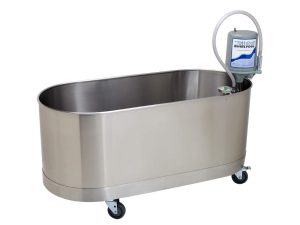
Hydrotherapy Whirlpool Tubs
All 61 whirlpool listings across eight families.
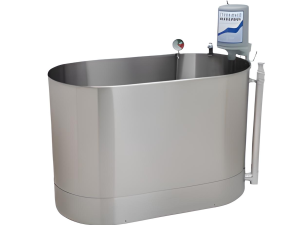
Sports Hydrotherapy Whirlpool Tubs
85, 90 and 110 gallon tubs and plunge packages.
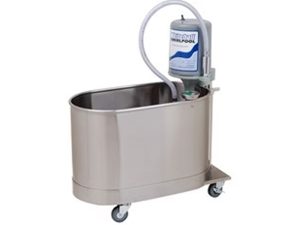
Extremity Hydrotherapy Whirlpool Tubs
15 to 45 gallon tanks for limbs.
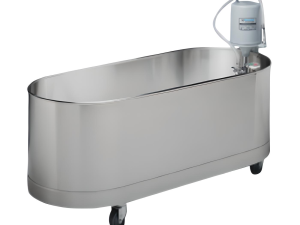
Lo-Boy Hydrotherapy Whirlpool Tubs
Seated lower body immersion.
Cold Therapy Tanks
Dedicated cold immersion units.
Taping Tables & Stations
Preparation stations for the training room.

Supports & Braces
Ankle, wrist and knee supports and wraps.
Therapeutic Devices
Ultrasound, electrotherapy and more.
GSA contract holder • Ships nationwide • From Patient to Doctor & Everyone In Between
Talk to a Medical Equipment Specialist
Toll free 877-706-4480 | Local 713-706-4480 | inquiry@msecompany.net